Last week the latest round of global negotiations to draft an agreement on a post-Kyoto greenhouse gas (GHG) control regime for signing at the Copenhagen conference in December concluded in Bonn. Little progress was reported, though the meeting concluded with the parties expressing cautious optimism. Further information is available at: http://unfccc.int/meetings/sb30/items/4842.php. The Japanese government proposed to cut its country’s emissions of GHG by 8% below 1990 by the year 2020, disappointing many environmentalists and other governments, including the Chinese who continue to resist any specific commitment to reduce their emissions. I have posted a description of my views concerning the Chinese position on the blog “Concurring Opinions,” where I am serving as a guest blogger this month (June 13th post on http://www.concurringopinions.com/). The next informal negotiating session will be held in Bonn beginning on August 10.
During the last two months indigenous groups in Peru have been protesting government plans for development of the Amazon region. More than 30 people were killed the week before last as the Peruvian government sought to quell protesters who had blocked a road and an airport. Last Wednesday the Peruvian Congress suspended a law that made it easier to cut down trees in the Amazon rainforest, but the protest intensified on Thursday as the indigenous groups held a National Protest Day in at least a dozen Peruvian cities. The leadership of the government-dominated Congress suspended for three months seven indigenous members of Congress who had been supporting the protests and an indigneous community radio station reportedly has been shut down.
Last week Royal Dutch Shell agreed to pay $15.5 million to settle the Alien Tort Statute lawsuit brought against it for involvement with the Nigerian military in the 1995 execution of environmental activist Ken Saro-wiwa. The settlement was reached just as the trial was about to commence after thirteen years of litigation. I spoke with one of the lawyers who had worked on the case and she expressed considerable excitement about the settlement. Shell maintains that it had no involvement in the execution of Sara-wiwa and eight other Ogoni leaders who had been protesting oil pollution in the Niger Delta. It describes the settlement as a “humanitarian gesture.”
On Friday the U.S. Congress enacted landmark legislation to give the Food and Drug Administration the authority to regulate tobacco products. The law is a response to the U.S. Supreme Court’s 5-4 decision nine years ago rejecting the agency’s conclusion that it could regulate such products because they are “drug delivery devices” to hook smokers on nicotine. This decision contrasted sharply with the Court’s normal deference to agency interpretations of ambiguous statutory provisions. The new law is not without its critics because several compromises were made to win broad support for the legislation, including from some tobacco companies. The FDA will not be allowed to raise the age at which it is legal to smoke (foreclosing the option of declaring a new generation off limits to the tobacco industry by raising the legal age for smoking by one year every year). It cannot ban nicotine entirely or remove menthol flavoring from cigarettes. But in general the legislation is a huge step toward regulating products that kill 400,000 people in the U.S. every year. An interesting news story would be to explore why the political fates of the tobacco and gun lobbies (two of the three members of the “Mod Squad” -- for “merchants of death” -- in Christopher Buckley’s marvelously funny novel “Thank You for Smoking”) have diverged so dramatically in recent years.
On Thursday I took Zhang Jingjing, one of China’s top public interest environmental lawyers, to see the Washington Nationals in a rare comeback win at home. While eating dinner on Capital Hill after the game, we ran into Senator (and 2004 Presidential candidate) John Kerry who spoke with us and posed for a picture with Jingjing. Jingjing, who has been in the U.S. as a Yale World Fellow this year, told Senator Kerry that she attended his recent hearing on climate change and that she understands how important it is that China control its GHG emissions.
Monday, June 15, 2009

Sunday, June 7, 2009
May 35th Commemoration in China, U.S. BPA Lobby & Climate Talks
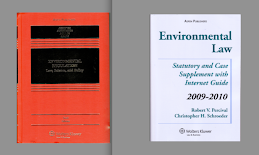
I returned to the U.S. on Saturday after two weeks teaching a course in Comparative Environmental Justice at the University of British Columbia in Vancouver. Most of my spare time in Vancouver was spent finishing the new 6th edition of my Environmental Law casebook, which will be published in August.
Thursday was the 20th anniversary of the Tiananmen Square massacre in China in 1989 when the communist government brutally murdered more than 100 students demonstrating for democracy in Tiananmen Square in Beijing. The Chinese authorities went to great lengths to stop any events marking the anniversary, censoring the internet even more extensively than normal and flooding Tiananmen Square with plainclothes police who harassed anyone trying to do interviews or news reports. I watched a CNN International report where the newsman was surrounded by plainclothes thugs opening large umbrellas to try to prevent his cameras from catching any view of the square in the background. The reporter kept dodging and weaving and the plainclothes cops kept tracking his every step, making for a comical display of how paranoid the Chinese authorities are about any mention of the anniversary. A Financial Times reporter reported being pushed and cursed at by plainclothes officers near the square when he tried to talk to a U.S. student spending the summer in Beijing.
News report said that because the words “June 4” were being censored on the internet, students started referring to the anniversary as “May 35th”. I had heard that since organized protests were prohibited, many people in Beijing were planning to wear white on Thursday as a silent way of marking the occasion. When you ask people in Beijing what their recollections are of the event, even students who are too young to remember it will tell you what their parents recall (e.g., “my parents said they made sandwiches and sent them to the students”). I even have met a few Chinese who had been among the student protesters in the square.
In Hong Kong there was a large public candlelight vigil to commemorate the anniversary with more than 100,000 people demonstrating. While Hong Kong is part of the P.R.C. following the end of the British rule in 1997, it enjoys considerably more freedom of speech and freedom of the press. The New York Times reported that for the first time ever the official Chinese media had a mention of the events of 1989 in a story extolling how much more peaceful the area was today. The Wall Street Journal featured an op-ed by a reporter who had been at the square when the massacre occured. She concluded that “[t]he real sign of modernity will come when China opens up its political system enough so that the country’s leaders no longer fear June 4 but treat the Tiananmen uprising with the honor it deserves.” Claudia Rosett, What I Saw at Tiananmen,” Wall St. J., June 4, 2009, at A15.
In lecturing about the development of global environmental law, I often refer to Canada’s chemical testing program and how it has contributed to the growing movement to ban bisphenol-A, a chemical widely used to harden plastics. After test data showed that the chemical may be particularly risky to children, Canada announced last year that it would ban its use in children’s products and Walmart announced that it would no longer carry children’s products that contained the chemical. Last Sunday the Washington Post revealed documents from an industry strategy meeting where lawyers for U.S. chemical producers discussed how to keep the chemical on the market in the U.S. Lyndsey Layton, Industry Lobbyists Devised Strategy to Protect Use of BPA, Wash. Post, May 31, 2009. The strategies mentioned included a $500,000 public relations campaign where their 'holy grail' spokesperson would be a 'pregnant young mother who would be willing to speak around the country about the benefits of BPA’." Also mentioned were “using fear tactics [e.g., Do you want to have access to baby food anymore?’).”
Last Monday another round of preparatory talks for the all-important Copenhagen COP-15 climate conference in December convened in Bonn. Updates are available at: http://unfccc.int/meetings/sb30/items/4842.php. All eyes are on the Chinese delegation, which has been calling on developing countries to slash their emissions of greenhouse gases (GHGs) by 40% by the year 2020 and to contribute between 0.5% and 1.0% of their annual GDP to a fund to compensate developing countries. Fiona Harvey, Climate Focus Turns to Beijing, Financial Times, June 2, 2009.
Thursday was the 20th anniversary of the Tiananmen Square massacre in China in 1989 when the communist government brutally murdered more than 100 students demonstrating for democracy in Tiananmen Square in Beijing. The Chinese authorities went to great lengths to stop any events marking the anniversary, censoring the internet even more extensively than normal and flooding Tiananmen Square with plainclothes police who harassed anyone trying to do interviews or news reports. I watched a CNN International report where the newsman was surrounded by plainclothes thugs opening large umbrellas to try to prevent his cameras from catching any view of the square in the background. The reporter kept dodging and weaving and the plainclothes cops kept tracking his every step, making for a comical display of how paranoid the Chinese authorities are about any mention of the anniversary. A Financial Times reporter reported being pushed and cursed at by plainclothes officers near the square when he tried to talk to a U.S. student spending the summer in Beijing.
News report said that because the words “June 4” were being censored on the internet, students started referring to the anniversary as “May 35th”. I had heard that since organized protests were prohibited, many people in Beijing were planning to wear white on Thursday as a silent way of marking the occasion. When you ask people in Beijing what their recollections are of the event, even students who are too young to remember it will tell you what their parents recall (e.g., “my parents said they made sandwiches and sent them to the students”). I even have met a few Chinese who had been among the student protesters in the square.
In Hong Kong there was a large public candlelight vigil to commemorate the anniversary with more than 100,000 people demonstrating. While Hong Kong is part of the P.R.C. following the end of the British rule in 1997, it enjoys considerably more freedom of speech and freedom of the press. The New York Times reported that for the first time ever the official Chinese media had a mention of the events of 1989 in a story extolling how much more peaceful the area was today. The Wall Street Journal featured an op-ed by a reporter who had been at the square when the massacre occured. She concluded that “[t]he real sign of modernity will come when China opens up its political system enough so that the country’s leaders no longer fear June 4 but treat the Tiananmen uprising with the honor it deserves.” Claudia Rosett, What I Saw at Tiananmen,” Wall St. J., June 4, 2009, at A15.
In lecturing about the development of global environmental law, I often refer to Canada’s chemical testing program and how it has contributed to the growing movement to ban bisphenol-A, a chemical widely used to harden plastics. After test data showed that the chemical may be particularly risky to children, Canada announced last year that it would ban its use in children’s products and Walmart announced that it would no longer carry children’s products that contained the chemical. Last Sunday the Washington Post revealed documents from an industry strategy meeting where lawyers for U.S. chemical producers discussed how to keep the chemical on the market in the U.S. Lyndsey Layton, Industry Lobbyists Devised Strategy to Protect Use of BPA, Wash. Post, May 31, 2009. The strategies mentioned included a $500,000 public relations campaign where their 'holy grail' spokesperson would be a 'pregnant young mother who would be willing to speak around the country about the benefits of BPA’." Also mentioned were “using fear tactics [e.g., Do you want to have access to baby food anymore?’).”
Last Monday another round of preparatory talks for the all-important Copenhagen COP-15 climate conference in December convened in Bonn. Updates are available at: http://unfccc.int/meetings/sb30/items/4842.php. All eyes are on the Chinese delegation, which has been calling on developing countries to slash their emissions of greenhouse gases (GHGs) by 40% by the year 2020 and to contribute between 0.5% and 1.0% of their annual GDP to a fund to compensate developing countries. Fiona Harvey, Climate Focus Turns to Beijing, Financial Times, June 2, 2009.
Monday, June 1, 2009
Alien Tort Claims, China & Climate Change, Vancouver Party
Two events last week placed the activities of multinational oil companies back in the global environmental spotlight. Wednesday was the scheduled start of a trial in federal district court in New York of a lawsuit alleging that Royal Dutch Shell collaborated with the Nigerian military to execute environmental activist Ken Saro-wiwa in 1995. The lawsuit is being brought under the Alien Tort Statute (ATS), enacted by the first U.S. Congress in 1789 to enable foreigners to recover for harm caused to them by U.S. citizens. Wednesday also was the day on which the annual meeting of shareholders of the Chevron Corporation was held and environmental protesters were expected. When it took over Texaco eight years ago, Chevron acquired a long-standing lawsuit against Texaco by residents of the Oriente region of Ecuador. These plaintiffs claim that Texaco’s oil development activities in Ecuador during the 1970s and 1980s created an environmental disaster that persists today and they were expected to protest at Chevron’s annual meeting.
Litigation under the Alien Tort Statute is almost impossible for environmental plaintiffs to win because the Supreme Court set the bar so high when it decided Sosa v. Alvarez-Machain in 2004. The Court held that the Alien Tort Statute can only be used to seek redress for actions that violate “specific, universal, and obligatory” norms recognized as part of the “law of nations” at the time the law was enacted. Both the Second Circuit (in Flores v. Southern Peru Copper Corp. in 2003) and the Fifth Circuit (in Beanal v. Freeport-McMoran in 1999) have held that allegations of severe environmental harm were not enough to give rise to liability under the statute. However, plaintiffs who claimed that the Unocal Corporation had collaborated with the Burmese military’s activities of forced labor, murder, and rape in connection with construction of an oil pipeline won a favorable settlement following an en banc oral argument in the Ninth Circuit (Doe v. Unocal Corp.) that did not go well for the company.
Ironically, the litigation against Texaco began as a claim under the Alien Tort Statute, but the company insisted that the litigation should not be heard by the U.S. courts. As a result, it was dismissed by the Second Circuit on the condition that Texaco agree to let the case be heard by an Ecuadoran court. After years of trial, the court in Ecuador may rule before the end of the year and Chevron is facing potentially $27 billion in cleanup costs. Chevron’s defense is that everything it did in Ecuador was legal and that it spent $40 million on environmental cleanup and was released from further liability by the government of Ecuador in 1992 when Texaco left the country. The plaintiffs claim that this settlement with an over-friendly government does not absolve Texaco of responsibility for the harm their activities caused to individuals. I previously predicted that as foreign courts become more aggressive in handling claims for environmental harm, companies will abandon their former strategy of seeking dismissals on forum non conveniens grounds of lawsuits brought against them in U.S. courts by foreigners. In hindsight Texaco would have been better off litigating the merits of the claims in U.S. courts than appearing before what appears to be an increasingly hostile court in Ecuador.
The start of the Saro-wiwa v. Shell trial has now been delayed until this week. Last December Chevron won a high profile ATS case when a jury in San Francisco ruled in Bowoto v. Chevron Corp. that it was not responsible for human rights abuses when the Nigerian military suppressed an environmental protest against its drilling practices. But win or lose, these cases expose to the glare of international publicity environmental practices that fall short of the standards oil companies use when operating in developed countries. Plaintiffs are making full use of the internet to communicate their point of view. See www.shellguilty.com and www.truecostofchevron.com.
This week House Speaker Nancy Pelosi traveled to China to engage Chinese officials on why it is important that they agree to control their emissions of greenhouse gases (GHG) at the upcoming global Copenhagen conference in December. This is a similar mission to the one that I was on last month when the State Department arranged for me to give two weeks of lectures on environmental law in six Chinese cities. Amusingly, an editorial in this morning’s Wall Street Journal piously declares that “what Beijing actually wants is for developed nations to hobble their own economies with a cap-and-tax regime that would send jobs and billions of dollars a year in transfer payments to China the way Kyoto has.” “Pelosi’s Chinese Climate Change,” Wall St. J., June 1, 2009. After hearing a similar argument in reverse from many Chinese during my trip last month, I realize that this is how the “tragedy of the global commons” occurs when each side accuses the other of wanting to be the free rider. To date, the U.S. is the only developed country that has taken a pass on Kyoto. Hopefully, when the Copenhagen conference takes place in December both the U.S. and China will be global environmental leaders on this issue.
On Friday night I hosted the students in the Southwestern University School of Law Vancouver summer program for a wine and cheese party at my apartment in the Yaletown neighborhood of downtown Vancouver. The party coincided with Game 6 of the NBA playoff semifinals and the students, most of whom are from Los Angeles, were delighted to watch their Lakers eliminate the Denver Nuggets and advance to the Championship round.
Litigation under the Alien Tort Statute is almost impossible for environmental plaintiffs to win because the Supreme Court set the bar so high when it decided Sosa v. Alvarez-Machain in 2004. The Court held that the Alien Tort Statute can only be used to seek redress for actions that violate “specific, universal, and obligatory” norms recognized as part of the “law of nations” at the time the law was enacted. Both the Second Circuit (in Flores v. Southern Peru Copper Corp. in 2003) and the Fifth Circuit (in Beanal v. Freeport-McMoran in 1999) have held that allegations of severe environmental harm were not enough to give rise to liability under the statute. However, plaintiffs who claimed that the Unocal Corporation had collaborated with the Burmese military’s activities of forced labor, murder, and rape in connection with construction of an oil pipeline won a favorable settlement following an en banc oral argument in the Ninth Circuit (Doe v. Unocal Corp.) that did not go well for the company.
Ironically, the litigation against Texaco began as a claim under the Alien Tort Statute, but the company insisted that the litigation should not be heard by the U.S. courts. As a result, it was dismissed by the Second Circuit on the condition that Texaco agree to let the case be heard by an Ecuadoran court. After years of trial, the court in Ecuador may rule before the end of the year and Chevron is facing potentially $27 billion in cleanup costs. Chevron’s defense is that everything it did in Ecuador was legal and that it spent $40 million on environmental cleanup and was released from further liability by the government of Ecuador in 1992 when Texaco left the country. The plaintiffs claim that this settlement with an over-friendly government does not absolve Texaco of responsibility for the harm their activities caused to individuals. I previously predicted that as foreign courts become more aggressive in handling claims for environmental harm, companies will abandon their former strategy of seeking dismissals on forum non conveniens grounds of lawsuits brought against them in U.S. courts by foreigners. In hindsight Texaco would have been better off litigating the merits of the claims in U.S. courts than appearing before what appears to be an increasingly hostile court in Ecuador.
The start of the Saro-wiwa v. Shell trial has now been delayed until this week. Last December Chevron won a high profile ATS case when a jury in San Francisco ruled in Bowoto v. Chevron Corp. that it was not responsible for human rights abuses when the Nigerian military suppressed an environmental protest against its drilling practices. But win or lose, these cases expose to the glare of international publicity environmental practices that fall short of the standards oil companies use when operating in developed countries. Plaintiffs are making full use of the internet to communicate their point of view. See www.shellguilty.com and www.truecostofchevron.com.
This week House Speaker Nancy Pelosi traveled to China to engage Chinese officials on why it is important that they agree to control their emissions of greenhouse gases (GHG) at the upcoming global Copenhagen conference in December. This is a similar mission to the one that I was on last month when the State Department arranged for me to give two weeks of lectures on environmental law in six Chinese cities. Amusingly, an editorial in this morning’s Wall Street Journal piously declares that “what Beijing actually wants is for developed nations to hobble their own economies with a cap-and-tax regime that would send jobs and billions of dollars a year in transfer payments to China the way Kyoto has.” “Pelosi’s Chinese Climate Change,” Wall St. J., June 1, 2009. After hearing a similar argument in reverse from many Chinese during my trip last month, I realize that this is how the “tragedy of the global commons” occurs when each side accuses the other of wanting to be the free rider. To date, the U.S. is the only developed country that has taken a pass on Kyoto. Hopefully, when the Copenhagen conference takes place in December both the U.S. and China will be global environmental leaders on this issue.
On Friday night I hosted the students in the Southwestern University School of Law Vancouver summer program for a wine and cheese party at my apartment in the Yaletown neighborhood of downtown Vancouver. The party coincided with Game 6 of the NBA playoff semifinals and the students, most of whom are from Los Angeles, were delighted to watch their Lakers eliminate the Denver Nuggets and advance to the Championship round.
Monday, May 25, 2009
Auto Standards, Cap & Trade Bill, Tobacco Decision & Schroeder Nomination
This was an exciting week of developments pertaining to U.S. efforts to reduce emissions of greenhouse gases (GHGs). On Tuesday, President Obama announced an historic agreement with automakers and the state of California to increase U.S. fuel economy standards for motor vehicles to 35.5 miles per gallon in 2016. Under the agreement, average fuel economy will be required to increase by 5 percent per year from 2012 to 2016. This accelerates an increase in the standards mandated by Congress in 2007 when it required that they be raised to 35 miles per gallon by the year 2020. The automakers benefit by being able to comply with a single, national standard, rather than separate standards mandated by the U.S. Department of Transportation and by California and states that adopt the California standards. Given the federal government’s heavy involvement in efforts to revive the auto industry, it is not surprising that the White House would be able to get automakers to agree to such a deal. Because motor vehicles account for 17% of U.S. emissions of GHGs, the agreement gives a significant boost to efforts to control these emissions. However, under the agreement, U.S. fuel efficiency standards still will not be as stringent as those in the EU or China. Moreover, as some commentators were quick to point out, in the absence of any increase in the price of gasoline, the emissions savings from an improvement in fuel economy will be partially offset by increased driving since it will cheaper to drive cars that burn less gasoline per mile.
After lengthy and intense debate, on Thursday the House Energy and Commerce Committee approved H.R. 2454, a bill that would create a comprehensive cap and trade program to control U.S. emissions of GHGs. The American Clean Energy and Security Act would require that U.S. emissions of GHGs be reduced by 17% below 2005 levels by the year 2020, by 42% by the year 2030 and by 83% reduction by 2050. The legislation would require electric utilities to generate 15% of their electricity from renewable energy sources by the year 2020. The 946-page bill was approved by a vote of 33 to 25 with all but four Democrats on the committee in favor of the bill and all Republicans opposed except for Mary Bono Mack of California. Despite President Obama’s initial insistence that allowances to emit GHGs be auctioned off, the bill would give away more 85% of the initial allowances to electric utilities, energy-intensive trade-exposed industries, and others, a compromise necessary to reduce political opposition to the legislation. Amendments to suspend the program until China or India agreed to control their GHG emissions were defeated, but provisions to require annual reporting on these countries efforts to control their GHGs were adopted.
Almost forgotten in the news last week was the report by U.S. Energy Information Administration that U.S. emissions of carbon dioxide from the use of fossil fuel declined by 2.8% in 2008, the largest reduction in more than 20 years. This occurred despite a 1% increase in economic growth. It largely, but not entirely, reflects the response to high fuel prices last summer and the slowdown in global economic activity. We can probably expect similar or greater reductions this year due to intensification of the global economic slowdown.
On Friday the U.S. Court of Appeals for the D.C. Circuit surprised many people by upholding a landmark 2006 ruling that tobacco companies violated federal racketeering laws in a scheme to deceive the public about the dangers of smoking. While the court affirmed the lower court’s decision that the companies could not be forced to disgorge $280 billion in profits, it held that nine companies and two trade associations “knew about the negative health consequences of smoking, the addictiveness and manipulation of nicotine, the harmfulness of secondhand smoke, and the concept of smoker compensation, which makes light cigarettes no less harmful then regular cigarettes and possibly more.” The court upheld the trial court’s ban on promotion of “light” or “low tar” cigarettes and its requirement that the companies make corrective public statements about the addictiveness and dangers of smoking.
On Tuesday, President Obama announced that he was nominating Chris Schroeder, the Charles Murphy F. Professor of Law and Public Policy Studies at Duke University School of Law, to head the Office of Legal Policy (OLP) at the U.S. Department of Justice. While OLP often has functioned in the shadow of Justice’s Office of Legal Counsel (OLC), where Chris worked during the Clinton administration, it has important responsibilities for legislation and judicial nominations, issues on which Chris is is eminently qualified given his past service as chief counsel for the Senate Judiciary Committee. Chris is one of the co-authors of my environmental law casebook and we currently are finishing a new sixth edition that will be published this summer.
I am currently in Vancouver where I will be teaching a two-week short course on Comparative Environmental Justice on the campus of the University of British Columbia as part of Southwestern University School of Law’s summer program. In order to enter Canada on Saturday I was required by Canadian Customs to obtain a work permit, which significantly delayed my entry. I am living in a wonderful apartment in the Aquarius complex in the Yaletown neighborhood of downtown Vancouver adjacent to a marina on False Creek.
After lengthy and intense debate, on Thursday the House Energy and Commerce Committee approved H.R. 2454, a bill that would create a comprehensive cap and trade program to control U.S. emissions of GHGs. The American Clean Energy and Security Act would require that U.S. emissions of GHGs be reduced by 17% below 2005 levels by the year 2020, by 42% by the year 2030 and by 83% reduction by 2050. The legislation would require electric utilities to generate 15% of their electricity from renewable energy sources by the year 2020. The 946-page bill was approved by a vote of 33 to 25 with all but four Democrats on the committee in favor of the bill and all Republicans opposed except for Mary Bono Mack of California. Despite President Obama’s initial insistence that allowances to emit GHGs be auctioned off, the bill would give away more 85% of the initial allowances to electric utilities, energy-intensive trade-exposed industries, and others, a compromise necessary to reduce political opposition to the legislation. Amendments to suspend the program until China or India agreed to control their GHG emissions were defeated, but provisions to require annual reporting on these countries efforts to control their GHGs were adopted.
Almost forgotten in the news last week was the report by U.S. Energy Information Administration that U.S. emissions of carbon dioxide from the use of fossil fuel declined by 2.8% in 2008, the largest reduction in more than 20 years. This occurred despite a 1% increase in economic growth. It largely, but not entirely, reflects the response to high fuel prices last summer and the slowdown in global economic activity. We can probably expect similar or greater reductions this year due to intensification of the global economic slowdown.
On Friday the U.S. Court of Appeals for the D.C. Circuit surprised many people by upholding a landmark 2006 ruling that tobacco companies violated federal racketeering laws in a scheme to deceive the public about the dangers of smoking. While the court affirmed the lower court’s decision that the companies could not be forced to disgorge $280 billion in profits, it held that nine companies and two trade associations “knew about the negative health consequences of smoking, the addictiveness and manipulation of nicotine, the harmfulness of secondhand smoke, and the concept of smoker compensation, which makes light cigarettes no less harmful then regular cigarettes and possibly more.” The court upheld the trial court’s ban on promotion of “light” or “low tar” cigarettes and its requirement that the companies make corrective public statements about the addictiveness and dangers of smoking.
On Tuesday, President Obama announced that he was nominating Chris Schroeder, the Charles Murphy F. Professor of Law and Public Policy Studies at Duke University School of Law, to head the Office of Legal Policy (OLP) at the U.S. Department of Justice. While OLP often has functioned in the shadow of Justice’s Office of Legal Counsel (OLC), where Chris worked during the Clinton administration, it has important responsibilities for legislation and judicial nominations, issues on which Chris is is eminently qualified given his past service as chief counsel for the Senate Judiciary Committee. Chris is one of the co-authors of my environmental law casebook and we currently are finishing a new sixth edition that will be published this summer.
I am currently in Vancouver where I will be teaching a two-week short course on Comparative Environmental Justice on the campus of the University of British Columbia as part of Southwestern University School of Law’s summer program. In order to enter Canada on Saturday I was required by Canadian Customs to obtain a work permit, which significantly delayed my entry. I am living in a wonderful apartment in the Aquarius complex in the Yaletown neighborhood of downtown Vancouver adjacent to a marina on False Creek.
Monday, May 18, 2009
China Lecture Tour - Week Two: Beijing, Chongqing, Shanghai & Suzhou
On Saturday night I arrived back in D.C. after finishing my two-week lecture tour of China. The trip was sponsored by the U.S. State Department’s Undersecretariat for Public Diplomacy and Public Affairs. On the trip I traveled to six Chinese cities in every consular district of the country and I delivered a total of 15 lectures at universities, professional associations and the Ministry of Environmental Protection. The trip was organized by U.S. embassy and consular staff who accompanied me and provided interpreters for each of my lectures.
On Monday May 11 I participated in an environmental research roundtable at Tsinghua University’s Center for U.S.-China Relations. Students from Tsinghua and Peking University discussed various research projects they are conducting and I offered some perspective on developments in global environmental law. On Monday night I had a reunion with my former students when I gave a lecture on “How Safe Is ‘Safe’?” at the China University of Political Science and Law (CUPL) in Beijing. He Bing, associate dean of the CUPL’s Law School, gave me a warm introduction and responded to my presentation, which discussed the history of environmental health and safety regulation, including the global response to the H1N1 virus. After my lecture, the students who were members of CUPL’s International Environmental Moot Court team took me out to dinner at Aimo Town, a wonderful Yunnan restaurant in Haidian. It was really great to get to spend time with them -- one of the real highlights of my trip.
On Tuesday morning I flew to Chongqing where I was met at the airport by Nancy Corbett, Steven Lacey, and Shen Kai from the U.S. Consulate in Chengdu. They had driven four hours from Chengdu to host my two-day visit in Chongqing. After I checked into our hotel, Nancy led us on an afternoon hike to the Po Lun Temple, a Buddhist temple dating originally from the sixth century that sits on a hill overlooking the Jialing River. On Tuesday night we were guests at a dinner hosted by the Chongqing University School of Law where I met university vice-president Chen Demin, Director of the Institute of Sustainable Development; Wenge Zeng, vice dean of the law school; and Dr. Huang Xisheng, deputy dean and director of the Environment and Resources Law Research Center of West China. They discussed their efforts to expand environmental law offerings at Chongqing University.
On Wednesday I spoke at the Chongqing Academy of Social Sciences on “The Globalization of Environmental Law.” The audience for the lecture included not only students from some of the universities in Chongqing, but also several environmental professionals including officials from some of the local environmental protection bureaus. During the question and answer session after my lecture, one of the students asked me how bad the pollution was in Beijing when I lived there last year and whether I thought the effort to produce a “Green Olympics” had had any lasting effect. Beijing has experienced more “blue sky” days this year, though the pollution there on Monday made it had to tell if it whether or not it was cloudy. Chongqing officials also discussed their efforts to measure the city’s carbon footprint and the difficulty of reducing dependence on fossil fuels for electricity production. After my lecture, the consular staff and I attended a lunch in our honor at a restaurant overlooking the river. Some of the local environmental officials at the lunch noted that they have been dealing with considerable environmental fallout from the Three Gorges Dam, which is located 118 miles down the Yangtze River from Chongqing. Farmers are convinced that the Dam has caused fundamental changes in local weather patterns, reducing rainfall in the area.
On Wednesday afternoon I spoke at the Southwest University of Political Science and Law in Chongqing. I was delighted that Professor Cao Mingde, a former professor at Southwest who has now joined Wang Canfa’s faculty at CUPL, flew in from Beijing with his wife in order to host my lecture. After a spirited post-lecture discussion with the audience of whether China should agree to control its emissions of greenhouse gases (GHGs), Professor Cao, his wife, and other university officials hosted a dinner for us on our last night in Chongqing.
On Thursday morning I flew from Chongqing to Shanghai where I gave an afternoon program at the U.S. Consulate that was attended by faculty and students from three Shanghai universities - Shanghai Jiao Tong University, the Shanghai University of Finance and Economics and Tongji University. Scott Walker from the Shanghai U.S. Consulate General hosted the program. The audience was incredibly knowledgeable about U.S. environmental law, discussing the latest controversies over environmental standing. Some of them indicated that they use my environmental law casebook. On Thursday night I had some great discussions of Chinese politics over dinner with Dan Guttman and Wieland Wagner, the Shanghai correspondent for Der Spiegal.
On Friday Scott Walker and I headed to Suzhou where I spoke about climate change in both the morning and the afternoon. In the morning I addressed a group of scientists at the Suzhou Association for Science and Technology. Dr. Chen Yuqun, president of the Shanghai Academic Society of Ecological Economy (SASEE), introduced me. SASEE is a non-government research organization that was founded in 1989. Dr. Chen is an urban eco-economist who has been studying the impact of urbanization on the environment for a quarter century. My lecture sparked a discussion of how climate change already was affecting China and why its effects will be more harmful than beneficial. After my lecture, Ming Liang, president of the Association for Science and Technology hosted a lunch for us. In the afternoon I spoke to a wonderful audience of more than 100 students and faculty at the Suzhou University Law School. Professor Zhu, who teaches environmental law at Suzhou University, introduced me. After the lecture, when a student asked why the U.S. rejected the Kyoto Protocol, I replied that George Bush rejected it, but not the American people. Professor Zhu then challenged me to explain why this answer was consistence with the Hagel resolution adopted by the U.S. Senate prior to the Kyoto conference and President Clinton’s refusal to submit the treaty to the Senate for ratification. That illustrated what a sophisticated audience this was, which may explain why we had the best discussion on my trip of why it is vital for China to agree to limit its GHG emissions.
Back in Shanghai on Friday night, I met Charlie McElwee of Squire Sanders for drinks at the Urbn Hotel, a supposedly carbon neutral venue. I was delighted to learn that Charlie is working on a book on Chinese Environmental Law to be published by Oxford University Press. Following drinks I had dinner with Professor Zhao Huiyu from Shanghai Jia Tong University Law School, Zhang Zee Zee from Roots & Shoots Shanghai and Dan Guttman. Professor Zhao is currently working as director of research for the Shanghai judiciary where she is learning a great deal about the results of efforts to strengthen the rule of law in China.
This was the most intense two weeks I have spent in China during my many trips there. I am enormously grateful to the State Department for giving me the opportunity to take this trip and to the U.S. foreign service officers at the Embassy and each of our four U.S. consulates who spent their time assisting with it. I am particularly grateful to the fabulous interpreters that the embassy and consulates provided for my lectures.
This trip gave me a rare opportunity to interact with faculty, students, environmental professionals and government officials from all over China. I got a clear sense that the Chinese intelligentsia is starting to understand the importance of controlling their country’s GHG emissions, even if their government continues to reject efforts to get them to agree to controls at the upcoming Copenhagen conference. In my lectures I highlighted the argument that China should not have to control emissions caused by the production of goods for export (see March 22, 2009 and June 15, 2008 blog posts) and why it falls apart on several levels and serves as an invitation to carbon tariffs on Chinese goods. I hope that my talks on these and other important environmental issues planted some seeds that eventually will blossom.
On Monday May 11 I participated in an environmental research roundtable at Tsinghua University’s Center for U.S.-China Relations. Students from Tsinghua and Peking University discussed various research projects they are conducting and I offered some perspective on developments in global environmental law. On Monday night I had a reunion with my former students when I gave a lecture on “How Safe Is ‘Safe’?” at the China University of Political Science and Law (CUPL) in Beijing. He Bing, associate dean of the CUPL’s Law School, gave me a warm introduction and responded to my presentation, which discussed the history of environmental health and safety regulation, including the global response to the H1N1 virus. After my lecture, the students who were members of CUPL’s International Environmental Moot Court team took me out to dinner at Aimo Town, a wonderful Yunnan restaurant in Haidian. It was really great to get to spend time with them -- one of the real highlights of my trip.
On Tuesday morning I flew to Chongqing where I was met at the airport by Nancy Corbett, Steven Lacey, and Shen Kai from the U.S. Consulate in Chengdu. They had driven four hours from Chengdu to host my two-day visit in Chongqing. After I checked into our hotel, Nancy led us on an afternoon hike to the Po Lun Temple, a Buddhist temple dating originally from the sixth century that sits on a hill overlooking the Jialing River. On Tuesday night we were guests at a dinner hosted by the Chongqing University School of Law where I met university vice-president Chen Demin, Director of the Institute of Sustainable Development; Wenge Zeng, vice dean of the law school; and Dr. Huang Xisheng, deputy dean and director of the Environment and Resources Law Research Center of West China. They discussed their efforts to expand environmental law offerings at Chongqing University.
On Wednesday I spoke at the Chongqing Academy of Social Sciences on “The Globalization of Environmental Law.” The audience for the lecture included not only students from some of the universities in Chongqing, but also several environmental professionals including officials from some of the local environmental protection bureaus. During the question and answer session after my lecture, one of the students asked me how bad the pollution was in Beijing when I lived there last year and whether I thought the effort to produce a “Green Olympics” had had any lasting effect. Beijing has experienced more “blue sky” days this year, though the pollution there on Monday made it had to tell if it whether or not it was cloudy. Chongqing officials also discussed their efforts to measure the city’s carbon footprint and the difficulty of reducing dependence on fossil fuels for electricity production. After my lecture, the consular staff and I attended a lunch in our honor at a restaurant overlooking the river. Some of the local environmental officials at the lunch noted that they have been dealing with considerable environmental fallout from the Three Gorges Dam, which is located 118 miles down the Yangtze River from Chongqing. Farmers are convinced that the Dam has caused fundamental changes in local weather patterns, reducing rainfall in the area.
On Wednesday afternoon I spoke at the Southwest University of Political Science and Law in Chongqing. I was delighted that Professor Cao Mingde, a former professor at Southwest who has now joined Wang Canfa’s faculty at CUPL, flew in from Beijing with his wife in order to host my lecture. After a spirited post-lecture discussion with the audience of whether China should agree to control its emissions of greenhouse gases (GHGs), Professor Cao, his wife, and other university officials hosted a dinner for us on our last night in Chongqing.
On Thursday morning I flew from Chongqing to Shanghai where I gave an afternoon program at the U.S. Consulate that was attended by faculty and students from three Shanghai universities - Shanghai Jiao Tong University, the Shanghai University of Finance and Economics and Tongji University. Scott Walker from the Shanghai U.S. Consulate General hosted the program. The audience was incredibly knowledgeable about U.S. environmental law, discussing the latest controversies over environmental standing. Some of them indicated that they use my environmental law casebook. On Thursday night I had some great discussions of Chinese politics over dinner with Dan Guttman and Wieland Wagner, the Shanghai correspondent for Der Spiegal.
On Friday Scott Walker and I headed to Suzhou where I spoke about climate change in both the morning and the afternoon. In the morning I addressed a group of scientists at the Suzhou Association for Science and Technology. Dr. Chen Yuqun, president of the Shanghai Academic Society of Ecological Economy (SASEE), introduced me. SASEE is a non-government research organization that was founded in 1989. Dr. Chen is an urban eco-economist who has been studying the impact of urbanization on the environment for a quarter century. My lecture sparked a discussion of how climate change already was affecting China and why its effects will be more harmful than beneficial. After my lecture, Ming Liang, president of the Association for Science and Technology hosted a lunch for us. In the afternoon I spoke to a wonderful audience of more than 100 students and faculty at the Suzhou University Law School. Professor Zhu, who teaches environmental law at Suzhou University, introduced me. After the lecture, when a student asked why the U.S. rejected the Kyoto Protocol, I replied that George Bush rejected it, but not the American people. Professor Zhu then challenged me to explain why this answer was consistence with the Hagel resolution adopted by the U.S. Senate prior to the Kyoto conference and President Clinton’s refusal to submit the treaty to the Senate for ratification. That illustrated what a sophisticated audience this was, which may explain why we had the best discussion on my trip of why it is vital for China to agree to limit its GHG emissions.
Back in Shanghai on Friday night, I met Charlie McElwee of Squire Sanders for drinks at the Urbn Hotel, a supposedly carbon neutral venue. I was delighted to learn that Charlie is working on a book on Chinese Environmental Law to be published by Oxford University Press. Following drinks I had dinner with Professor Zhao Huiyu from Shanghai Jia Tong University Law School, Zhang Zee Zee from Roots & Shoots Shanghai and Dan Guttman. Professor Zhao is currently working as director of research for the Shanghai judiciary where she is learning a great deal about the results of efforts to strengthen the rule of law in China.
This was the most intense two weeks I have spent in China during my many trips there. I am enormously grateful to the State Department for giving me the opportunity to take this trip and to the U.S. foreign service officers at the Embassy and each of our four U.S. consulates who spent their time assisting with it. I am particularly grateful to the fabulous interpreters that the embassy and consulates provided for my lectures.
This trip gave me a rare opportunity to interact with faculty, students, environmental professionals and government officials from all over China. I got a clear sense that the Chinese intelligentsia is starting to understand the importance of controlling their country’s GHG emissions, even if their government continues to reject efforts to get them to agree to controls at the upcoming Copenhagen conference. In my lectures I highlighted the argument that China should not have to control emissions caused by the production of goods for export (see March 22, 2009 and June 15, 2008 blog posts) and why it falls apart on several levels and serves as an invitation to carbon tariffs on Chinese goods. I hope that my talks on these and other important environmental issues planted some seeds that eventually will blossom.
Sunday, May 10, 2009
China Lecture Tour - Week One: Guangzhou, Dalian & Beijing
I have now finished the first week of my two-week lecture tour of China sponsored by the U.S. State Department. On Monday morning I spoke to a terrific group of faculty and students at Sun Yat-Sen University Law School in Guangzhou on “The Emergence of Global Environmental Law.” Sun Yat-sen is the law school that is a partner in Vermont Law School’s AID-funded project. Some of the students in the audience told me that they have helping translate Chinese cases into English for the Global Environmental Law casebook that I am working on with Professor Tseming Yang of Vermont. The students seemed to respond well to my talk, in particular to my challenge to them to join next year’s International Environmental Moot Court Competition. One of the faculty produced a newspaper announcement that I would be speaking on climate change on Tuesday and expressed interest in attending that talk as well. Following the talk, Professor Li and others hosted a lunch for me on campus.
On Monday afternoon I spoke to a group of forty lawyers at the Guangzhou Lawyers’ Association on the same global environmental law topic. Approximately a dozen of the lawyers were from the Association’s Environment Committee, a hopeful sign for the development of an environmental bar. My standard pitch about the importance of China agreeing to limit its greenhouse gas (GHG) emissions at next December’s Copenhagen conference sparking some vigorous debate, with the lawyer who introduced me charging that developed countries were using the climate issue to retard China’s growth. I responded with every argument I could muster and from the audience’s body language I think I may have changed some minds.
After the talk at the bar association, I returned to the U.S. Consulate where I did a 90-minute interview with journalist Luo Jinyu who writes for Citizen Magazine, a highly respected publication that I’m told has done some excellent investigative journalism. The questions were fascinating and wide-ranging - lessons China can learn from the history of U.S. environmental law, trends in environmental law around the world, what role developing countries should agree to play in controlling GHG emissions, how to reconcile economic development with environmental protection.
On Tuesday I gave three talks in Guangzhou. The day started with a talk to 60 science students at Jinan University’s School of Environmental Sciences on “The Global Challenge of Responding to Climate Change.” The talk was very well received by the students, only a handful of whom had seen Al Gore’s film “An Inconvenient Truth.” Edward Dunn from the U.S. Consulate explained that the film’s title does not translate well into Chinese, which has limited its popularity here. The Jinan faculty expressed interest in having me visit again, perhaps to do a short course as a senior Fulbright specialist.
I was the luncheon speaker on Tuesday at the U.S. Consulate General in Guangzhou, which I was informed is the fourth largest U.S. consular facility in the world. Judging from the size of the waiting room for applicants for U.S. visas and the size of the crowd waiting in line outside, this would not surprise me. Prior to lunch there was considerable excitement because the Houston Rockets had defeated the LA Lakers in Los Angeles. Staff from the consulate reported that large crowds of Chinese had gathered to watch the game on TVs in store windows, rooting for the Rockets because they are led by Chinese star Yao Ming. My luncheon talk focused on the state of environmental law around the world. A 1982 graduate from the University of Maryland School of Law, who works as a deputy consul general, introduced himself to me. I also met the vice consul for the Economic/Political Section who is responsible for dealing with environmental issues. The consulate’s high-definition flat screen on which my slides were projected made them look stunning.
After lunch we drove for nearly an hour to University Town, a sprawling suburban complex where several universities are located. I spoke to an audience of undergraduate and graduate students and faculty at the Law School of the South China University of Technology (SCUT). I was greeted by Hongyi Ge, dean of the law school, who had tea with me, Ed Dunn, and Megan, the consulate’s terrific interpreter. Dean Hongyi was particularly proud of the fact that the law school had not one, but two, environmental law professors, who he introduced to us. SCUT’s law school has an intellectual property center and they proudly displayed their moot court room. They have started a legal clinic that does not have any specific specialty yet. After I gave my lecture about global environmental law, Dean Hongyi hosted a dinner in our honor at an excellent restaurant owned by the university.
On Wednesday morning I flew to Dalian, a beautiful coastal city in northeastern China just across the Yellow Sea from Pyongyang, North Korea. It is famous for being the site of the Siege of Port Arthur, an important battle during the Russo-Japanese War in 1904. I was met at the airport by a Yu Li, a cultural assistant from the U.S. consulate in Shenyang. We checked into the Bayshore Hotel, a sail-shaped building on the oceanfront that mimics the design of the famous Burj Al Arab hotel in Dubai. After a brief rest we went to the Dalian Maritime University Law School where I gave a presentation on global environmental law. Dalian is the home of China’s largest shipyard and the law school specializes in maritime law. I met Lixon Han, director of the maritime law department of the school, who had previously visited at Tulane Law School. After my talk, which I adjusted to focus more on marine pollution issues, the law school hosted us for dinner at a local Korean barbeque restaurant.
On Thursday morning I spoke about climate change at the Dalian Academy of Environmental Science. Huang Jian Hui, deputy director of the Dalian Environmental Protection Bureau, and Xia Jin, chief engineer for the Dalian Municipal Design & Research Institute of Environmental Science met us when we arrived at the school. My talk sparked a lively discussion concerning what China’s role should be in a post-Kyoto regime to control emissions of GHGs. Some of the faculty in the audience questioned whether climate change was real and whether it was caused by human activity, but most of the discussion focused on what could be done to respond to the problem. The audience seemed particularly interested in hearing about how the Obama administration is changing U.S. climate policy and moving to establish a national program to control GHG emissions, something that should greatly enhance our bargaining position in Copenhagen. After lunch at the university, Yu Li and our driver took me on a tour of the waterfront and up the coastline northeast from Dalian. I then flew back to Beijing on Thursday afternoon.
On Saturday I spoke at the Ministry of Environmental Protection (MEP) in Beijing to a group of fifty directors and leading officials from Chinese environmental protection bureaus. The group, which came from 21 provinces of China, was at the MEP for a weekend training session. I was the first speaker after the opening ceremonies and I spoke for 90 minutes on enforcement and environmental federalism, followed by a half hour of questions and discussion. This group was really engaged in the topic and we had a great question and answer session covering a wide range of topics including civil and criminal enforcement, recovery of natural resource damages, obstacles to regulation, citizen suits and permit fees.
During the second week of my China trip I will be speaking in Beijing at Tsinghua University and the China University of Political Science and Law before leaving for Chongqing, Shanghai and Suzhou.
On Monday afternoon I spoke to a group of forty lawyers at the Guangzhou Lawyers’ Association on the same global environmental law topic. Approximately a dozen of the lawyers were from the Association’s Environment Committee, a hopeful sign for the development of an environmental bar. My standard pitch about the importance of China agreeing to limit its greenhouse gas (GHG) emissions at next December’s Copenhagen conference sparking some vigorous debate, with the lawyer who introduced me charging that developed countries were using the climate issue to retard China’s growth. I responded with every argument I could muster and from the audience’s body language I think I may have changed some minds.
After the talk at the bar association, I returned to the U.S. Consulate where I did a 90-minute interview with journalist Luo Jinyu who writes for Citizen Magazine, a highly respected publication that I’m told has done some excellent investigative journalism. The questions were fascinating and wide-ranging - lessons China can learn from the history of U.S. environmental law, trends in environmental law around the world, what role developing countries should agree to play in controlling GHG emissions, how to reconcile economic development with environmental protection.
On Tuesday I gave three talks in Guangzhou. The day started with a talk to 60 science students at Jinan University’s School of Environmental Sciences on “The Global Challenge of Responding to Climate Change.” The talk was very well received by the students, only a handful of whom had seen Al Gore’s film “An Inconvenient Truth.” Edward Dunn from the U.S. Consulate explained that the film’s title does not translate well into Chinese, which has limited its popularity here. The Jinan faculty expressed interest in having me visit again, perhaps to do a short course as a senior Fulbright specialist.
I was the luncheon speaker on Tuesday at the U.S. Consulate General in Guangzhou, which I was informed is the fourth largest U.S. consular facility in the world. Judging from the size of the waiting room for applicants for U.S. visas and the size of the crowd waiting in line outside, this would not surprise me. Prior to lunch there was considerable excitement because the Houston Rockets had defeated the LA Lakers in Los Angeles. Staff from the consulate reported that large crowds of Chinese had gathered to watch the game on TVs in store windows, rooting for the Rockets because they are led by Chinese star Yao Ming. My luncheon talk focused on the state of environmental law around the world. A 1982 graduate from the University of Maryland School of Law, who works as a deputy consul general, introduced himself to me. I also met the vice consul for the Economic/Political Section who is responsible for dealing with environmental issues. The consulate’s high-definition flat screen on which my slides were projected made them look stunning.
After lunch we drove for nearly an hour to University Town, a sprawling suburban complex where several universities are located. I spoke to an audience of undergraduate and graduate students and faculty at the Law School of the South China University of Technology (SCUT). I was greeted by Hongyi Ge, dean of the law school, who had tea with me, Ed Dunn, and Megan, the consulate’s terrific interpreter. Dean Hongyi was particularly proud of the fact that the law school had not one, but two, environmental law professors, who he introduced to us. SCUT’s law school has an intellectual property center and they proudly displayed their moot court room. They have started a legal clinic that does not have any specific specialty yet. After I gave my lecture about global environmental law, Dean Hongyi hosted a dinner in our honor at an excellent restaurant owned by the university.
On Wednesday morning I flew to Dalian, a beautiful coastal city in northeastern China just across the Yellow Sea from Pyongyang, North Korea. It is famous for being the site of the Siege of Port Arthur, an important battle during the Russo-Japanese War in 1904. I was met at the airport by a Yu Li, a cultural assistant from the U.S. consulate in Shenyang. We checked into the Bayshore Hotel, a sail-shaped building on the oceanfront that mimics the design of the famous Burj Al Arab hotel in Dubai. After a brief rest we went to the Dalian Maritime University Law School where I gave a presentation on global environmental law. Dalian is the home of China’s largest shipyard and the law school specializes in maritime law. I met Lixon Han, director of the maritime law department of the school, who had previously visited at Tulane Law School. After my talk, which I adjusted to focus more on marine pollution issues, the law school hosted us for dinner at a local Korean barbeque restaurant.
On Thursday morning I spoke about climate change at the Dalian Academy of Environmental Science. Huang Jian Hui, deputy director of the Dalian Environmental Protection Bureau, and Xia Jin, chief engineer for the Dalian Municipal Design & Research Institute of Environmental Science met us when we arrived at the school. My talk sparked a lively discussion concerning what China’s role should be in a post-Kyoto regime to control emissions of GHGs. Some of the faculty in the audience questioned whether climate change was real and whether it was caused by human activity, but most of the discussion focused on what could be done to respond to the problem. The audience seemed particularly interested in hearing about how the Obama administration is changing U.S. climate policy and moving to establish a national program to control GHG emissions, something that should greatly enhance our bargaining position in Copenhagen. After lunch at the university, Yu Li and our driver took me on a tour of the waterfront and up the coastline northeast from Dalian. I then flew back to Beijing on Thursday afternoon.
On Saturday I spoke at the Ministry of Environmental Protection (MEP) in Beijing to a group of fifty directors and leading officials from Chinese environmental protection bureaus. The group, which came from 21 provinces of China, was at the MEP for a weekend training session. I was the first speaker after the opening ceremonies and I spoke for 90 minutes on enforcement and environmental federalism, followed by a half hour of questions and discussion. This group was really engaged in the topic and we had a great question and answer session covering a wide range of topics including civil and criminal enforcement, recovery of natural resource damages, obstacles to regulation, citizen suits and permit fees.
During the second week of my China trip I will be speaking in Beijing at Tsinghua University and the China University of Political Science and Law before leaving for Chongqing, Shanghai and Suzhou.
Sunday, May 3, 2009
Last Harvard Class, H1N1 Screening & China Trip
On Wednesday I taught my last Environmental Law class of the semester at Harvard Law School. Our topic was global environmental law. After I introduced the subject and discussed the ongoing negotiations to create a new global regime to control greenhouse gas (GHG) emissions, I turned the class over to two guest speakers. Zhang Jingjing, a Chinese public interest environmental lawyer who is spending the year in New Haven as a Yale World Fellow, discussed the development of environmental law in China. She also discussed several of the cases she worked on for the Center for Legal Assistance to Pollution Victims, where she was director of litigation. These included lawsuits seeking compensation for victims of air and water pollution. Jingjing and I became good friends last year when I taught in Beijing and she attended nearly all of my Environmental Law classes at the China University of Political Science and Law. Jingjing candidly discussed China’s enormous environmental problems and the obstacles that confront public interest litigation in a society that does not have an independent judiciary and a strong tradition of respect for the rule of law. She compared the situation in China to that in the U.S. four decades ago when lawyers sought to create new law to respond to environmental challenges.
Bruce Rich, senior counsel for international finance and development at the Environmental Defense Fund, spoke to the class about his efforts to force multilateral development banks and export credit agencies to be more responsive to environmental concerns. He enthusiastically embraced the concept of global environmental law, saying that he now realizes that it more accurately describes the field in which he has been practicing for the last several decades than traditional concepts of public international law.
My sports event of the week was attending Game 5 of the Boston Celtics/Chicago Bulls NBA playoff series at the Boston Garden. The Celts rallied from 11 points down late in the game to send it into overtime - the third of the five playoff games to go into overtime. The game would have gone into double overtime but for a missed free throw with two seconds left that allowed the home Celtics to prevail. While the game was amazing, it was topped by the Bulls’ win in triple overtime in game 6 on Thursday in Chicago.
On Wednesday night I hosted a happy hour for my Environmental Law class at a Cambridge bar, financed by the law school’s fund for faculty to entertain students. Bruce Rich joined us before flying back to Washington. One of my Maryland environmental law students who is a professional soccer player preparing to play for the Boston Breakers of the new Women’s Professional Soccer League also came to the happy hour. She will be interning this summer at EPA’s Boston office. My niece who lives in Cambridge also made an appearance along with one of her friends.
On Friday I flew to Beijing to start a two-week speaking tour of China sponsored by the U.S. State Department’s Undersecretary of Public Diplomacy and Public Information. Concern about the global spread of the H1N1 virus led some people on the airplane to wear surgical masks. After the plane landed in Beijing, Chinese Customs officials came on board to distribute a new “Health Declaration Form on Entry.” The form asked what countries and cities you had visited in the past two weeks and whether you had come into contact with “patients or suspects suffering from influenza within the past 1 week.” Question 3 on the form asked: “Have you had close contact with pig within the past 1 week?” After getting off the plane, all passengers went through two sets of temperature detectors that had been deployed at Customs to screen for people potentially infected with the H1N1 virus. There have been no cases of H1N1 detected in mainland China. One case has been confirmed in Hong Kong - a traveler from Mexico. The Chinese government reportedly has located and is quarantining passengers who were on an airline flight carrying the Mexican traveler to Hong Kong.
After clearing Chinese customs, I was met at the Beijing airport by a driver from the U.S. embassy who took me to the Hilton hotel closest to the embassy. This morning he picked me up and took me to the airport to fly from Beijing to Guangzhou. On the flight to Guangzhou I had to pay excess luggage charges, probably due to the weight of 25 seminar papers written by students in my Global Environmental Law seminar at Maryland. I will be reading them while in China in order to email back the grades for students who are graduating.
Upon arriving in Guangzhou I was met by a driver from the U.S. consulate who provided me with briefing materials I studied on the way into town. When checking into my hotel in downtown Guangzhou, the reception desk asked me to consent to having my temperature taken to screen out guests who may have the H1N1 virus. After using a hand-held device that flashes light in your face, they reported that my temperature was normal.
Tomorrow I will be giving a lecture at a university, participating in a roundtable discussion with environmental lawyers from the Guangzhou Bar Association, and doing an interview with a Chinese magazine. I will be in Guangzhou until Wednesday morning when I fly to Dalian. On Thursday I will return to Beijing, before going to Chongqing and Shanghai.
Bruce Rich, senior counsel for international finance and development at the Environmental Defense Fund, spoke to the class about his efforts to force multilateral development banks and export credit agencies to be more responsive to environmental concerns. He enthusiastically embraced the concept of global environmental law, saying that he now realizes that it more accurately describes the field in which he has been practicing for the last several decades than traditional concepts of public international law.
My sports event of the week was attending Game 5 of the Boston Celtics/Chicago Bulls NBA playoff series at the Boston Garden. The Celts rallied from 11 points down late in the game to send it into overtime - the third of the five playoff games to go into overtime. The game would have gone into double overtime but for a missed free throw with two seconds left that allowed the home Celtics to prevail. While the game was amazing, it was topped by the Bulls’ win in triple overtime in game 6 on Thursday in Chicago.
On Wednesday night I hosted a happy hour for my Environmental Law class at a Cambridge bar, financed by the law school’s fund for faculty to entertain students. Bruce Rich joined us before flying back to Washington. One of my Maryland environmental law students who is a professional soccer player preparing to play for the Boston Breakers of the new Women’s Professional Soccer League also came to the happy hour. She will be interning this summer at EPA’s Boston office. My niece who lives in Cambridge also made an appearance along with one of her friends.
On Friday I flew to Beijing to start a two-week speaking tour of China sponsored by the U.S. State Department’s Undersecretary of Public Diplomacy and Public Information. Concern about the global spread of the H1N1 virus led some people on the airplane to wear surgical masks. After the plane landed in Beijing, Chinese Customs officials came on board to distribute a new “Health Declaration Form on Entry.” The form asked what countries and cities you had visited in the past two weeks and whether you had come into contact with “patients or suspects suffering from influenza within the past 1 week.” Question 3 on the form asked: “Have you had close contact with pig within the past 1 week?” After getting off the plane, all passengers went through two sets of temperature detectors that had been deployed at Customs to screen for people potentially infected with the H1N1 virus. There have been no cases of H1N1 detected in mainland China. One case has been confirmed in Hong Kong - a traveler from Mexico. The Chinese government reportedly has located and is quarantining passengers who were on an airline flight carrying the Mexican traveler to Hong Kong.
After clearing Chinese customs, I was met at the Beijing airport by a driver from the U.S. embassy who took me to the Hilton hotel closest to the embassy. This morning he picked me up and took me to the airport to fly from Beijing to Guangzhou. On the flight to Guangzhou I had to pay excess luggage charges, probably due to the weight of 25 seminar papers written by students in my Global Environmental Law seminar at Maryland. I will be reading them while in China in order to email back the grades for students who are graduating.
Upon arriving in Guangzhou I was met by a driver from the U.S. consulate who provided me with briefing materials I studied on the way into town. When checking into my hotel in downtown Guangzhou, the reception desk asked me to consent to having my temperature taken to screen out guests who may have the H1N1 virus. After using a hand-held device that flashes light in your face, they reported that my temperature was normal.
Tomorrow I will be giving a lecture at a university, participating in a roundtable discussion with environmental lawyers from the Guangzhou Bar Association, and doing an interview with a Chinese magazine. I will be in Guangzhou until Wednesday morning when I fly to Dalian. On Thursday I will return to Beijing, before going to Chongqing and Shanghai.
Subscribe to:
Posts (Atom)