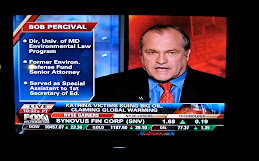
Tomorrow I am launching a new website for my environmental law casebook (Environmental Regulation: Law, Science and Policy). The URL for the site is simply the acronym for the title of the casebook: www.erlsp.com. The site contains comprehensive updates for the material in the 6th edition of the casebook, which has been the most popular environmental law casebook used in U.S. law schools. By creating my own website that I personally maintain I am now freed of dependence on the University of Maryland campus IT department (hurray!), which will enable me to post frequent updates instantly from wherever I am in the world. The new 7th edition of the casebook will be published by Aspen Law and Business in early summer of 2012. Aspen has just launched an electronic version of the casebook, which is available through through Aspen’s SmartBooks program (https://www.brainshark.com/WKLB/vu?pi=zEwzmRA44z2C9Vz0). The 2011-2012 edition of my Statutory and Case Supplement arrived in book stores last week (I saw the first copy at Georgetown’s bookstore even before I received a copy from Aspen).
Aung San Suu Kyi, winner of the 1991 Nobel Peace Prize and long-time leader of Myanmar/Burma’s democratic opposition, has joined a campaign to protest China Power Investments’s construction of the Myistone Dam on the Irrawaddy River. Tension Over Dam Project Shifts Myanmar’s Politics, Wall St. J., Aug. 13, 2011. The NGO Burma Rivers Network leaked a copy of a 945-page environmental impact assessment prepared jointly by Burmese and Chinese scientists in 2009 that recommended that the project be scrapped. The project has been strongly opposed by many Burmese villagers who are being relocated due to its construction. They argue that it will cause enormous environmental damage and social dislocation while largely benefiting Burma’s authoritarian military government by increasing its revenue from cross-border sales of electricity to China.
This week’s Republican presidential debate in Iowa illustrated the bizarre state of environmental politics in the U.S. today. The Republican candidates in the debate (including even former Governor Huntsman, who says “conservation is conservative” and claims to take climate change seriously) decried overregulation and sought to demonize EPA as a voracious, “job-killing” agency bent on regulatory overreach. Yet as attorney John D. Walke of the Natural Resource Defense Council points out on his blog (http://switchboard.nrdc.org/blogs/jwalke/out-of-control_criticism_of_ep.html) , most of EPA’s regulatory actions are mandated by law, many to correct actions by the Bush EPA that were struck down by the courts as illegal. Even as Republicans denounced President Obama as anti-business, on August 9 President Obama announced a landmark agreement supported by the trucking industry and truck manufacturers to require heavy trucks to improve their fuel economy by up to 20% by the 2018 model year. It is estimated that the agreement will save 530 million barrels of oil over the lifetime of trucks built from the 2014 to 2018 model years. The industry groups reportedly were attracted to the initiative because it will harmonize federal and California fuel efficiency standards. Mark Clayton, Cheers All Around as Obama Sets Fuel Efficiency Goals for Big Trucks, Christian Science Monitor, August 9, 2011.
What explains the new anti-environmental orthodoxy where Republican presidential candidates attack each other for previously supporting cap-and-trade programs to control greenhouse gas emissions? Washington Post business columnist Steven Pearlstein blames business leaders for bankrolling what has spun into an out-of-control anti-regulatory campaign. In today’s Washington Post he writes: “When it started out, all you really wanted was to push back against a few meddlesome regulators or shave a point or two off your tax rate, but you were concerned it would look like special-interest rent-seeking. So when the Washington lobbyists came up with the clever idea of launching a campaign against over-regulation and over-taxation, you threw in some money, backed some candidates and financed a few lawsuits.” But then it morphed into “hundreds of millions of the shareholders’ dollars, laundered through once-respected organizations such as the Chamber of Commerce and the National Association of Manufacturers, phony front organizations with innocent-sounding names such as Americans for a Sound Economy, and a burgeoning network of Republic PACs and financing vehicles.” Coupled with the Supreme Court’s Citizens United decision that removed limits on corporate campaign spending, the result was the election of “Frankenpols” who turned what “started out as a reasonable attempt at political rebalancing . . . into a jihad against all regulation, all taxes and all government, waged by right-wing zealots who want to . . . shut down the regulatory agencies that protect you from unscrupulous competitors . . .”. Steven Pearlstein, Who’s To Blame for this Mess? Let’s Start with the Corporate Lobby, Wash. Post, Aug. 14, 2011,at G1.
The prospect for Japan restarting some of its undamaged nuclear reactors dimmed last week with the disclosure by a whistleblower at Kyushu Electric Power Co. that some of Japan’s largest electric companies had collaborated with government officials to stage manage public forums on the issue. Their activities allegedly included organizing phony “astroturf” groups to pack public fora with utility employees, planting questions, and coordinating email drives. The disclosures, which include allegations of document destruction to cover up the campaign, generated considerable public outrage in Japan. Chester Dawson, Scandal Taints Japan Nuclear Sector, Wall St. J., Aug. 13, 2011. Private citizens are now taking their own radiation readings and uploading them on public websites. Hot Concern, The Economist, Aug. 13, 2011, at 39. Last week Tokyo Electric Power, owner of the stricken reactors, began constructing a giant tent around them to contain the spread of radioactive contaminants, even as the Japanese government moved toward shrinking the size of mandatory evacuation areas around the crippled Fukushima Daiichi site. Mitsuru Obe, Japan Moves to Narrow Some Evacuation Areas, Wall St. J., Aug. 10, 2011.
On August 11 the Secretary of Energy’s Advisory Board (SEAB) Shale Gas Production Subcommittee issued a draft 90-day report on the rapidly growing use of hydraulic fracturing (“fracking”) to extract natural gas from shale formations. Bobbie Brown & Ian Urbina, Panel Seeks Stiffer Rules for Drilling of Gas Wells, N.Y. Times, Aug. 11, 2011, at A12. The report recommended measures to reduce the environmental impact of “fracking,” including greater monitoring and public disclosure of information about fracking, new controls on air emissions from fracking operations, the adoption of best management practices in well development and construction and the use of a manifest system for water transfers. A copy of the report is available online at: http://www.shalegas.energy.gov/resources/081111_90_day_report.pdf.
A special advertising supplement to the New York Times sponsored by Rossiskaya Gazeta, the Russian government’s paper of record, profiled the rise of environmental activists in Russia. Vladimir Ruvinsky, Out of the Woods a New Opposition, Russia Beyond the Headlines, Aug. 12, 2011, at 2. The article highlighted the efforts of former suburban working mother Evgenia Chirikova and her lawyer Alexei Navalny to try to stop construction of a road through the Khimki Forest. It noted Chirikova’s concern about the extent to which Russia respects the rule of law in light of numerous attacks on environmental activists. Apparently Russian officials believe that publicizing the work of public interest environmental activists will improve Russia’s image in the U.S.
Yesterday I stopped in a Borders bookstore to observe the progress of the chain’s going-out-of-business sale. The advertised 30% discount already had left the travel section of the store severely depleted of books. The travel book that remained in greatest supply appeared to be a guide for touring Syria - not a surprise in light of current events.
Sunday, August 14, 2011

Monday, August 8, 2011
Japan Nuclear Compensation Fund, Frank-Dodd & Conflict Minerals, UNEP Nigeria Oil Contamination Report (by Bob Percival)
On August 3 the Japanese Parliament passed legislation to create a fund to compensate the victims of the Fukushima Daiichi nuclear accident. Under the legislation the Japense government will make an initial contribution of $26 billion to the fund and other Japanese power companies also will contribute. With most of Japan’s nuclear power plants currently shut down, extraordinary measures to reduce consumption of electricity are being employed in Japan. Momentum seems to be building for keeping the reactors shut down. Last week three top Japanese nuclear regulators were fired by Prime Minister Naoto Kan for being too close to the industry and survivors of the World War II nuclear attacks on Hiroshima and Nagasaki joined the opposition to nuclear power. Martin Fackler, Atomic Bomb Survivors Join Nuclear Power Opposition, N.Y. Times, Aug. 7, 2011, at A11.
The conflict minerals provisions of the Frank-Dodd legislation appear to be having a dramatic impact as exports of tin, tantalum and tungsten from the Congo region have dropped by more than 70% in the last year. The legislation requires companies to certify to the SEC what steps they have taken to ensure that their supply chains for such minerals are not funding armed conflicts in the area. While proponents of transparency initiatives are working to establish certification procedures, apparently many companies simply are opting to acquire their minerals from other parts of the world even if they are more expensive there This allegedly is harming legitimate mineral suppliers from the Congo region. David Aronson, How Congress Devastated Congo, Aug. 8, 2011, at A17.
As mentioned last week, I was interviewed for a story about the legal challenge by foreign airlines in the European Court of Justice to the EU’s requirement that all flights to and from EU countries be subject to limits on greenhouse gas (GHG) emissions. The article appear in the online edition of the New York Times last Tuesday. Lawrence Hurley, Airlines Face Uphill Battle in E.U. Emissions Cases, Legal Experts Say, New York Times, August 2, 2011 (http://www.nytimes.com/gwire/2011/08/02/02greenwire-airlines-face-uphill-battle-in-eu-emissions-cas-9359.html?ref=earth). The European experts interviewed for the article think the legal challenge has very little chance of succeeding.
On August 4 the UN Environment Programme released its long-awaited assessment of oil contamination of the Ogoniland region in Nigeria’ Niger Delta. The report concluded that the contamination from repeated oil spills in the area has caused widespread environmental damage and health risks and could take decades to clean up. The complete report can be downloaded at: http://www.unep.org/nigeria/ A copy of the executive summary is available online at: http://postconflict.unep.ch/publications/OEA/UNEP_OEA_ES.pdf
My former student Brooke O’Hanley, who now lives in California, was in D.C. for a conference last week. Prior to starting law school, Brooke was a pro soccer player for the Carolina Courage when they won the WUSA Championship in 2002. After playing soccer with my son on Monday, Brooke and I went to Nationals park to see Washington beat Atlanta. On Tuesday night we went to the White House for a special tour of the West Wing arranged by my former student Neal Kemkar who now works for CEQ. However we had horrendous luck because a fence jumper caused a security lockdown at the White House that resulted in our tour being canceled. Still it was great to catch up with Neal and Brooke over beers at a nearby watering hole. On August 2 I had lunch with Maryland alum Jacob Scherr, director of Global Strategy and Advocacy for the Natural Resources Defense Council (NRDC). Prior to lunch he gave me a brief tour of NRDC’s new D.C. offices on 15th Street next to the Washington Post and across the street from the Madison Hotel. Jacob is working on preparations for the Rio+20 Earth Summit in June 2012. On Friday I moved into my office at the Georgetown University Law Center where I will be teaching Environmental Law this fall as a visiting professor of law.
The conflict minerals provisions of the Frank-Dodd legislation appear to be having a dramatic impact as exports of tin, tantalum and tungsten from the Congo region have dropped by more than 70% in the last year. The legislation requires companies to certify to the SEC what steps they have taken to ensure that their supply chains for such minerals are not funding armed conflicts in the area. While proponents of transparency initiatives are working to establish certification procedures, apparently many companies simply are opting to acquire their minerals from other parts of the world even if they are more expensive there This allegedly is harming legitimate mineral suppliers from the Congo region. David Aronson, How Congress Devastated Congo, Aug. 8, 2011, at A17.
As mentioned last week, I was interviewed for a story about the legal challenge by foreign airlines in the European Court of Justice to the EU’s requirement that all flights to and from EU countries be subject to limits on greenhouse gas (GHG) emissions. The article appear in the online edition of the New York Times last Tuesday. Lawrence Hurley, Airlines Face Uphill Battle in E.U. Emissions Cases, Legal Experts Say, New York Times, August 2, 2011 (http://www.nytimes.com/gwire/2011/08/02/02greenwire-airlines-face-uphill-battle-in-eu-emissions-cas-9359.html?ref=earth). The European experts interviewed for the article think the legal challenge has very little chance of succeeding.
On August 4 the UN Environment Programme released its long-awaited assessment of oil contamination of the Ogoniland region in Nigeria’ Niger Delta. The report concluded that the contamination from repeated oil spills in the area has caused widespread environmental damage and health risks and could take decades to clean up. The complete report can be downloaded at: http://www.unep.org/nigeria/ A copy of the executive summary is available online at: http://postconflict.unep.ch/publications/OEA/UNEP_OEA_ES.pdf
My former student Brooke O’Hanley, who now lives in California, was in D.C. for a conference last week. Prior to starting law school, Brooke was a pro soccer player for the Carolina Courage when they won the WUSA Championship in 2002. After playing soccer with my son on Monday, Brooke and I went to Nationals park to see Washington beat Atlanta. On Tuesday night we went to the White House for a special tour of the West Wing arranged by my former student Neal Kemkar who now works for CEQ. However we had horrendous luck because a fence jumper caused a security lockdown at the White House that resulted in our tour being canceled. Still it was great to catch up with Neal and Brooke over beers at a nearby watering hole. On August 2 I had lunch with Maryland alum Jacob Scherr, director of Global Strategy and Advocacy for the Natural Resources Defense Council (NRDC). Prior to lunch he gave me a brief tour of NRDC’s new D.C. offices on 15th Street next to the Washington Post and across the street from the Madison Hotel. Jacob is working on preparations for the Rio+20 Earth Summit in June 2012. On Friday I moved into my office at the Georgetown University Law Center where I will be teaching Environmental Law this fall as a visiting professor of law.
Sunday, July 31, 2011
Fuel Economy Accord, Global Fracking, Japan Conservation, EU Aviation GHG Rules, Riders & Huntsman (by Bob Percival)
On Friday July 29 the Obama administration announced an agreement with automakers to support further substantial increases in federal fuel economy standards for new motor vehicles. Thirteen automakers support the proposal gradually to increase the standards to 54.5 miles per gallon (mpg) by 2025. The current fleet average standard is 27.3 mpg, rising to 35.5 mpg by 2016. Significantly, the plan has the support not only of U.S. automakers, but also of many foreign companies, although Volkswagen and Daimler AG declined to support the plan. The deal was sealed when the Obama administration agreed at the last minute to abandon a more ambitious 56.2 mpg target and to revisit the standards mid-way through their implementation to determine if they are too strict or too lenient in light of fuel prices, consumer behavior, and the state of technology. Toyota, General Motors, Ford, Chrysler, Honda, Hyundai, Mazda, Nissan, BMW, Jaguar, Kia, Mitsubishi and Volvo reportedly support the plan. Angela Greiling Keane, Automakers Agree to 54.5 MPG Fuel Economy Rule, Obama Says, Bloomberg Business Week, July 29, 2011. It is estimated that over the life of the program the stronger standards will save 12 billion barrels of oil, reduce CO2 emissions by 6 billion tons, and save consumers an average of $8,200 in fuel purchases over the life of vehicles purchased in 2025. Further details are available online at: http://www.whitehouse.gov/sites/default/files/fuel_economy_report.pdf. This agreement represents a kind of global regulatory negotiation that should help defuse legal challenges to the increase in fuel economy standards.
Eighteen months ago this blog ((Jan. 23, 2009 blog post) reported on a new tactic for opposing the flurry of midnight anti-environmental actions by the outgoing Bush administration. On Dec. 19, 2008 Tim DeChristopher, a University of Utah student protester, spontaneously entered a Bureau of Land Management (BLM) auction of lease for oil drilling on federal lands near Bryce and Canyonlands National Parks. DeChristopher outbid oil companies for 22,500 acres of the leases. Although the auction was later declared illegal due to BLM’s failure to conduct necessary environmental reviews, DeChristopher was prosecuted and convicted for making false statements on the ground that he was not a legitimate bidder. Last week a Utah federal court sentenced DeChristopher to two years in prison and a $10,000 fine. Environmentalist Bill McKibben described the sentence as an “unconscionable” punishment for an act of conscience. “It's as if [Martin Luther] King, who was DeChristopher's age when he launched the Montgomery bus boycott, had been charged with defrauding the bus company.”
On July 27 the Arkansas Oil and Gas Commission ordered a shutdown of some disposal facilities for hydraulic fracturing fluid in the state and a ban on construction of new facilities due to concerns that underground injection of these fluids had contributed to hundreds of small earthquakes that occurred in central Arkansas last year. After a six-month moratorium on new disposal facilities, the Arkansas Geologic Survey found a correlation between the earthquakes and the use of the disposal facilities. Concerns that fracking operations have contributedto earthquakes also are surfacing in Europe, causing delays in fracking operations in Blackpool, England. Guy Chazan, Fracking Pioneers Pierce Europe, Wall St. J., July 28, 2001. In an editorial comparing the fracking boom in Pennsylvania to New York’s more precautionary approach to regulating fracking, the Wall Street Journal denounced New York’s approach as a product of “obsessions of rich, big-city greens [that] explain why parts of upstate New York are the new Appalachia.” A Tale of Two Shale States, Wall St. J., July 26, 2011. On July 28 EPA proposed the first national rules to control emissions of air pollutants from fracking operations. Deborah Solomon & Tennille Tracy, EPA Unveils Air Quality Rules for Natural-Gas Fracking, Wall St. J., July 29, 2011.
Due to public concern about the tsunami-induced nuclear accident in Japan, only 16 of that country’s 54 nuclear power plants are currently in operation. This has dramatically reduced electric power production in Japan, forcing extraordinary conservation measures including setting air conditioners at 82 degrees and shifting auto production to weekends. Surprisingly, consumption of electricity has dropped so substantially that the country has power to spare. Peter Landers, Japan Snaps Back With Less Power, Wall St. J., July 29, 2011, at A1. Mikio Katayama, president of Sharp Electronics, Japan’s largest supplier of solar panels, believes that the post-accident investment climate is much more favorable for renewables. However, he notes that China’s current inventories of solar panels are said to be larger than the world’s entire demand for solar power this year. Juro Osawa, Sharp President Pushes Solar Power in Japan’s Nuclear Wake, Wall St. J., July 25, 2011, at B6.
This week I was interviewed by Greenwire about the fascinating litigation in the European Court of Justice by international airlines challenging the requirement that they participate in the EU’s emissions trading scheme for greenhouse gases (GHGs) beginning on January 1, 2012. The airlines are arguing that the EU has violated international law by attempting to regulate extraterritorial emissions (the regulations apply to emissions from all flights that depart from or arrive in the EU). They maintain that the appropriate vehicle for dealing with the growing problem of GHG emissions from aviation is the Convention on International Civil Aviation, known as the Chicago Convention.
Republicans in the U.S. House of Representatives last week added 39 anti-environmental riders to appropriations legislation for the U.S. EPA and Department of Interior. Leslie Kaufman, House Republicans Try to Curb Environmental Rules, N.Y. Times, July 28, 2011, at A16. But one Republican presidential candidate sought to distance himself from the House’s anti-environmental orgy. Speaking on July 28 to the 2nd Annual Theodore Roosevelt Dinner held by Republicans for Environmental Protection, former U.S. Ambassador to China Jon Huntsman declared that “Conservation is conservative.” Huntsman, who has pointedly refused to join other Republican candidates in reversing their prior support for measures to combat climate change, argued that “science should be driving our discussion” on this issue. Outside the Washington hotel where Huntsman spoke, climate change deniers displayed a digital billboard labeling him “Utah’s Al Gore” while Democrats criticized Huntsman for backing away from his previous support for a regional cap-and-trade program.
On Friday July 29 I attended the Washington Nationals/New York Mets game at Nationals Park with my friend Dan Guttman who is briefly back in the U.S. from China to teach summer courses. The Nationals’ starting pitcher was Chien-Ming Wang from Taiwan, who previously had pitched for the New York Yankees. He has been under contract to the Nationals for the last two years, but unable to pitch in the majors due to injuries. Prior to the game Taiwan’s representative to the U.S. Jason Yuan was on the field to be presented with a Wang jersey by Nationals manager Davey Johnson. Wang gave up four runs in the first inning before pitching well and the Nats lost 8-5, but bounced back to win the next two games agains the Mets. Wang will next pitch for the Nats on Wednesday.
Eighteen months ago this blog ((Jan. 23, 2009 blog post) reported on a new tactic for opposing the flurry of midnight anti-environmental actions by the outgoing Bush administration. On Dec. 19, 2008 Tim DeChristopher, a University of Utah student protester, spontaneously entered a Bureau of Land Management (BLM) auction of lease for oil drilling on federal lands near Bryce and Canyonlands National Parks. DeChristopher outbid oil companies for 22,500 acres of the leases. Although the auction was later declared illegal due to BLM’s failure to conduct necessary environmental reviews, DeChristopher was prosecuted and convicted for making false statements on the ground that he was not a legitimate bidder. Last week a Utah federal court sentenced DeChristopher to two years in prison and a $10,000 fine. Environmentalist Bill McKibben described the sentence as an “unconscionable” punishment for an act of conscience. “It's as if [Martin Luther] King, who was DeChristopher's age when he launched the Montgomery bus boycott, had been charged with defrauding the bus company.”
On July 27 the Arkansas Oil and Gas Commission ordered a shutdown of some disposal facilities for hydraulic fracturing fluid in the state and a ban on construction of new facilities due to concerns that underground injection of these fluids had contributed to hundreds of small earthquakes that occurred in central Arkansas last year. After a six-month moratorium on new disposal facilities, the Arkansas Geologic Survey found a correlation between the earthquakes and the use of the disposal facilities. Concerns that fracking operations have contributedto earthquakes also are surfacing in Europe, causing delays in fracking operations in Blackpool, England. Guy Chazan, Fracking Pioneers Pierce Europe, Wall St. J., July 28, 2001. In an editorial comparing the fracking boom in Pennsylvania to New York’s more precautionary approach to regulating fracking, the Wall Street Journal denounced New York’s approach as a product of “obsessions of rich, big-city greens [that] explain why parts of upstate New York are the new Appalachia.” A Tale of Two Shale States, Wall St. J., July 26, 2011. On July 28 EPA proposed the first national rules to control emissions of air pollutants from fracking operations. Deborah Solomon & Tennille Tracy, EPA Unveils Air Quality Rules for Natural-Gas Fracking, Wall St. J., July 29, 2011.
Due to public concern about the tsunami-induced nuclear accident in Japan, only 16 of that country’s 54 nuclear power plants are currently in operation. This has dramatically reduced electric power production in Japan, forcing extraordinary conservation measures including setting air conditioners at 82 degrees and shifting auto production to weekends. Surprisingly, consumption of electricity has dropped so substantially that the country has power to spare. Peter Landers, Japan Snaps Back With Less Power, Wall St. J., July 29, 2011, at A1. Mikio Katayama, president of Sharp Electronics, Japan’s largest supplier of solar panels, believes that the post-accident investment climate is much more favorable for renewables. However, he notes that China’s current inventories of solar panels are said to be larger than the world’s entire demand for solar power this year. Juro Osawa, Sharp President Pushes Solar Power in Japan’s Nuclear Wake, Wall St. J., July 25, 2011, at B6.
This week I was interviewed by Greenwire about the fascinating litigation in the European Court of Justice by international airlines challenging the requirement that they participate in the EU’s emissions trading scheme for greenhouse gases (GHGs) beginning on January 1, 2012. The airlines are arguing that the EU has violated international law by attempting to regulate extraterritorial emissions (the regulations apply to emissions from all flights that depart from or arrive in the EU). They maintain that the appropriate vehicle for dealing with the growing problem of GHG emissions from aviation is the Convention on International Civil Aviation, known as the Chicago Convention.
Republicans in the U.S. House of Representatives last week added 39 anti-environmental riders to appropriations legislation for the U.S. EPA and Department of Interior. Leslie Kaufman, House Republicans Try to Curb Environmental Rules, N.Y. Times, July 28, 2011, at A16. But one Republican presidential candidate sought to distance himself from the House’s anti-environmental orgy. Speaking on July 28 to the 2nd Annual Theodore Roosevelt Dinner held by Republicans for Environmental Protection, former U.S. Ambassador to China Jon Huntsman declared that “Conservation is conservative.” Huntsman, who has pointedly refused to join other Republican candidates in reversing their prior support for measures to combat climate change, argued that “science should be driving our discussion” on this issue. Outside the Washington hotel where Huntsman spoke, climate change deniers displayed a digital billboard labeling him “Utah’s Al Gore” while Democrats criticized Huntsman for backing away from his previous support for a regional cap-and-trade program.
On Friday July 29 I attended the Washington Nationals/New York Mets game at Nationals Park with my friend Dan Guttman who is briefly back in the U.S. from China to teach summer courses. The Nationals’ starting pitcher was Chien-Ming Wang from Taiwan, who previously had pitched for the New York Yankees. He has been under contract to the Nationals for the last two years, but unable to pitch in the majors due to injuries. Prior to the game Taiwan’s representative to the U.S. Jason Yuan was on the field to be presented with a Wang jersey by Nationals manager Davey Johnson. Wang gave up four runs in the first inning before pitching well and the Nats lost 8-5, but bounced back to win the next two games agains the Mets. Wang will next pitch for the Nats on Wednesday.
Sunday, July 24, 2011
IMO Regulates Vessel Emissions, TEL Journal, Light Bulbs, B.C. Carbon Tax (by Bob Percival)
At its 62nd meeting in London, the Marine Environment Protection Committee (MEPC) of the International Maritime Organization (IMO) adopted important new rules to reduce pollution from ships. The rules are amendments to Annex VI of MARPOL, the International Convention for the Prevention of Pollution from Ships that now has 150 member countries representing nearly all of the world’s shipping. Annex VI governs air pollution from ships. The new rules include an Energy Efficiency Design Index (EEDI) that generally will require new ships above 400 gross tons to reduce their pollution by improving their energy efficiency. Ships built between 2015-2019 will have to be 10% more energy efficient, increasing to 20% for ships built from 2020 to 2024, and 30% for ships built after 2025. To mollify developing countries who objected to the new requirements, it was agreed that such countries can elect to delay compliance by ships flying their flags for between four and six years. All ships will be required to have an International Energy Efficiency Certificate and a Ship Energy Efficiency Management Plan (SEEMP). In an editorial the New York Times praised the regulations as “a good step forward,” while warning that the delayed compliance waiver for developing countries was “a huge loophole.” “Changing Course,” New York Times, July 23, 2011.
I am very pleased to announce that an exciting new Transnational Environmental Law (TEL) journal will go online at the end of this year with a print version being published in April 2012. This peer-reviewed journal is the brainchild of Professors Thijs Etty from VU University Amsterdam and Veerle Heyvaert from the London School of Economics, who will serve as editors-in-chief. TEL, which is being published by Cambridge University Press, represents dramatic confirmation of the growth of global environmental law along the lines of the model repeatedly described in this website. I have agreed to serve on the new journal’s editorial advisory board. The editors notes that “TEL strives for a new generation of environmental scholarship that will bridge geographical boundaries, scholarly styles and generations.” For more information about this journal visit http://journals.cambridge.org/tel
While sharp disputes continue in the U.S. Congress over raising the debt limit and future U.S. spending and tax policy, the battle over more energy efficient light bulbs has assumed the dimensions of a cultural war. On July 22, the U.S. House of Representatives actually voted on an amendment that would have prohibited the federal government from installing or buying compact fluorescent light (CFL) bulbs for congressional offices. Authored by Representative Glenn “GT” Thompson (R-Pa.), the amendment was defeated by a vote of 283-130. Thompson, who actually opposed his party’s efforts to repeal the mandate for more energy efficient light bulbs, argued that incandescent bulbs give off better light, that CFLs are dangerous because they contain mercury, and that their production benefits non-U.S. manufacturers.
British Columbia’s carbon tax appears to be a big success. It has not damaged that province’s booming economy, where unemployment remains below, and economic growth above, the average for the rest of Canada. Nor has the tax, which began at C$10/ton of carbon emissions and will increase to C$30/ton next year, harmed the poor, since the proceeds are rebated back to individual taxpayers and companies in the form of lower taxes. Per captia fuel consumption has declined in British Columbia by 4.5%, significantly more than in the rest of the country. The carbon tax now has broad political support from voters and politicians in British Columbia, even as the province conducts a hard fought referendum on repeal of the harmonized sales tax (HST). “We Have a Winner,” The Economist, July 23, 2011, at 35.
An extraordinarily brutal heat wave gripped the U.S. this week. Years ago scientists were predicting that one consequence of global warming would be far more days when the temperature exceeded 100 degrees Fahrenheit in the Baltimore-/Washington area. The temperature in Baltimore on Friday hit a record 105 degrees . On Friday night Jane Barrett, director of Maryland’s Environmental Law Clinic, and I made our annual outing with our research assistants and clinical fellows to Camden Yards to watch the Orioles play the Los Angeles Angels. Temperature at game time was 100 degrees. To help the fans combat the heat, the Orioles provided free ice and had a “misting tent” set up. The temperature was still over 90 degrees when the game finished with a 6-1 victory for the Angels.
I am very pleased to announce that an exciting new Transnational Environmental Law (TEL) journal will go online at the end of this year with a print version being published in April 2012. This peer-reviewed journal is the brainchild of Professors Thijs Etty from VU University Amsterdam and Veerle Heyvaert from the London School of Economics, who will serve as editors-in-chief. TEL, which is being published by Cambridge University Press, represents dramatic confirmation of the growth of global environmental law along the lines of the model repeatedly described in this website. I have agreed to serve on the new journal’s editorial advisory board. The editors notes that “TEL strives for a new generation of environmental scholarship that will bridge geographical boundaries, scholarly styles and generations.” For more information about this journal visit http://journals.cambridge.org/tel
While sharp disputes continue in the U.S. Congress over raising the debt limit and future U.S. spending and tax policy, the battle over more energy efficient light bulbs has assumed the dimensions of a cultural war. On July 22, the U.S. House of Representatives actually voted on an amendment that would have prohibited the federal government from installing or buying compact fluorescent light (CFL) bulbs for congressional offices. Authored by Representative Glenn “GT” Thompson (R-Pa.), the amendment was defeated by a vote of 283-130. Thompson, who actually opposed his party’s efforts to repeal the mandate for more energy efficient light bulbs, argued that incandescent bulbs give off better light, that CFLs are dangerous because they contain mercury, and that their production benefits non-U.S. manufacturers.
British Columbia’s carbon tax appears to be a big success. It has not damaged that province’s booming economy, where unemployment remains below, and economic growth above, the average for the rest of Canada. Nor has the tax, which began at C$10/ton of carbon emissions and will increase to C$30/ton next year, harmed the poor, since the proceeds are rebated back to individual taxpayers and companies in the form of lower taxes. Per captia fuel consumption has declined in British Columbia by 4.5%, significantly more than in the rest of the country. The carbon tax now has broad political support from voters and politicians in British Columbia, even as the province conducts a hard fought referendum on repeal of the harmonized sales tax (HST). “We Have a Winner,” The Economist, July 23, 2011, at 35.
An extraordinarily brutal heat wave gripped the U.S. this week. Years ago scientists were predicting that one consequence of global warming would be far more days when the temperature exceeded 100 degrees Fahrenheit in the Baltimore-/Washington area. The temperature in Baltimore on Friday hit a record 105 degrees . On Friday night Jane Barrett, director of Maryland’s Environmental Law Clinic, and I made our annual outing with our research assistants and clinical fellows to Camden Yards to watch the Orioles play the Los Angeles Angels. Temperature at game time was 100 degrees. To help the fans combat the heat, the Orioles provided free ice and had a “misting tent” set up. The temperature was still over 90 degrees when the game finished with a 6-1 victory for the Angels.
Monday, July 18, 2011
Attack on Light Bulb Efficiency Mandate, New Indian Environment Minister, IWC Meeting, 7th Circuit Rejects Kiobel (by Bob Percival)
Republicans in the U.S. House of Representatives tried this week to repeal the energy efficiency mandate for light bulbs that was enacted with bipartisan support in the Energy Independence and Security Act of 2007. The Better Use of Light Bulbs (BULB) Act, sponsored by Congressman Joe Barton (R-Tex.), would have repealed the mandate to improve light bulb energy efficiency by 27-29% through 2014 and by 60-70% by 2020. These mandates are expected to phase out highly inefficient incandescent light bulbs that waste 80 percent of their energy in creating heat rather than light. Congressman Fred Upton (R-Ill.), who had sponsored the mandates in 2007, now supported the effort to repeal them. When it was brought up under special rules on July 12 that required two-thirds approval, the repeal effort failed by gaining a majority of only 233-193. Later in the week an appropriations rider that would delay the mandates from January 1 to October 1, 2012 was adopted by voice vote in the House. It would prohibit the federal government from spending any money to enforce the mandates during the next fiscal year. The National Electrical Manufacturers Association opposed efforts to change the mandates because it would penalize companies that have made investments in anticipation of the new rules taking effect.
On July 12 outspoken Indian Minister of Environment and Forests Jairam Ramesh was removed from his position by Indian Prime Minister Manmohan Singh. Press reports suggest that the move was motivated by the Prime Minister’s desire to speed up development projects that Ramesh had placed on hold for failure to comply with environmental requirements. Amol Sharma, India Fires Environment Minister Who Held Up Projects, Wall St. J., July 13, 2011. Succeeding Ramesh as the new Minister of Environment and Forests is Jayanti Natarajan. Ramesh was “promoted” to oversee the cabinet-level Ministry of Rural Development. Environmentalists are cautiously optimistic that Natarajan will prove to be a worthy successor to Ramesh.
Last week the International Whaling Commission (IWC) held its 63rd annual meeting on the Channel Island of Jersey. Fifty-four of the 89 countries that are members of the Commission (with Colombia being the latest to join) were present for the commission of the meeting. The Commission made no changes to the present limits on aboriginal subsistence whaling. It adopted a resolution condemning any actions at sea that create risks to human life and property. The Commission deferred action on a proposal to create a South Atlantic Sanctuary after it became apparent that the necessary support of three-quarters of the voting members was lacking. Next year’s meeting will be held in Panama from June 11 to July 6, 2012, but after that meeting the Commission is likely to meet only once every two years and it may start to hold meetings of the Scientific Committee separately from, and in advance of, the Commission meeting.
Within days of each other, two U.S. Courts of Appeals expressly rejected the conclusion by the Second Circuit in its September 2010 Kiobel decision that corporations cannot violate the law of nations and thus are immune from liability under the Alien Tort Statute (ATS). As noted in last week’s blog post (July 11), on July 8 the D.C. Circuit ruled in Doe v. ExxonMobil Corp., No. 09-7125, that corporations can be held liable under the ATS for aiding and abetting actions by governments in violation of the law of nations. On July 11 the Seventh Circuit, in an opinion written by Judge Richard Posner, also rejected Kiobel. In Flomo v. Firestone Natural Rubber Co., No. 10-3675 (7th Cir.), the court recognized that the issue of corporate liability under the ATS “seems to have been left open” by the U.S. Supreme Court “in an enigmatic footnote in Sosa, 542 U.S. at 732 n.20.” However, Judge Posner then expressly rejected Kiobel’s premise that because corporations have never been prosecuted for violating customary international law there cannot be any principle of customary international law that binds a corporation. First, he noted that the allied powers used customary international law to dissolve German corporations that had assisted the Nazi war effort. Second, he concluded that even if such prosecutions have been rare, that does not mean that corporations are exempt from customary international law. While opining that corporate liability would be extended too far if companies were strictly liable for anything that an employee did in a developing country, Posner stated that there was no problem holding companies liable for violations “directed, encouraged or condoned at the corporate defendant’s decisionmaking level.” (The plaintiffs in Flomo allege that Firestone used child labor on its rubber plantations in violation of customary international law). Judge Posner declared that an argument that it would be “bad for business” to hold corporations liable under the ATS, was “irrelevant, but not obvious,” noting that companies that do not use child labor are hurt when competitors are not held liable for doing so. However, the Seventh Circuit panel ultimately concluded that there was insufficient evidence to hold Firestone liable for violation of customary international law.
On July 12 outspoken Indian Minister of Environment and Forests Jairam Ramesh was removed from his position by Indian Prime Minister Manmohan Singh. Press reports suggest that the move was motivated by the Prime Minister’s desire to speed up development projects that Ramesh had placed on hold for failure to comply with environmental requirements. Amol Sharma, India Fires Environment Minister Who Held Up Projects, Wall St. J., July 13, 2011. Succeeding Ramesh as the new Minister of Environment and Forests is Jayanti Natarajan. Ramesh was “promoted” to oversee the cabinet-level Ministry of Rural Development. Environmentalists are cautiously optimistic that Natarajan will prove to be a worthy successor to Ramesh.
Last week the International Whaling Commission (IWC) held its 63rd annual meeting on the Channel Island of Jersey. Fifty-four of the 89 countries that are members of the Commission (with Colombia being the latest to join) were present for the commission of the meeting. The Commission made no changes to the present limits on aboriginal subsistence whaling. It adopted a resolution condemning any actions at sea that create risks to human life and property. The Commission deferred action on a proposal to create a South Atlantic Sanctuary after it became apparent that the necessary support of three-quarters of the voting members was lacking. Next year’s meeting will be held in Panama from June 11 to July 6, 2012, but after that meeting the Commission is likely to meet only once every two years and it may start to hold meetings of the Scientific Committee separately from, and in advance of, the Commission meeting.
Within days of each other, two U.S. Courts of Appeals expressly rejected the conclusion by the Second Circuit in its September 2010 Kiobel decision that corporations cannot violate the law of nations and thus are immune from liability under the Alien Tort Statute (ATS). As noted in last week’s blog post (July 11), on July 8 the D.C. Circuit ruled in Doe v. ExxonMobil Corp., No. 09-7125, that corporations can be held liable under the ATS for aiding and abetting actions by governments in violation of the law of nations. On July 11 the Seventh Circuit, in an opinion written by Judge Richard Posner, also rejected Kiobel. In Flomo v. Firestone Natural Rubber Co., No. 10-3675 (7th Cir.), the court recognized that the issue of corporate liability under the ATS “seems to have been left open” by the U.S. Supreme Court “in an enigmatic footnote in Sosa, 542 U.S. at 732 n.20.” However, Judge Posner then expressly rejected Kiobel’s premise that because corporations have never been prosecuted for violating customary international law there cannot be any principle of customary international law that binds a corporation. First, he noted that the allied powers used customary international law to dissolve German corporations that had assisted the Nazi war effort. Second, he concluded that even if such prosecutions have been rare, that does not mean that corporations are exempt from customary international law. While opining that corporate liability would be extended too far if companies were strictly liable for anything that an employee did in a developing country, Posner stated that there was no problem holding companies liable for violations “directed, encouraged or condoned at the corporate defendant’s decisionmaking level.” (The plaintiffs in Flomo allege that Firestone used child labor on its rubber plantations in violation of customary international law). Judge Posner declared that an argument that it would be “bad for business” to hold corporations liable under the ATS, was “irrelevant, but not obvious,” noting that companies that do not use child labor are hurt when competitors are not held liable for doing so. However, the Seventh Circuit panel ultimately concluded that there was insufficient evidence to hold Firestone liable for violation of customary international law.
Monday, July 11, 2011
9th IUCN Academy Colloquium, David Getches, D.C. Circuit Rejects Kiobel, Australia Carbon Tax (by Bob Percival)
I returned to the U.S. over the weekend after participating in the 9th annual Colloquium of the IUCN Academy of Environmental Law in South Africa. The Colloquium was held from July 3-7 at the Mpekweni Beach Resort east of Port Elizabeth on the southern coast of South Africa. The theme of this year’s colloquium was “Water and the Law: Towards Sustainability.” In keeping with the theme, the conference featured several days of heavy rain, broken by brief bursts of sunshine, something that was supposedly quite unusual in this very dry part of South Africa. Despite the remote location, by my count the Colloquium had 150 participants from 30 countries.
On July 4 I chaired a session of the conference on “Climate Change and Water Management,” which featured presentations by Linda Malone from William & Mary, Antia Foerster from the University of Melbourne, Jose Juan Gonzalez from the Universidad Autonoma Metropolitana in Mexico City, and Rob Fowler from the University of South Australia. On Tuesday night the colloquium featured a winetasting of South African wines. I contributed a bottle of Zevenwacht gewurztraminer that I had purchased while doing a one-day tour of the Cape Winelands in Stellenbosch, Franschhoek and Paarl on the previous Saturday.
Shortly before I was due to give my talk on Wednesday on “Transboundary Water Management and the Emergence of Global Environmental Law,” I was greatly shocked and saddened to learn of the death of David Getches, dean of the University of Colorado School of Law. David was one of the real giants in the field of environmental law and also a truly wonderful human being. I last communicated with him in March when he very kindly invited me to visit at Colorado next year. Although my prior commitments precluded such a visit, I shared with him my fondness for the Rocky Mountains born from many childhood summers in Rocky Mountain National Park. I thought it only fitting at the start of my presentation to the Colloquium to pay tribute to David. The audience from all over the world immediately responded by expressing their enormous regard for him.
I have attended eight of the nine Academy Colloquium (all but the first one that was held in Shanghai in 2003 on very short notice) and once again it was a terrific experience. Nearly 100 high quality presentations were made and the opportunities to network and exchange views with environmental law scholars from all over the world were invaluable. The U.S. law schools represented at the Colloquium included Maryland, Lewis & Clark, Pace, Widener, Willamette, and William & Mary. More are likely to participate in the 10th Colloquium, which will be held next year from July 1-5 at the University of Maryland School of Law. The theme for next year’s colloquium, which will be held one month after the Rio+20 Earth Summit will be “Global Environmental Law at a Crossroads.” For more information about this theme and the 10th Colloquium visit: http://www.law.umaryland.edu/iucnael2012.
At the closing plenary session I was invited to give a presentation on plans for the 10th Colloquium. We are planning several great events, including an opening dinner at the National Aquarium, a crab cruise on Baltimore Harbor during the 4th of July fireworks celebration, our program’s annual winetasting event, and a field trip to an Orioles game (schedule permitting). In addition we will be hosting an international environmental law film festival. To show how easy it is to make a film, while at the 9th Colloquium I made a film trailer promoting the 10th Colloquium that I showed during the closing plenary. It features clips of participants in the 9th Colloquium urging everyone to “Come to Maryland” in more than 20 different languages. A copy of the trailer is online at: http://law.umaryland.edu/iucnael2012.
The schedule for future colloquia was announced at the 9th Colloquium. In 2013 the 11th Colloquium will be held at the University of the South Pacific in Vanuatu. In 2014 the 12th Colloquium will be held at the University of Taragona in Catalonia. On the way to the airport on July 8, I joined many conference participants in a terrific tour of Addo Elephant National Park near Port Elizabeth. We saw lots of wildlife, including elephants, antelope, zebras, eiland, and warthogs. Photos of my trip to Africa, including the visit to Robben Island, the tour of the Cape WInelands and the trip to Addo Elephant National Park, are available online at: http://gallery.me.com/rperci#100879
On July 9 the U.S. Court of Appeals for the D.C. Circuit held that corporations can be held liable for violations of the law of nations. In Doe v. ExxonMobil Corp., No. 09-7125 (D.C. Cir. July 9, 2011), the court by a 2-1 vote rejected the Second Circuit’s Kiobel decision that had held that corporations are incapable of violating the law of nations. Plaintiffs in the case inclued villagers from the Aceh territory of Indonesia who alleged that Exxon’s security forces committed murder, torture, sexual assault, battery, and false imprisonment in violation of the Alien Tort Statute (ATS) and the Torture Victim Protection Act (TVPA), and various common law torts. In an opinion by Judge Rogers, joined by Judge Tatel, the court held that “neither the text, history, nor purpose of the ATS supports corporate immunity for torts based on heinous conduct allegedly committed by its agents in violation of the law of nations.” The court affirmed the dismissal of the TVPA claims, but reversed the district court’s holding that the plaintiffs lacked prudential standing to bring their non-federal tort claims. Judge Kavanaugh dissented. The decision creates a clear conflict with the Second Circuit’s Kiobel decision, making it increasingly likely that the Supreme Court will have to decide whether corporations can be held liable under the Alien Tort Statute for violating the law of nations. The decision also rejects the trial court’s suggestion that non-resident aliens automatically lack prudential standing to sue because they are not within the zone of interests protected by U.S. law. A copy of the decision is available online at: http://www.cadc.uscourts.gov/internet/opinions.nsf/567B411C56CD7A6F852578C700513FC8/$file/09-7125-1317431.pdf
On July 10 Australian Prime Minister Julia Gillard proposed a carbon tax of 23 Australian dollars per ton on Australia’s top 500 emitters of greenhouse gases. The tax, which would go into effect in mid-2012, would increase by 2.5% per year until 2015 when a market-based emissions trading scheme will go into effect.
On July 4 I chaired a session of the conference on “Climate Change and Water Management,” which featured presentations by Linda Malone from William & Mary, Antia Foerster from the University of Melbourne, Jose Juan Gonzalez from the Universidad Autonoma Metropolitana in Mexico City, and Rob Fowler from the University of South Australia. On Tuesday night the colloquium featured a winetasting of South African wines. I contributed a bottle of Zevenwacht gewurztraminer that I had purchased while doing a one-day tour of the Cape Winelands in Stellenbosch, Franschhoek and Paarl on the previous Saturday.
Shortly before I was due to give my talk on Wednesday on “Transboundary Water Management and the Emergence of Global Environmental Law,” I was greatly shocked and saddened to learn of the death of David Getches, dean of the University of Colorado School of Law. David was one of the real giants in the field of environmental law and also a truly wonderful human being. I last communicated with him in March when he very kindly invited me to visit at Colorado next year. Although my prior commitments precluded such a visit, I shared with him my fondness for the Rocky Mountains born from many childhood summers in Rocky Mountain National Park. I thought it only fitting at the start of my presentation to the Colloquium to pay tribute to David. The audience from all over the world immediately responded by expressing their enormous regard for him.
I have attended eight of the nine Academy Colloquium (all but the first one that was held in Shanghai in 2003 on very short notice) and once again it was a terrific experience. Nearly 100 high quality presentations were made and the opportunities to network and exchange views with environmental law scholars from all over the world were invaluable. The U.S. law schools represented at the Colloquium included Maryland, Lewis & Clark, Pace, Widener, Willamette, and William & Mary. More are likely to participate in the 10th Colloquium, which will be held next year from July 1-5 at the University of Maryland School of Law. The theme for next year’s colloquium, which will be held one month after the Rio+20 Earth Summit will be “Global Environmental Law at a Crossroads.” For more information about this theme and the 10th Colloquium visit: http://www.law.umaryland.edu/iucnael2012.
At the closing plenary session I was invited to give a presentation on plans for the 10th Colloquium. We are planning several great events, including an opening dinner at the National Aquarium, a crab cruise on Baltimore Harbor during the 4th of July fireworks celebration, our program’s annual winetasting event, and a field trip to an Orioles game (schedule permitting). In addition we will be hosting an international environmental law film festival. To show how easy it is to make a film, while at the 9th Colloquium I made a film trailer promoting the 10th Colloquium that I showed during the closing plenary. It features clips of participants in the 9th Colloquium urging everyone to “Come to Maryland” in more than 20 different languages. A copy of the trailer is online at: http://law.umaryland.edu/iucnael2012.
The schedule for future colloquia was announced at the 9th Colloquium. In 2013 the 11th Colloquium will be held at the University of the South Pacific in Vanuatu. In 2014 the 12th Colloquium will be held at the University of Taragona in Catalonia. On the way to the airport on July 8, I joined many conference participants in a terrific tour of Addo Elephant National Park near Port Elizabeth. We saw lots of wildlife, including elephants, antelope, zebras, eiland, and warthogs. Photos of my trip to Africa, including the visit to Robben Island, the tour of the Cape WInelands and the trip to Addo Elephant National Park, are available online at: http://gallery.me.com/rperci#100879
On July 9 the U.S. Court of Appeals for the D.C. Circuit held that corporations can be held liable for violations of the law of nations. In Doe v. ExxonMobil Corp., No. 09-7125 (D.C. Cir. July 9, 2011), the court by a 2-1 vote rejected the Second Circuit’s Kiobel decision that had held that corporations are incapable of violating the law of nations. Plaintiffs in the case inclued villagers from the Aceh territory of Indonesia who alleged that Exxon’s security forces committed murder, torture, sexual assault, battery, and false imprisonment in violation of the Alien Tort Statute (ATS) and the Torture Victim Protection Act (TVPA), and various common law torts. In an opinion by Judge Rogers, joined by Judge Tatel, the court held that “neither the text, history, nor purpose of the ATS supports corporate immunity for torts based on heinous conduct allegedly committed by its agents in violation of the law of nations.” The court affirmed the dismissal of the TVPA claims, but reversed the district court’s holding that the plaintiffs lacked prudential standing to bring their non-federal tort claims. Judge Kavanaugh dissented. The decision creates a clear conflict with the Second Circuit’s Kiobel decision, making it increasingly likely that the Supreme Court will have to decide whether corporations can be held liable under the Alien Tort Statute for violating the law of nations. The decision also rejects the trial court’s suggestion that non-resident aliens automatically lack prudential standing to sue because they are not within the zone of interests protected by U.S. law. A copy of the decision is available online at: http://www.cadc.uscourts.gov/internet/opinions.nsf/567B411C56CD7A6F852578C700513FC8/$file/09-7125-1317431.pdf
On July 10 Australian Prime Minister Julia Gillard proposed a carbon tax of 23 Australian dollars per ton on Australia’s top 500 emitters of greenhouse gases. The tax, which would go into effect in mid-2012, would increase by 2.5% per year until 2015 when a market-based emissions trading scheme will go into effect.
Belated July 3 Post -IUCN South Africa Colloquium, Eskom Protest, Supreme Court Wetlands Case, German Nuclear Power Phaseout (by Bob Percival)
This post was written on July 3, but due to poor internet connections in rural South Africa, it was not posted until July 11.
I am in South Africa now for the annual Colloquium of the IUCN Academy of Environmental Law. This year for the first time the Colloquium is being co-sponsored by four South African law schools - North-West University, the University of Cape Town, the University of Kwa-Zulu Natal, and the University of Witwatersrand. It is being held in a rather remote part of the South African coast at the Mpekweni Beach Resort several hours east of Port Elizabeth. I arrived at the resort today after spending three days in Cape Town. (Because of the poor internet access, I was not able to post this report until July 11).
While in Cape Town I visited Robben Island, the island several miles off the coast where Nelson Mandela was imprisoned for 18 years. A high-speed ferry takes one-half hour to reach the island where visitors are placed on buses for a tour. Now that the prison has closed down, the island is somewhat of a nature reserve and we spotted a group of penguins from the bus. The bus stopped at important sites on the island including the limestone quarry where Mandela and his fellow political prisoners were forced to work for many years. The bus then ends up at the prison where visitors are given a tour led by a former inmate who also was a political prisoner. The tour includes a visit to the cell where Mandela was held. Shortly after I got off the bus I heard someone call my name and discovered that it was Charles Di Leva, chief counsel for the Environmental and International Law Unit of the World Bank. Charles and other World Bank officials were in Cape Town for the 2011 Climate Investment Fund (CIF) Partnership Forum, hosted by the African Development Bank. At the CIF Forum, which was held at the convention center across the street from the hotel where I was staying, new initiatives were announced to promote renewable energy development in Africa, including a concentrated solar powerplant in Morocco.
The day before I arrived in South Africa, Greenpeace protested the construction of two large new coal-fired powerplant by South African electric utility Eskom by dumping three truckloads of coal in front of Eskom’s headquarters in Johannesburg. Eskom is planning to build the 4,800-megawatt (MW) Kusile plant and the 4,788 MV Medupi plant. The World Bank has helped fund the project, which has been heavily criticized by environmentalists for increasing greenhouse gas emissions. Eskom and the Bank argue that South Africa needs to exploit its extensive coal resources and that the plants will use highly efficient super-critical combustion technology. Greenpeace activists argue that Eskom has made only token investments in renewable energy, including 100 MV of wind power and 100 MV of solar. South Africa, which is growing rapidly, relies on coal for 90% of its electrical generation. While Eskom had hoped to build more nuclear powerplants, the Japanese nuclear accident has cast those plans into doubt.
On July 1 the U.S. Court of Appeals for the D.C. Circuit dismissed a challenge to the Obama administration’s effort to kill Yucca Mountain, Nevada as a repository for storing the country’s high-level radioactive waste. The court held that the lawsuit brought by three state and local governmental units in South Carolina and Washington state was not ripe for judicial review until the Nuclear Regulatory Commission (NRC) takes final action that is judicially reviewable. In Re Aiken County, No. 10-1050 (D.C. Cir. July 1, 2011). Even though the U.S. Department of Energy has withdrawn its license application for Yucca Mountain on orders from President Obama, the judges noted that since the NRC is an independent agency, the final decision on the matter rests with the NRC and not the president.
On June 27, the last day of its October 2010 Term, the U.S. Supreme Court agreed to decide another environmental case. The Court granted review in Sackett v. U.S. Environmental Protection Agency, No. 10-1062. The case involves the question whether a failure to grant a hearing to challenge a wetlands determination under §404 of the Clean Water Act prior to EPA’s issuance of a compliance order is a violation of the Administrative Procedure Act (APA) or a denial of due process. The Ninth Circuit had upheld a district court decision that the Clean Water Act precludes pre-enforcement review of compliance orders. The Court’s decision to review the case is somewhat surprising in light of its refusal to hear a similar issue involving pre-enforcement review under CERCLA (see June 12 blog post).
On June 30 the German Parliament overwhelmingly approved the government’s plan to shut down all the country’s nuclear powerplants by the year 2022. The vote in favor of the government’s plan was 513-79. The decision represents a dramatic change in the government’s policy, which previously had supported extending the operating life of existing nuclear powerplants until this year’s nuclear accident in Japan. It will require Germany to be even more aggressive in the development of renewable energy sources. By 2020 Germany plans to generate 35% of its energy from hydro, wind, solar and biogas projects.
I am in South Africa now for the annual Colloquium of the IUCN Academy of Environmental Law. This year for the first time the Colloquium is being co-sponsored by four South African law schools - North-West University, the University of Cape Town, the University of Kwa-Zulu Natal, and the University of Witwatersrand. It is being held in a rather remote part of the South African coast at the Mpekweni Beach Resort several hours east of Port Elizabeth. I arrived at the resort today after spending three days in Cape Town. (Because of the poor internet access, I was not able to post this report until July 11).
While in Cape Town I visited Robben Island, the island several miles off the coast where Nelson Mandela was imprisoned for 18 years. A high-speed ferry takes one-half hour to reach the island where visitors are placed on buses for a tour. Now that the prison has closed down, the island is somewhat of a nature reserve and we spotted a group of penguins from the bus. The bus stopped at important sites on the island including the limestone quarry where Mandela and his fellow political prisoners were forced to work for many years. The bus then ends up at the prison where visitors are given a tour led by a former inmate who also was a political prisoner. The tour includes a visit to the cell where Mandela was held. Shortly after I got off the bus I heard someone call my name and discovered that it was Charles Di Leva, chief counsel for the Environmental and International Law Unit of the World Bank. Charles and other World Bank officials were in Cape Town for the 2011 Climate Investment Fund (CIF) Partnership Forum, hosted by the African Development Bank. At the CIF Forum, which was held at the convention center across the street from the hotel where I was staying, new initiatives were announced to promote renewable energy development in Africa, including a concentrated solar powerplant in Morocco.
The day before I arrived in South Africa, Greenpeace protested the construction of two large new coal-fired powerplant by South African electric utility Eskom by dumping three truckloads of coal in front of Eskom’s headquarters in Johannesburg. Eskom is planning to build the 4,800-megawatt (MW) Kusile plant and the 4,788 MV Medupi plant. The World Bank has helped fund the project, which has been heavily criticized by environmentalists for increasing greenhouse gas emissions. Eskom and the Bank argue that South Africa needs to exploit its extensive coal resources and that the plants will use highly efficient super-critical combustion technology. Greenpeace activists argue that Eskom has made only token investments in renewable energy, including 100 MV of wind power and 100 MV of solar. South Africa, which is growing rapidly, relies on coal for 90% of its electrical generation. While Eskom had hoped to build more nuclear powerplants, the Japanese nuclear accident has cast those plans into doubt.
On July 1 the U.S. Court of Appeals for the D.C. Circuit dismissed a challenge to the Obama administration’s effort to kill Yucca Mountain, Nevada as a repository for storing the country’s high-level radioactive waste. The court held that the lawsuit brought by three state and local governmental units in South Carolina and Washington state was not ripe for judicial review until the Nuclear Regulatory Commission (NRC) takes final action that is judicially reviewable. In Re Aiken County, No. 10-1050 (D.C. Cir. July 1, 2011). Even though the U.S. Department of Energy has withdrawn its license application for Yucca Mountain on orders from President Obama, the judges noted that since the NRC is an independent agency, the final decision on the matter rests with the NRC and not the president.
On June 27, the last day of its October 2010 Term, the U.S. Supreme Court agreed to decide another environmental case. The Court granted review in Sackett v. U.S. Environmental Protection Agency, No. 10-1062. The case involves the question whether a failure to grant a hearing to challenge a wetlands determination under §404 of the Clean Water Act prior to EPA’s issuance of a compliance order is a violation of the Administrative Procedure Act (APA) or a denial of due process. The Ninth Circuit had upheld a district court decision that the Clean Water Act precludes pre-enforcement review of compliance orders. The Court’s decision to review the case is somewhat surprising in light of its refusal to hear a similar issue involving pre-enforcement review under CERCLA (see June 12 blog post).
On June 30 the German Parliament overwhelmingly approved the government’s plan to shut down all the country’s nuclear powerplants by the year 2022. The vote in favor of the government’s plan was 513-79. The decision represents a dramatic change in the government’s policy, which previously had supported extending the operating life of existing nuclear powerplants until this year’s nuclear accident in Japan. It will require Germany to be even more aggressive in the development of renewable energy sources. By 2020 Germany plans to generate 35% of its energy from hydro, wind, solar and biogas projects.
Subscribe to:
Posts (Atom)