The latest round of pre-Copenhagen climate negotiations concluded a week ago in Bangkok with little progress. But this week there were signs that developing countries were showing some flexibility in the negotiations by dropping their insistence on mandated technology transfer. EU climate negotiators reported that their developing country counterparts are now embracing the concept of joint development of low carbon technologies rather than mandated technology transfer. FIona Harvey, Hopes for Deal on Climate Boosted, Financial Times, Oct. 16, 2009, at 3.
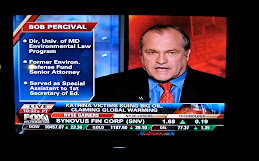
Two new court decisions surfaced this week on common law nuisance actions brought due to harm caused by climate change. In Comer v. Murphy Oil USA, the U.S. Court of Appeals for the Fifth Circuit held that a district court had erred when it dismissed on political question grounds a lawsuit alleging that greenhouse gas (GHG) emissions by oil and chemical companies had added to the ferocity of Hurricane Katrina. The court held that the case did not pose a nonjusticiable political question and that the plaintiffs had standing in light of the U.S Supreme Court’s decision in Massachusetts v. EPA. While the case returns to the district court for trial, it remains a decided longshot on the merits in light of the attenuated causal link between climate change and Hurricane Katrina. Indeed Judge Davis in a special concurrence opined that the case could be dismissed for failure to allege facts that would establish that GHG emissions from the defendants were a proximate cause of injury from Hurricane Katrina. A copy of the decision is available on my parallel blog at www.globalenvironmentallaw,com
A federal district judge in San Francisco has reached a contrary result in a lawsuit by an arctic village seeking damages from oil companies for harmed caused by climate change. In Native Village of Kivalina v. ExxonMobil Corporation, Judge Saundra Armstrong held that while the international dimensions of climate change did not render the case nonjusticiable, the absence of judicially discoverable and manageable standards for holding defendants liable for damages did make it a nonjusticiable political question. The judge also held that the plaintiffs lacked standing in light of the attentuated causal change they alleged between the defendants’ conduct and their injuries. Plaintiffs have vowed to appeal this case to the Ninth Circuit which may well reverse in light of the rejection of the political question grounds by the Second (Connecticut v. American Electric Power) and Fifth (Comer v. Murphy Oil USA) Circuits. A copy of the decision is available on my parallel blog at www.globalenvironmentallaw.com
Debate over cap-and-trade legislation in the U.S. Senate is causing a split within the business community. On Friday Washington Post business reporter Steven Pearlstein wrote a devastating column attacking the campaign the U.S. Chamber of Commerce is waging against the legislation as not representing the true views of the Chamber’s members who are far less than the 3 million it claims. See Steven Pearlstein, U.S. Chamber of Commerce Reaping the WHirlwind, Washington Post, Oct. 16, 2009, at A16.
Support for cap-and-trade legislation is reportedly growing with indications that some Republican Senators may support the legislation if it includes additional subsidies to revive the U.S. nuclear power industry. The German government also reportedly is reconsidering its decision to phase out nuclear power. Last week the U.S. Nuclear Regulatory Commission (NRC) rejected the design of the new AP1000 reactor due to concerns about the adequacy of the containment vessel, which may increase public confidence in the NRC’s efforts to ensure the safety of new reactors.
On Friday I had lunch in Washington D.C. with Professor Wei Guihong, the deputy dean of the Department of Law at the Beijing Forestry University. I first met Professor Wei two and a half years ago when she participated in the Globalizing Clinical Education conference held at the University of Maryland School of Law. She has been spending the last year in the United States researching public interest law at Georgetown University, working primarily with Professor Philip Schrag. Professor Wei had just returned from a conference in Portland, Oregon. She will return to Beijing at the end of the month and she is interested in promoting the use of conservation easements in China. She also is interested in biodiversity and forestry protection law.
Monday, October 19, 2009

Monday, October 12, 2009
Venezuela Trip & Maryland Conference
Early this morning I returned to D.C. after a whirlwind weekend trip to Venezuela. I took my son Richard, who was born in Paraguay, to see the Paraguayan national soccer team play its penultimate World Cup Soccer qualifier against Venezuela. Richard is a freshman at Florida International University in Miami and we planned this trip several weeks ago, thinking it would be a critical game for the Paraguayan team. However, because Paraguay upset Argentina last month it already had qualified to play in the World Cup, which will be held this summer in South Africa. Thus, the game meant much more to Venezuela, the only country in South American that has never appeared in the World Cup.
On Thursday I flew to Miami and picked up my son and we flew to Caracas on Friday morning. We spent Friday night visiting with my friend Xu Kezhu, whose husband is the Chinese consul to Venezuela. Professor Xu was the deputy director of the Center for Legal Assistance to Pollution Victims (CLAPV) in Beijing until she moved to Venezuela in January to join her husband. I last saw her in December where she took me to see the world famous Venezuelan Youth Symphony perform at the National Center for Performing Arts (“the Egg”) in Beijing. On Friday night Professor Xu and her husband took Richard and I to see a Chinese shadow puppet troupe, the Folkloric Arts Company of Shaanxi, perform at the Teatro Municipal in Caracas. After their terrific performance, we went backstage and met the performers who gave us an opportunity to try manipulating their shadow puppets. We then fought a horrendous traffic jam in downtown Caracas before meeting Professor Xu’s son who joined us for dinner at a local Chinese restaurant. It was really great to see Professor Xu and to meet her family. She told me that she plans to return to public interest environmental law practice in China when her husband’s posting is completed in a few years.
Two weeks ago it was announced that the Venezuela/Paraguay soccer game would be played in Puerto Ordaz, Venezuela, nearly 400 miles southeast of Caracas. As a result on Saturday we had to leave Caracas at 6AM to embark on a 9-hour trip to Puerto Ordaz. When we stopped for gas I was astonished to discover how cheap it is due to nationalization of the oil companies and heavy government subsidies. A liter of 91 octane gasoline costs .079 bolivares, the equivalent of less than .30 bolivares per gallon or less than 14 cents in US currency at the official exchange rate of 2.14 bolivares per dollar (or less than 6 cents at the black market rate of more than 5 bolivares per dollar). High octane (95) premium gasoline cost .009 bolivares per liter or less than 16 cents per gallon (official exchange rate, 6.5 cents at the black market rate). While Venezuelans seem proud that their gasoline costs less than water, it results in their country being the refuge of gas guzzlers that generate considerable pollution and enormous traffic jams in Caracas. No one will be crazy enough to buy a hybrid vehicle when you can fill your tank up for less than a dollar. With everyone invested in a culture of astonishingly cheap gasoline, eliminating the subsidies would be an enormous political challenge.
After hours of traversing southeastern Venezuela, crossing the Orinoco River we finally arriving in Puerto Ordaz, a town near the Guyana border. We proceeded directly to Cachamay Stadium where we arrived two hours before gametime. Every seat already was occupied by more than 40,000 wildly cheering Venezuelan fans. My son wisely opted to buy a Venezuelan hat so as not to attract unwanted attention as one of the very few Paraguayan fans present (he declared that the hat would be a present for a classmate from Venezuela after he returned to Miami). He did find a Paraguay jersey that he purchased, but he wisely returned it to the car rather than wearing it into the stadium. Paraguay played brilliantly, but the game was scoreless at halftime. In the second half Paraguay scored two goals and their goalie blocked a Venezuelan penalty kick, sending local supporters of the “vinotinto” (the charming nickname for the Venezuelan team because they wear burgundy jerseys the color of red wine) streaming for the exits. A few came back when Venezuela scored a late goal, but the game ended with a 2-1 Paraguay victory, putting the Paraguayan Guarani in a tie for first place in the South American group. After staying overnight in Puerto Ordaz, we left at 4AM on Sunday to return to Caracas in time for our flight back to the U.S. Photos of our trip are available online at: http://gallery.me.com/rperci#100567
Prior to leaving for Venezuela on Thursday, I attend the opening of a terrific conference on “Regulatory Dsyfunction” that our Environmental Law Program co-sponsored with the Center for Progressive Reform. The conference was organized by my colleague Rena Steinzor, president of the Center for Progressive Reform, which has done a fabulous job of promoting the public interest in regulatory issues. The conference included representatives of EPA, OSHA and the Consumer Products Safety Commission (CPSC), who discussed the problems confronting each of their agencies, prominent academics and environmental activists. Because I had to teach a class and catch a plane, I was only able to attend a brief part of the conference. While the discussions were off the record, what struck me was the extent to which international issues have affected each agency. OSHA has wrestled with how to harmonize hazard communication requirements with international standards. The CPSC is dealing with a host of issues raised by imports of hazardous consumer products. EPA is considering TSCA reform against the backdrop of the EU’s path-breaking REACH program that will generate far more test data on chemicals than EPA currently has. Globalization is clearly having a profound effect on regulatory policy.
On Thursday I flew to Miami and picked up my son and we flew to Caracas on Friday morning. We spent Friday night visiting with my friend Xu Kezhu, whose husband is the Chinese consul to Venezuela. Professor Xu was the deputy director of the Center for Legal Assistance to Pollution Victims (CLAPV) in Beijing until she moved to Venezuela in January to join her husband. I last saw her in December where she took me to see the world famous Venezuelan Youth Symphony perform at the National Center for Performing Arts (“the Egg”) in Beijing. On Friday night Professor Xu and her husband took Richard and I to see a Chinese shadow puppet troupe, the Folkloric Arts Company of Shaanxi, perform at the Teatro Municipal in Caracas. After their terrific performance, we went backstage and met the performers who gave us an opportunity to try manipulating their shadow puppets. We then fought a horrendous traffic jam in downtown Caracas before meeting Professor Xu’s son who joined us for dinner at a local Chinese restaurant. It was really great to see Professor Xu and to meet her family. She told me that she plans to return to public interest environmental law practice in China when her husband’s posting is completed in a few years.
Two weeks ago it was announced that the Venezuela/Paraguay soccer game would be played in Puerto Ordaz, Venezuela, nearly 400 miles southeast of Caracas. As a result on Saturday we had to leave Caracas at 6AM to embark on a 9-hour trip to Puerto Ordaz. When we stopped for gas I was astonished to discover how cheap it is due to nationalization of the oil companies and heavy government subsidies. A liter of 91 octane gasoline costs .079 bolivares, the equivalent of less than .30 bolivares per gallon or less than 14 cents in US currency at the official exchange rate of 2.14 bolivares per dollar (or less than 6 cents at the black market rate of more than 5 bolivares per dollar). High octane (95) premium gasoline cost .009 bolivares per liter or less than 16 cents per gallon (official exchange rate, 6.5 cents at the black market rate). While Venezuelans seem proud that their gasoline costs less than water, it results in their country being the refuge of gas guzzlers that generate considerable pollution and enormous traffic jams in Caracas. No one will be crazy enough to buy a hybrid vehicle when you can fill your tank up for less than a dollar. With everyone invested in a culture of astonishingly cheap gasoline, eliminating the subsidies would be an enormous political challenge.
After hours of traversing southeastern Venezuela, crossing the Orinoco River we finally arriving in Puerto Ordaz, a town near the Guyana border. We proceeded directly to Cachamay Stadium where we arrived two hours before gametime. Every seat already was occupied by more than 40,000 wildly cheering Venezuelan fans. My son wisely opted to buy a Venezuelan hat so as not to attract unwanted attention as one of the very few Paraguayan fans present (he declared that the hat would be a present for a classmate from Venezuela after he returned to Miami). He did find a Paraguay jersey that he purchased, but he wisely returned it to the car rather than wearing it into the stadium. Paraguay played brilliantly, but the game was scoreless at halftime. In the second half Paraguay scored two goals and their goalie blocked a Venezuelan penalty kick, sending local supporters of the “vinotinto” (the charming nickname for the Venezuelan team because they wear burgundy jerseys the color of red wine) streaming for the exits. A few came back when Venezuela scored a late goal, but the game ended with a 2-1 Paraguay victory, putting the Paraguayan Guarani in a tie for first place in the South American group. After staying overnight in Puerto Ordaz, we left at 4AM on Sunday to return to Caracas in time for our flight back to the U.S. Photos of our trip are available online at: http://gallery.me.com/rperci#100567
Prior to leaving for Venezuela on Thursday, I attend the opening of a terrific conference on “Regulatory Dsyfunction” that our Environmental Law Program co-sponsored with the Center for Progressive Reform. The conference was organized by my colleague Rena Steinzor, president of the Center for Progressive Reform, which has done a fabulous job of promoting the public interest in regulatory issues. The conference included representatives of EPA, OSHA and the Consumer Products Safety Commission (CPSC), who discussed the problems confronting each of their agencies, prominent academics and environmental activists. Because I had to teach a class and catch a plane, I was only able to attend a brief part of the conference. While the discussions were off the record, what struck me was the extent to which international issues have affected each agency. OSHA has wrestled with how to harmonize hazard communication requirements with international standards. The CPSC is dealing with a host of issues raised by imports of hazardous consumer products. EPA is considering TSCA reform against the backdrop of the EU’s path-breaking REACH program that will generate far more test data on chemicals than EPA currently has. Globalization is clearly having a profound effect on regulatory policy.
Sunday, October 4, 2009
Justice & Global Economy Program, Chinese Scholar, Senate GHG Bill and EPA GHG Regulations
On Saturday afternoon I participated in a program on “Justice and the Global Economy” to mark the inauguration of Maryland’s new law dean Phoebe Haddon. More than 500 people attended the program which was held at the spectacular new student center on our campus in downtown Baltimore. The audience included prominent members of the Maryland legal and governmental communities and many of Dean Haddon’s former colleagues from Temple University.
The program featured talks by Dean Haddon, Congressman Elijah Cummings, and a keynote address by U.S. Trade Representative Ron Kirk. Kirk explained why global trade is important to the U.S. economy, noting that 95 percent of all the world’s consumers live outside of the U.S. Prior to his address I made a presentation on environmental justice and the global economy as part of a panel with Hogan & Hartson partner Louis Lebowitz and my colleague Shruti Rana. I noted that environmental groups split over trade liberalization with some believing it would encourage production to move to countries with lax environmental standards, generating pressure to relax domestic environmental regulation. Other environmentalists believed that free trade agreements created an opportunity to establish new institutions to highlight lax enforcement of environmental standards in other countries. While trade liberalization has produced mixed results to date, I argued that it would be crucial to achieve consensus at Copenhagen on a new global regime of controls on greenhouse gas (GHG) emissions that satisfies the legitimate concerns of developing countries without sparking renewed protectionism.
On Wednesday Professor Zhang Shijun from Shandong University arrived at Maryland to begin a year serving as a visiting environmental law scholar. Just hours after arriving in Maryland, Professor Zhang and I attended a reception for visiting faculty which gave him an opportunity to introduce himself to my colleagues. On Wednesday afternoon he attended my Environmental Law class and on Wednesday evening my assistant Suzann Langrall hosted a wonderful dinner for him at her home near campus. Suzann is helping to organize a trip to China that we will be taking with our environmental law students and alums during spring break next March. On Tuesday we hosted an informational session for people interested in the trip where we showed photos and video from the previous Maryland law trip to China in March 2008.
On Wednesday Senators Barbara Boxer and John Kerry, chairs of the Senate Environment and Foreign Relations committees respectively, unveiled draft legislation to be considered in the Senate this fall that would cap and reduce GHG emissions. They proposed GHG reductions somewhat more ambitious than those approved by the House of Representatives in June. Their proposal has many details that remained to be specified, including how emissions allowances would be distributed. On the same day EPA Administrator Lisa Jackson announced that she had approved a notice of proposed regulations to regulate under the Clean Air Act GHG emissions from sources that emit more than 25,000 tons per year. The proposed regulations, which are available online at: http://www.epa.gov/nsr/documents/GHGTailoringProposal.pdf, are likely to put more pressure on Congress to approve its own program to control GHG emissions. However, later in the week Obama climate and energy czar Carol Browner expressed the view that it was unlikely that there will be sufficient time for Congress to agree on new GHG control legislation prior to the Copenhagen conference in December.
Today marked the end of the Major League Baseball regular season, except for a one-day playoff that will be held in Minnesota on Tuesday between the Twins and the Detroit Tigers. The team I root for, the Washington Nationals, became the first team in baseball history to both start a season with seven straight losses and to end it with seven straight wins. On Saturday morning I was delighted to attend our law school’s annual 1L softball tournament where more than 200 students from each of the ten first year small sections competed. Congratulations to Professor Deborah Hellman’s Section G, which won the tournament.
The program featured talks by Dean Haddon, Congressman Elijah Cummings, and a keynote address by U.S. Trade Representative Ron Kirk. Kirk explained why global trade is important to the U.S. economy, noting that 95 percent of all the world’s consumers live outside of the U.S. Prior to his address I made a presentation on environmental justice and the global economy as part of a panel with Hogan & Hartson partner Louis Lebowitz and my colleague Shruti Rana. I noted that environmental groups split over trade liberalization with some believing it would encourage production to move to countries with lax environmental standards, generating pressure to relax domestic environmental regulation. Other environmentalists believed that free trade agreements created an opportunity to establish new institutions to highlight lax enforcement of environmental standards in other countries. While trade liberalization has produced mixed results to date, I argued that it would be crucial to achieve consensus at Copenhagen on a new global regime of controls on greenhouse gas (GHG) emissions that satisfies the legitimate concerns of developing countries without sparking renewed protectionism.
On Wednesday Professor Zhang Shijun from Shandong University arrived at Maryland to begin a year serving as a visiting environmental law scholar. Just hours after arriving in Maryland, Professor Zhang and I attended a reception for visiting faculty which gave him an opportunity to introduce himself to my colleagues. On Wednesday afternoon he attended my Environmental Law class and on Wednesday evening my assistant Suzann Langrall hosted a wonderful dinner for him at her home near campus. Suzann is helping to organize a trip to China that we will be taking with our environmental law students and alums during spring break next March. On Tuesday we hosted an informational session for people interested in the trip where we showed photos and video from the previous Maryland law trip to China in March 2008.
On Wednesday Senators Barbara Boxer and John Kerry, chairs of the Senate Environment and Foreign Relations committees respectively, unveiled draft legislation to be considered in the Senate this fall that would cap and reduce GHG emissions. They proposed GHG reductions somewhat more ambitious than those approved by the House of Representatives in June. Their proposal has many details that remained to be specified, including how emissions allowances would be distributed. On the same day EPA Administrator Lisa Jackson announced that she had approved a notice of proposed regulations to regulate under the Clean Air Act GHG emissions from sources that emit more than 25,000 tons per year. The proposed regulations, which are available online at: http://www.epa.gov/nsr/documents/GHGTailoringProposal.pdf, are likely to put more pressure on Congress to approve its own program to control GHG emissions. However, later in the week Obama climate and energy czar Carol Browner expressed the view that it was unlikely that there will be sufficient time for Congress to agree on new GHG control legislation prior to the Copenhagen conference in December.
Today marked the end of the Major League Baseball regular season, except for a one-day playoff that will be held in Minnesota on Tuesday between the Twins and the Detroit Tigers. The team I root for, the Washington Nationals, became the first team in baseball history to both start a season with seven straight losses and to end it with seven straight wins. On Saturday morning I was delighted to attend our law school’s annual 1L softball tournament where more than 200 students from each of the ten first year small sections competed. Congratulations to Professor Deborah Hellman’s Section G, which won the tournament.
Sunday, September 27, 2009
AEP Decision, UN Climate Summit, G-20 Meeting, Chevron Ecuador Arbitration Claim & ABA SEER Conference
On Monday the U.S. Court of Appeals for the Second Circuit finally released its decision in Connecticut v. American Electric Power, a case that had been argued in June 2006. The court by a vote of 2-0 reversed a district court’s decision that had dismissed a common law nuisance action by states and land trusts against six utilties operating powerplants who contribute 10 percent of U.S. greenhouse gas (GHG) emissions. The court held that the claim that the utilities had caused a public nuisance by contributing to global warming and climate change did not raise a nonjusticiable political question and was not preempted by the federal Clean Air Act. The third judge who had been on the panel was Sonya Sotomayor, now a Justice of the U.S. Supreme Court. I had previously noted that her elevation to the court could require the case to be reargued if the other two judges did not agree. While the decision was 137 pages long, given the agreement on the outcome by the other two judges (one appointed by President George H.W. Bush and the other by President George W. Bush), it is hard to see why it took them so long to decide the case, which raises the interesting question whether Judge Sotomayor agreed with them. One certainly can understand why she would not have wanted the decision to come out before her confirmation, regardless of which way she would have voted, because it would make climate change a flashpoint issue at her confirmation hearings.
The court’s holding that the case did not raise a nonjusticiable political question was widely expected because the district court’s decision seemed to use this doctrine as an excuse to avoid deciding a difficult case. By holding also that the Clean Air Act does not preempt the federal common law of nuisance for GHG emissions by stationary sources because EPA has not regulated them yet, the decision is likely to increase pressure on both EPA and Congress to act to do so.
The United Nations General Assembly held a Climate Summit on Tuesday September 22. Nearly 100 world leaders attended the Summit whose objective was “to mobilize the political will and vision needed to reach an ambitious agreed outcome based on science at the UN climate talks in Copenhagen.” While there was broad agreement on the importance of the Copenhagen negotiations, there were no significant breakthroughs in terms of new commitments to reduce GHG emissions or to provide financial assistance to help developing countries do so. President Obama and Chinese President Hu Jintao joined other leaders in summarizing the many things their countries are doing to reduce the growth of GHG emissions with Hu pledging to reduce the carbon intensity of Chinese economic growth, but not committing to any limits on total Chinese emissions. EU leaders expressed frustration with the failure of the U.S. Senate to act more quickly on cap-and-trade legislation that has passed the House.
On Thursday and Friday leaders of the G-20 countries met in Pittsburgh. While the revelation of the secret Iranian nuclear facility stole much of the show, the leaders did consider a U.S. proposal to phase out subsidies for fossil fuel use. It is estimated that elimination of such subsidies, which are estimated to cost the largest developing countries such as China, India, Russia, South Africa and Iran $310 billion per year, could reduce GHG emissions by 10 to 12 percent. While some of these subsidies are viewed as politically necessary to help the poor meet their energy needs, Indonesia is being held up as a model for replacing the subsidies with direct cash payments to the poor to eliminate their tilt toward fossil fuel use. The final conference communiqué, which can be viewed at http://www.pittsburghsummit.gov/mediacenter/129639.htm calls for further investigation of this initiative and a report at the next G-20 summit.
On Wednesday September 23, the Chevron Corporation announced that it had filed an international arbitration claim against the government of Ecuador in the Permanent Court of Arbitration in the Hague. Chevron bases its claim on what it calls the Ecuadoran government’s “exploitation” of the lawsuit filed by residents of the Oriente region f or environmental damage caused by oil drilling. Chevron is asking the tribunal to enforce its 1998 cleanup agreement with Petroecuador and a bilateral U.S.-Ecuador investment treaty. While Chevron’s move was widely expected, most observers thought it would not occur until after the litigation against the company was concluded in the Ecuadoran courts. Chevron, which initially fought to remove the case from the U.S. courts, now claims that it has no choice because “Ecuador’s judicial system is incapable of functioning independently of political influence.” Ecuadoran attorney general Diego Garcia rejected Chevron’s effort to impugn the integrity of the Ecuadoran judiciary and noted that the plaintiffs in the lawsuit before the Ecuadoran court are not parties to the arbitration proceeding Chevron has initiated in the Hague.
On Friday I moderated a panel on “Climate Change and Other Hot Clean Air Act Issues” at the American Bar Association’s annual fall conference of the Section on Environment, Energy and Resources (SEER) Law. Former EPA general counsel Roger Martella introduced me and I then introduced the panel consisting of former EPA Deputy Administrator Bob Sussman, Bill Becker (president of the National Association of Clean Air Agencies), Environmental Defense Fund General Counsel Jim Tripp and ExxonMobil environmental counsel Clara Poffenberger. Rather than having lengthy presentations from each panelist, we used a roundtable format where I raised a set of issues and asked each panelist to respond. Bob Sussman, who is now a senior policy adviser to EPA Administrator Lisa Jackson, gave EPA’s position, then Bill explained the views of state regulators, while Jim represented the environmental community and Clara reflected the views of an oil company that has been one of the leading skeptics on climate change issues. It made for a lively discussion as we did three rounds focusing on EPA’s actions to regulate GHG emissions, the cap-and-trade legislation in Congress, and EPA’s efforts to control mercury emissions, interstate air pollution and ground level ozone. The panelists then responded to written questions submitted by the audience.
The court’s holding that the case did not raise a nonjusticiable political question was widely expected because the district court’s decision seemed to use this doctrine as an excuse to avoid deciding a difficult case. By holding also that the Clean Air Act does not preempt the federal common law of nuisance for GHG emissions by stationary sources because EPA has not regulated them yet, the decision is likely to increase pressure on both EPA and Congress to act to do so.
The United Nations General Assembly held a Climate Summit on Tuesday September 22. Nearly 100 world leaders attended the Summit whose objective was “to mobilize the political will and vision needed to reach an ambitious agreed outcome based on science at the UN climate talks in Copenhagen.” While there was broad agreement on the importance of the Copenhagen negotiations, there were no significant breakthroughs in terms of new commitments to reduce GHG emissions or to provide financial assistance to help developing countries do so. President Obama and Chinese President Hu Jintao joined other leaders in summarizing the many things their countries are doing to reduce the growth of GHG emissions with Hu pledging to reduce the carbon intensity of Chinese economic growth, but not committing to any limits on total Chinese emissions. EU leaders expressed frustration with the failure of the U.S. Senate to act more quickly on cap-and-trade legislation that has passed the House.
On Thursday and Friday leaders of the G-20 countries met in Pittsburgh. While the revelation of the secret Iranian nuclear facility stole much of the show, the leaders did consider a U.S. proposal to phase out subsidies for fossil fuel use. It is estimated that elimination of such subsidies, which are estimated to cost the largest developing countries such as China, India, Russia, South Africa and Iran $310 billion per year, could reduce GHG emissions by 10 to 12 percent. While some of these subsidies are viewed as politically necessary to help the poor meet their energy needs, Indonesia is being held up as a model for replacing the subsidies with direct cash payments to the poor to eliminate their tilt toward fossil fuel use. The final conference communiqué, which can be viewed at http://www.pittsburghsummit.gov/mediacenter/129639.htm calls for further investigation of this initiative and a report at the next G-20 summit.
On Wednesday September 23, the Chevron Corporation announced that it had filed an international arbitration claim against the government of Ecuador in the Permanent Court of Arbitration in the Hague. Chevron bases its claim on what it calls the Ecuadoran government’s “exploitation” of the lawsuit filed by residents of the Oriente region f or environmental damage caused by oil drilling. Chevron is asking the tribunal to enforce its 1998 cleanup agreement with Petroecuador and a bilateral U.S.-Ecuador investment treaty. While Chevron’s move was widely expected, most observers thought it would not occur until after the litigation against the company was concluded in the Ecuadoran courts. Chevron, which initially fought to remove the case from the U.S. courts, now claims that it has no choice because “Ecuador’s judicial system is incapable of functioning independently of political influence.” Ecuadoran attorney general Diego Garcia rejected Chevron’s effort to impugn the integrity of the Ecuadoran judiciary and noted that the plaintiffs in the lawsuit before the Ecuadoran court are not parties to the arbitration proceeding Chevron has initiated in the Hague.
On Friday I moderated a panel on “Climate Change and Other Hot Clean Air Act Issues” at the American Bar Association’s annual fall conference of the Section on Environment, Energy and Resources (SEER) Law. Former EPA general counsel Roger Martella introduced me and I then introduced the panel consisting of former EPA Deputy Administrator Bob Sussman, Bill Becker (president of the National Association of Clean Air Agencies), Environmental Defense Fund General Counsel Jim Tripp and ExxonMobil environmental counsel Clara Poffenberger. Rather than having lengthy presentations from each panelist, we used a roundtable format where I raised a set of issues and asked each panelist to respond. Bob Sussman, who is now a senior policy adviser to EPA Administrator Lisa Jackson, gave EPA’s position, then Bill explained the views of state regulators, while Jim represented the environmental community and Clara reflected the views of an oil company that has been one of the leading skeptics on climate change issues. It made for a lively discussion as we did three rounds focusing on EPA’s actions to regulate GHG emissions, the cap-and-trade legislation in Congress, and EPA’s efforts to control mercury emissions, interstate air pollution and ground level ozone. The panelists then responded to written questions submitted by the audience.
Sunday, September 20, 2009
Climate Summit, Trafigura Settlement & Environmental Education in Tibet
Last week the Sixty-Fourth Session of the United Nations General Assembly convened in New York. On Tuesday September 22nd UN Secretary General Ban Ki-moon is convening a Summit on Climate Change. According to the UN “[t]he objective of the Summit is to create a broader political vision of the urgency for action, and to mobilize the political will needed to reach an agreed outcome at the United Nations Climate Change Conference in Copenhagen this December.” Leaders of the major countries of the world also will meet in Pittsburgh this week for the latest G-20 conference where climate issues will be part of the discussions.
With the December Copenhagen conference rapidly approaching, concerns are being voiced that it may already be too late to reach any truly comprehensive global agreement at Copenhagen on post-Kyoto GHG emissions controls. As climate legislation continues to be subject to delays in the Senate, many people also are becoming pessimistic about the prospects for climate legislation being adopted in Congress this year. I had lunch on Friday in Washington with one of the key participants in the Congressional debate over climate legislation who predicted that if things do not change substantially no legislation will be adopted this year. The protracted debate over health care reform certainly has sapped some of the energy that otherwise would have been devoted to passing climate legislation. Negotiations on both domestic legislation and a new international agreement have been difficult, but this is not unexpected given the difficulty of mobilizing collective action to address problems of such vast temporal and geographic scope as climate change.
Despite growing gloom and doom, one optimistic note is that the U.S. already is making substantial progress in reducing its GHG emissions. In an article in today’s Washington Post, Lester Brown, president of the Earth Policy Institute who normally is not a big optimist on environmental matters, notes that the U.S. already has reduced its carbon emissions by 9 percent over the last two years and that it is poised to make even further cuts due to the rapid growth of alternative energy sources and improvements in U.S. energy efficiency. Lester R. Brown, On Energy We’re Finally Walking the Walk, Washington Post, Sept. 20, 2009 (http://www.washingtonpost.com/wp-dyn/content/article/2009/09/18/AR2009091801143.html). While much of this reduction is due to the economic downturn, it may persist if trends toward improving energy efficiency and investments in renewable energy sources are sustained. Of course, that will depend in part on the future price of oil and whether regulations are adopted that effectively put a price on carbon emissions. Earlier this month Credit Suisse Securities noted that wholesale demand for electricity in the U.S. declined a whopping 15.3 percent in the second quarter of 2009 compared to 2008. Credit Suisse is predicting that 2009 overall will feature a 2.8 percent decline in electricity demand in the U.S., the largest drop since World War II.
This week the British oil trading firm Trafigura abruptly offered to settle a $160 million class action brought in London on behalf of 31,000 residents of the Ivory Coast allegedly harmed by the company’s dumping of hundreds of tons of toxic waste in Abidjan in August 2006. The company previously had been forced to clean up the waste at a cost of $200 million, but thousands of residents of Abidjan claimed that exposure to the waste had caused severe health problems and even some deaths. The case against Trafigura had been scheduled to go to trial in Britain on October 6. Trafigura had blamed the waste dumping on an “independent contractor” and had aggressively threatened to bring libel actions against media outlets who published reports favorable to the claimants. Last Wednesday the Guardian newspaper revealed emails allegedly showing efforts by Trafigura to cover up its involvement in the waste dumping. Trafigura then announced that it had reached a nearly $50 million settlement with attorneys for the plaintiffs. While attorneys for the plaintiffs expressed approval of the settlement, Greenpeace argued that the company still should be prosecuted for manslaughter for deaths caused by the waste dumping.
On Friday afternoon I had drinks with Tashi Rabgey, director of the University of Virginia’s Center for Tibetan Studies. Tashi, a former Rhodes Scholar who is the daughter of a Tibetan monk, is interested in partnering with educational institutions in China to develop environmental education programs in Tibet. I promised to discuss her ideas with Chinese environmental law professors during my trip to China at the end of next month. This week I received confirmation that the paper I am co-authoring with Zhang Jingjing, China country director for the Public Interest Law Initiative, has been accepted for presentation at the IUCN Academy of Environmental Law’s annual colloquium in Wuhan the first week in November.
With the December Copenhagen conference rapidly approaching, concerns are being voiced that it may already be too late to reach any truly comprehensive global agreement at Copenhagen on post-Kyoto GHG emissions controls. As climate legislation continues to be subject to delays in the Senate, many people also are becoming pessimistic about the prospects for climate legislation being adopted in Congress this year. I had lunch on Friday in Washington with one of the key participants in the Congressional debate over climate legislation who predicted that if things do not change substantially no legislation will be adopted this year. The protracted debate over health care reform certainly has sapped some of the energy that otherwise would have been devoted to passing climate legislation. Negotiations on both domestic legislation and a new international agreement have been difficult, but this is not unexpected given the difficulty of mobilizing collective action to address problems of such vast temporal and geographic scope as climate change.
Despite growing gloom and doom, one optimistic note is that the U.S. already is making substantial progress in reducing its GHG emissions. In an article in today’s Washington Post, Lester Brown, president of the Earth Policy Institute who normally is not a big optimist on environmental matters, notes that the U.S. already has reduced its carbon emissions by 9 percent over the last two years and that it is poised to make even further cuts due to the rapid growth of alternative energy sources and improvements in U.S. energy efficiency. Lester R. Brown, On Energy We’re Finally Walking the Walk, Washington Post, Sept. 20, 2009 (http://www.washingtonpost.com/wp-dyn/content/article/2009/09/18/AR2009091801143.html). While much of this reduction is due to the economic downturn, it may persist if trends toward improving energy efficiency and investments in renewable energy sources are sustained. Of course, that will depend in part on the future price of oil and whether regulations are adopted that effectively put a price on carbon emissions. Earlier this month Credit Suisse Securities noted that wholesale demand for electricity in the U.S. declined a whopping 15.3 percent in the second quarter of 2009 compared to 2008. Credit Suisse is predicting that 2009 overall will feature a 2.8 percent decline in electricity demand in the U.S., the largest drop since World War II.
This week the British oil trading firm Trafigura abruptly offered to settle a $160 million class action brought in London on behalf of 31,000 residents of the Ivory Coast allegedly harmed by the company’s dumping of hundreds of tons of toxic waste in Abidjan in August 2006. The company previously had been forced to clean up the waste at a cost of $200 million, but thousands of residents of Abidjan claimed that exposure to the waste had caused severe health problems and even some deaths. The case against Trafigura had been scheduled to go to trial in Britain on October 6. Trafigura had blamed the waste dumping on an “independent contractor” and had aggressively threatened to bring libel actions against media outlets who published reports favorable to the claimants. Last Wednesday the Guardian newspaper revealed emails allegedly showing efforts by Trafigura to cover up its involvement in the waste dumping. Trafigura then announced that it had reached a nearly $50 million settlement with attorneys for the plaintiffs. While attorneys for the plaintiffs expressed approval of the settlement, Greenpeace argued that the company still should be prosecuted for manslaughter for deaths caused by the waste dumping.
On Friday afternoon I had drinks with Tashi Rabgey, director of the University of Virginia’s Center for Tibetan Studies. Tashi, a former Rhodes Scholar who is the daughter of a Tibetan monk, is interested in partnering with educational institutions in China to develop environmental education programs in Tibet. I promised to discuss her ideas with Chinese environmental law professors during my trip to China at the end of next month. This week I received confirmation that the paper I am co-authoring with Zhang Jingjing, China country director for the Public Interest Law Initiative, has been accepted for presentation at the IUCN Academy of Environmental Law’s annual colloquium in Wuhan the first week in November.
Sunday, September 13, 2009
French Carbon Tax, EU Climate Assistance Plan, Global Lead Prices, NY Sea Level Rise
On Thursday French President Nicolas Sarkozy announced that France will impose a carbon tax effective on January 1, 2010. The tax will initially be set at a level of €17 (approximately $25) per ton for emissions of CO2 from the burning of fossil fuels. For each gallon of gasoline the tax would amount to approximately 26 cents in U.S. dollars. In announcing plans for the carbon tax, Sarkozy argued that “We cannot keep on taxing labor, taxing capital and ignore taxes on pollution.” The tax still must be approved by the French Parliament, but this is not considered to be a difficult hurdle. With the tax France will join the ranks of Finland and Sweden who introduced taxes on greenhouse gas (GHG) emissions in the 1990s. French environmentalists reportedly were dismayed that the tax was not higher. A report commissioned by the French government had recommended a carbon tax of €32 per ton that would increase by 5 percent per year until it reached €100 in the year 2030. The lower level of the tax is believed to be a response to consumer opposition to the tax, though Sarkozy announced that rebates would be provided to offset the impact on lower income groups. Sarkozy coupled the announcement of plans for the tax with a call on the European Union to impose carbon taxes on imports from countries who do not agree to reduce GHG emissions.
This week the European Union (EU) unveiled a plan to provide €15 billion per year in assistance to developing countries to help them reduce their GHG emissions. Joshua Chaffin & Ed Crooks, EU Sets out €11 Billion Climate Change Aid Plan, FInancial Times, September 9, 2009. The EU estimates that developing countries will need €100 billion per year to reduce their GHG emissions, but China’s estimates just for its own costs are more than four times larger than that. Particularly controversial was a suggestion that climate change aid from the EU may be paid for by reducing other aid that developed countries otherwise would provided to the developing world.
After soaring in response to China’s temporary shutdown of several large lead smelters, the price of lead plunged 12 percent last week on global markets. Lead closed at $2,115/ton after hitting $2,511/ton on Tuesday, an increase of 151 percent this year. It is estimated that the Chinese shutdowns will keep only approximately 60,000 tons of lead off global markets, less than 2 percent of total Chinese production. Total Chinese production of lead is expected to be 3.14 million tons in 2009.
For a fascinating report on the options New York City is considering to respond to sea level rise, see Robert Lee Holtz, New York City Braces for Risk of Higher Seas, Wall Street Journal, Sept. 11, 2009, at A15. Reviewing forecasts from various international research teams, the report notes that the city could be subject to faster sea level rise than in other parts of the world due to water density and ocean currents. Researchers are debating whether New York should consider constructing storm surge barriers to protect its low-lying port, financial district, subways and power grid.
No need to read the following paragraphs unless you follow the Washington Nationals. I am currently in Miami where I have been visiting my son who is in college here and also watching the Nats take two out of three from the Florida Marlins. On Friday I watched the Nats win their first game of the season at Landshark Stadium, a crushing blow to Marlins hopes of gaining on the Phillies for the division lead. There were probably less than a dozen Nats fans here, but we were treated politely by the Marlins fans. On Sunday my son and I had one odd encounter with a Marlins intern who offered us a free Marlins jersey if we gave him one of the Nats hats we were wearing. We refused - apparently they wanted to do a between innings stunt where they tore up a Nats cap, but none were available for sale at Landshark (my son was wearing his own custom designed Nats hat that says “D.C. Chillin’” on the back).
As the Marlins await the opening of their new stadium in 2012, Landshark Stadium (the stadium’s name has changed several times over the years - now it is named for a niche beer) is even less appealing than RFK was in the final years the Nats played there In a true Miami twist, they passed out bingo cards on Friday night and put bingo numbers up on the scoreboard between innings. Unlike the wholesome Nat Pack, the Marlins Mermaids look like a Las Vegas production number even doing bumps and grinds during the singing of “Take Me Out to the Ballgame.” Despite their diminished fan base, the Marlins have their own version of the Redskins‘ Hoggettes (the Manatees - see http://florida.marlins.mlb.com/fla/fan_forum/manatees.jsp) . It was exciting to see Ian Desmond continue his torrid Nats debut with 5 hits in his first five at bats here (I had to take a photo of the scoreboard when it displayed his batting average of .778) and to see Justin Maxwell and Pete Orr get their first home runs of the year. I must be good luck for the Nats because they have won both road series I attended (in Yankee Stadium and here) despite having a horrendous 21-50 road record overall.
This week the European Union (EU) unveiled a plan to provide €15 billion per year in assistance to developing countries to help them reduce their GHG emissions. Joshua Chaffin & Ed Crooks, EU Sets out €11 Billion Climate Change Aid Plan, FInancial Times, September 9, 2009. The EU estimates that developing countries will need €100 billion per year to reduce their GHG emissions, but China’s estimates just for its own costs are more than four times larger than that. Particularly controversial was a suggestion that climate change aid from the EU may be paid for by reducing other aid that developed countries otherwise would provided to the developing world.
After soaring in response to China’s temporary shutdown of several large lead smelters, the price of lead plunged 12 percent last week on global markets. Lead closed at $2,115/ton after hitting $2,511/ton on Tuesday, an increase of 151 percent this year. It is estimated that the Chinese shutdowns will keep only approximately 60,000 tons of lead off global markets, less than 2 percent of total Chinese production. Total Chinese production of lead is expected to be 3.14 million tons in 2009.
For a fascinating report on the options New York City is considering to respond to sea level rise, see Robert Lee Holtz, New York City Braces for Risk of Higher Seas, Wall Street Journal, Sept. 11, 2009, at A15. Reviewing forecasts from various international research teams, the report notes that the city could be subject to faster sea level rise than in other parts of the world due to water density and ocean currents. Researchers are debating whether New York should consider constructing storm surge barriers to protect its low-lying port, financial district, subways and power grid.
No need to read the following paragraphs unless you follow the Washington Nationals. I am currently in Miami where I have been visiting my son who is in college here and also watching the Nats take two out of three from the Florida Marlins. On Friday I watched the Nats win their first game of the season at Landshark Stadium, a crushing blow to Marlins hopes of gaining on the Phillies for the division lead. There were probably less than a dozen Nats fans here, but we were treated politely by the Marlins fans. On Sunday my son and I had one odd encounter with a Marlins intern who offered us a free Marlins jersey if we gave him one of the Nats hats we were wearing. We refused - apparently they wanted to do a between innings stunt where they tore up a Nats cap, but none were available for sale at Landshark (my son was wearing his own custom designed Nats hat that says “D.C. Chillin’” on the back).
As the Marlins await the opening of their new stadium in 2012, Landshark Stadium (the stadium’s name has changed several times over the years - now it is named for a niche beer) is even less appealing than RFK was in the final years the Nats played there In a true Miami twist, they passed out bingo cards on Friday night and put bingo numbers up on the scoreboard between innings. Unlike the wholesome Nat Pack, the Marlins Mermaids look like a Las Vegas production number even doing bumps and grinds during the singing of “Take Me Out to the Ballgame.” Despite their diminished fan base, the Marlins have their own version of the Redskins‘ Hoggettes (the Manatees - see http://florida.marlins.mlb.com/fla/fan_forum/manatees.jsp) . It was exciting to see Ian Desmond continue his torrid Nats debut with 5 hits in his first five at bats here (I had to take a photo of the scoreboard when it displayed his batting average of .778) and to see Justin Maxwell and Pete Orr get their first home runs of the year. I must be good luck for the Nats because they have won both road series I attended (in Yankee Stadium and here) despite having a horrendous 21-50 road record overall.
Monday, September 7, 2009
Ecuador Recusal, Climate Negotiations, Renewable Energy Investments, EU Incandescent Bulb Ban & IUCN Academy
On Friday Juan Nuñez, the Ecuadoran judge presiding over the trial of the long-running lawsuit against Chevron for oil contamination of the Oriente region, recused himself from the case after Chevron released video that the company claimed showed the judge was committed to ruling against the oil company. In the video, which was posted on Chevron’s website, the judge reportedly refuses to reveal the verdict several times, but then responds “yes, sir” to a question Chevron claims was an inquiry as to whether Chevron will lose the lawsuit. There also reportedly is a discussion of how remediation funds Chevron would be ordered to pay will be spent and a suggestion that some could be used to pay off government officials. The video was covertly filmed by an Ecuadoran former contractor for Chevron who the oil company claims was acting entirely independently. While the judge claimed the video had been doctored and denied that he had prejudged the case, he was asked to recuse himself by Washington Pezantes, the attorney general of Ecuador. The quick recusal suggests that the Ecuadoran judiciary appreciates the importance of the case and the likely battle that would follow efforts to enforce any judgment against Chevron in the U.S. courts. Judge Nicolás Zambrano will now preside over the case, which is being heard in Lago Agrio, Ecuador.
Debate continued over what role China and India should play in the post-Kyoto climate treaty expected to be signed in Copenhagen in December. On Wednesday the government of India released a report projecting that India’s emissions of greenhouse gases (GHGs) could quadruple over the next 20 years. But India’s environment minister Jairam Ramesh emphasized that on a per capita basis India’s emissions will remain below the per capita emissions of developed countries. Five independent studies released by the government project that India’s emissions will rise from 1.4 billion tons in 2008 to between 4 billion and 7.3 billion tons in 2031. The country’s per capita emissions were forecast to rise to between 2.77 and nearly 5 tons per capita compared to a global average of 4.22 tons per capita in 2005. James Lamont, Amy Kazmin & Fiona Harvey, India’s Growth Set to Quadruple CO2 Emissions, FInancial Times, Sept. 2, 2009. The UK’s climate change minister Ed Miliband visited New Dehli last week to discuss the Copenhagen negotiations with Indian government officials. Last week Chinese economists released a study concluding that it would cost China $438 billion annually to reduce the country’s GHG emissions beginning in 2030. Kathrin Hille& Fiona Harvey, China’s High Price for Emissions Cuts, Financial Times, Sept. 2, 2009, at 4.
As pre-Copenhagen negotiations continue, efforts to promote the development of new, climate-friendly energy technologies expand. On Tuesday the U.S. government announced the award of $502 million in grants for a dozen wind and solar energy projects. More than half of the grant money went to Iberdrola SA, a Spanish wind power company, for five such projects. Spain became a global leader in solar power in 2008 through aggressive government subsides that have now been scaled back dramatically. As a result of the cutback in subsidies Spain’s installed solar capacity actually is projected to decline this year. On Friday Vice President Biden announced the first ever federal loan guarantee for a renewable energy project, a $535 million loan to Solyndra, Inc. for a solar panel factory to be built in Fremont, California, a town hit hard by the closing of an auto plant there earlier this year. Chinese automaker BYD announced last Monday that it would start selling its all-electric e6 sedan in the U.S. next year, a year ahead of schedule. American investor Warren Buffet , who owns a 10 percent stake in BYD, is said to be considering expansion of his investment in the company. Norway announced that it will shift the investment strategy of its $400 billion sovereign wealth fund, the world’s second largest, to encourage more investment in technologies to reduce GHG emissions in the developing world. The fund revealed that it has invested $1.2 billion in clean energy companies in India, which it described as just the start.
On Tuesday September 1 the European Union’s program to phase out use of incandescent light bulbs began when a ban on retailers buying or importing most such bulbs took effect. While stores can sell their remaining stocks of incandescent bulbs, when those stocks are exhausted consumers will have to buy more efficient compact fluorescent bulbs that generally use 80 percent less energy. A similar ban will go into effect in the U.S. in 2012 and opponents already are trying to stir up public opposition by arguing that fluorescent light is of poorer quality, the bulbs cost more and are more dangerous when broken.
Last Monday I submitted an abstract of the paper I am coauthoring with Zhang Jingjing for presentation at the IUCN Academy of Environmental Law annual colloquium in Wuhan, China in November. The paper will explore why environmental law has not been more successful in compensating victims of environmental harm despite several efforts to overcome the common law’s “causation conundrum.” Jingjing, who formerly was a top public interest environmental litigator for the Center for Legal Assistance to Pollution Victims (CLAPV) in Beijing, is now China country director for the Public Interest Law Institute (PILI). On Thursday morning I participated in a 90-minute conference call for members of the IUCN Academy’s governance committee. The other committee members were located in South Africa, Australia and Canada, but using Skype we were able to converse over the internet for free with only an occasional dropped connection.
Debate continued over what role China and India should play in the post-Kyoto climate treaty expected to be signed in Copenhagen in December. On Wednesday the government of India released a report projecting that India’s emissions of greenhouse gases (GHGs) could quadruple over the next 20 years. But India’s environment minister Jairam Ramesh emphasized that on a per capita basis India’s emissions will remain below the per capita emissions of developed countries. Five independent studies released by the government project that India’s emissions will rise from 1.4 billion tons in 2008 to between 4 billion and 7.3 billion tons in 2031. The country’s per capita emissions were forecast to rise to between 2.77 and nearly 5 tons per capita compared to a global average of 4.22 tons per capita in 2005. James Lamont, Amy Kazmin & Fiona Harvey, India’s Growth Set to Quadruple CO2 Emissions, FInancial Times, Sept. 2, 2009. The UK’s climate change minister Ed Miliband visited New Dehli last week to discuss the Copenhagen negotiations with Indian government officials. Last week Chinese economists released a study concluding that it would cost China $438 billion annually to reduce the country’s GHG emissions beginning in 2030. Kathrin Hille& Fiona Harvey, China’s High Price for Emissions Cuts, Financial Times, Sept. 2, 2009, at 4.
As pre-Copenhagen negotiations continue, efforts to promote the development of new, climate-friendly energy technologies expand. On Tuesday the U.S. government announced the award of $502 million in grants for a dozen wind and solar energy projects. More than half of the grant money went to Iberdrola SA, a Spanish wind power company, for five such projects. Spain became a global leader in solar power in 2008 through aggressive government subsides that have now been scaled back dramatically. As a result of the cutback in subsidies Spain’s installed solar capacity actually is projected to decline this year. On Friday Vice President Biden announced the first ever federal loan guarantee for a renewable energy project, a $535 million loan to Solyndra, Inc. for a solar panel factory to be built in Fremont, California, a town hit hard by the closing of an auto plant there earlier this year. Chinese automaker BYD announced last Monday that it would start selling its all-electric e6 sedan in the U.S. next year, a year ahead of schedule. American investor Warren Buffet , who owns a 10 percent stake in BYD, is said to be considering expansion of his investment in the company. Norway announced that it will shift the investment strategy of its $400 billion sovereign wealth fund, the world’s second largest, to encourage more investment in technologies to reduce GHG emissions in the developing world. The fund revealed that it has invested $1.2 billion in clean energy companies in India, which it described as just the start.
On Tuesday September 1 the European Union’s program to phase out use of incandescent light bulbs began when a ban on retailers buying or importing most such bulbs took effect. While stores can sell their remaining stocks of incandescent bulbs, when those stocks are exhausted consumers will have to buy more efficient compact fluorescent bulbs that generally use 80 percent less energy. A similar ban will go into effect in the U.S. in 2012 and opponents already are trying to stir up public opposition by arguing that fluorescent light is of poorer quality, the bulbs cost more and are more dangerous when broken.
Last Monday I submitted an abstract of the paper I am coauthoring with Zhang Jingjing for presentation at the IUCN Academy of Environmental Law annual colloquium in Wuhan, China in November. The paper will explore why environmental law has not been more successful in compensating victims of environmental harm despite several efforts to overcome the common law’s “causation conundrum.” Jingjing, who formerly was a top public interest environmental litigator for the Center for Legal Assistance to Pollution Victims (CLAPV) in Beijing, is now China country director for the Public Interest Law Institute (PILI). On Thursday morning I participated in a 90-minute conference call for members of the IUCN Academy’s governance committee. The other committee members were located in South Africa, Australia and Canada, but using Skype we were able to converse over the internet for free with only an occasional dropped connection.
Subscribe to:
Comments (Atom)