For the last several weeks technical problems have prevented me from posting on my blog at www.globalenvironmentallaw.com, but regular weekly posts have been made on this blog. I started making parallel posts on these two blogs while teaching in China three years ago because sometimes one site or the other is blocked by the great Chinese firewall. When I was in China during the last week this blogspot site was blocked, while the other site was working. Having just arrived back in the U.S. I am posting to this site the post I made on the other site earlier in the week while in China.
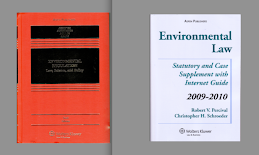
I have had a wonderful time in China since arriving on May 10. On Wednesday night May 11 I had dinner in Beijing with Alan Miller, one of the co-authors of my environmental law casebook, who was in town to work on energy efficiency guidelines for the Chinese cement industry on behalf of the International Finance Corporation. On Thursday May 12 my son Richard and I went to the Summer Palace and the Great Wall. Due to high winds we were forced to go to the Badaling part of the Great Wall, but the winds cleared out most of the pollution and the day ended with blue skies and puffy white clouds - a rarity for Beijing. On Friday we flew to Jinan where I visited Shandong University School of Law. Jinan is a small town for China -- only about 2 million residents -- Shandong University has approximately 20,000 students. After lunch with several law professors, including Zhang Shijun, who was a visiting scholar at the University of Maryland School of Law during the 2009-2010 academic year, I presented a guest lecture on “Transnational Liability Litigation for Environmental Harm.”
On Friday night my son and I flew to Shanghai where we had dinner with Professor Zhao Huiyi from Shanghai Jiao Tong University Law School. Professor Zhao, whose specialties are environmental law and criminal law, has just completed two years on leave from the law school to supervise criminal prosecutions for the procurate in Shanghai. She is hoping to come to the U.S. as a visiting scholar during the 2011-2012 academic year. On Monday May 16, we traveled to Ningbo to visit Ningbo University. Professor Cai Xianfeng, who I had met while he was in the United States in 2010, hosted the visit. After lunch with several law professors I gave a lecture on “Climate Change and the Future of Global Energy Policy in the Wake of Global ‘Tsunamis’.” The tsunamis referred to in my lecture title included the Japanese tsunami and the nuclear accident it spawned, the volatility of global energy prices in the wake of unrest in the Middle East, and the Republican takeover of the U.S. House of Representatives in the November 2010 election. I discussed the effects of each of these three developments on efforts to control emissions of greenhouse gases in the U.S. and other countries. Photos from my trip to China are available online at: http://gallery.me.com/rperci#100835
The accident at the Fukushima Daiichi nuclear power plant in Japan has generated considerable concern in China because China has far more nuclear reactors planned and under construction than any other country and earthquakes are a major concern. On May 12 China marked the third anniversary of the devastating Wenchuan earthquake that killed nearly 70,000 people. Japanese authorities have unveiled a plan for compensating the victims of the Fukushima Daiichi accident. The plan would establish a fund to compensate the 80,000 people displaced due to the accident funded by contributions from plant owner Tokyo Electric Power Company and other utilities that operate nuclear powerplants in Japan. The Japanese government plans to issue special bonds to get the fund up and running.
Chinese authorities have approved the first criminal prosecution for an environmental crime since Amendment VIII was added to the Criminal Law on May 1. The prosecution involves two men caught dumping acid wastes into the Honghe River. Complaints in mid-February about dead fish floating in the river led to an investigation and police eventually caught Mr. Jiang and Mr. Dong pouring the acid into the river. Zhou Xiaqin, the prosecutor responsible for the case, noted that under the old law, a criminal prosecution could not be brought unless it was proven that the offense had caused serious harm to public or private property or injuries or deaths. Wu Yiyao, Two Men to Face Charges for Polluting, China Daily, May 13, 2011, at 5.
China’s National Audit Office (NAO) has discovered that 205 million yuan (US $31.5 million) in subsidies designed to facilitate emissions reductions by power plants and cement and steel manufacturers have been embezzled. Twenty people reportedly have been punished for their roles in the embezzlement schemes and fines totaling more than $1 million have been imposed. The embezzlements represent only a small portion of the nearly $20 billion in subsidies to support energy conservation and emissions reductions projects from 2007 to 2009. Subsidy Fraud Hits Emissions Battle, Shanghai Daily, May 14, 2011, at A7.
On May 11 the Supreme Court of India rejected an appeal challenging as too light the sentences imposed on seven employees of the Union Carbide plant in Bhopal, India, where a release of a toxic chemical killed thousands in December 1984.
Wednesday, May 18, 2011

Tuesday, May 10, 2011
Public Trust Climate Change Suits, Global Warming Reducing Crop Yields, Soil Erosion and Runoff Fears, China Airlines & EU ETS (by Bob Percival)
Last week an Oregon-based group called “Our Children’s Trust” filed lawsuits in federal court in California and many state courts alleging that the atmosphere is a public trust that the state and federal government have a fiduciary duty to protect on behalf of present and future generations. The lawsuits, which feature teenagers as plaintiffs, maintain that the governments have breached their duty to protect the public trust because they have failed to control emissions of greenhouse gases. The public trust doctrine was recognized by the U.S. Supreme Court in Illinois Central Railroad v. Illinois, 146 U.S. 387 (1892), where it held that the state of Illinois held title to submerged lands within its borders in trust for the public. It has not been Citing an “atmospheric climate emergency,” the suits seek declaratory relief recognizing the public trust in the atmosphere and the duty of government officials to protect it from causing harm due to climate change. Links to copies of some of the complaints are available at: http://www.ourchildrenstrust.org/legal-action/lawsuits. There is considerable skepticism in the legal community concerning whether the lawsuits are likely to be successful as many courts have steered away from applying the public trust concept in environmental cases because of the difficulty of discerning objective standards to apply. Yet the underlying concept that courts should be available to intervene as a last resort if government officials are failing to prevent enormous harm to public resources has some appeal.
On May 5 the journal Science published a study finding that global corn and wheat production has declined by 3.8% and 5.5% respectively since 1980 due to global warming. An abstract of the study, “Climate Change and Global Crop Production Since 1980” by David Lobell and Wolfram Schlenker of Stanford University, and Justin Costa-Roberts of Columbia University, is available online at: http://www.sciencemag.org/content/early/2011/05/04/science.1204531. The study concluded that the effects of global warming on crop production vary from country to country. It has reduced wheat production in Russia by 10% and by a few percentage points each in China, France and India. Corn production has fallen by a few percentage points in Brazil, China and France. Surprisingly, overall crop productivity in the Midwestern U.S. have not yet been affected by climate change, the study found. Global rice and soybean productivity has not yet been significantly affected because losses in some parts of the world have been offset by gains in other areas. The study’s assessment of impacts is likely to be conservative because it excluded the effects of extreme weather events on crop yields. Justin Gillis, Global Warming Reduces Expected Yields of Harvests in Some Countries, Study Says, N.Y. Times, May 5, 2011.
A study by the Environmental Working Group entitled “Losing Ground” concludes that agricultural soil erosion and runoff in Iowa is occurring at nearly twice the rate of 5.2 tons per acre estimated by the U.S. Department of Agriculture. Using an aerial survey and data from Iowa State University researchers, the study concludes that recent storms have triggered alarming soil losses in some areas. A copy of the study is available online at: http://www.ewg.org/losingground/ The current flooding of the Mississippi River is exacerbating fears of Midwestern erosion and runoff. Jeffrey Ball, Floods Raise Runoff Concerns, Wall St. J., May 5, 2011, at A5.
Congress continues to debate the future of U.S. energy policy with the Republican-controlled House of Representatives trying to speed up domestic oil drilling, while the Senate considers a measure to eliminate tax breaks for large oil companies. Last week the Obama Administration established a seven-member panel led by MIT Professor and former CIA Director John Deutch to recommend ways of improving the safety of hydraulic fracturing as a means for extracting natural gas from shale formations. The U.S. Department of Energy’s announcement of the panel is available online at: http://www.energy.gov/news/10309.htm.
I arrived in Beijing this afternoon with my son, who was fascinated by crossing the International Date Line for the first time. He was intrigued to hear that Samoa has decided to switch to the western side of the dateline in order to make trade easier with New Zealand and Australia. American Samoa, which I visited in 1973 while sailing around the world, will stay east of the dateline, creating “exciting tourism opportunities” according to Samoa’s prime minister because with less than an hour’s flight “you can have two birthdays, two weddings and two wedding anniversaries on the same date.” Samoans to Jump Ahead One Day in Zone Shift, China Daily, May 10, 2011, at 10.
The China Air Transport Association (CATA) has threatened retaliation against the EU for insisting that all flights departing or landing at EU airports participate in the EU’s Emissions Trading System (ETS) beginning next January 1. Thirty-three airlines from the Chinese mainland, Hong Kong and Macao are covered by the EU rules, which also are being challenged by the U.S. Air Transport Association. The CATA estimates that Chinese airlines would have to pay nearly $2.7 billion over the next nine years to purchases emissions allowances from the ETS. Xin Dingding, Airlines Battling Costly EU Plan, China Daily, May 10, 2011 at 4.
On May 5 the journal Science published a study finding that global corn and wheat production has declined by 3.8% and 5.5% respectively since 1980 due to global warming. An abstract of the study, “Climate Change and Global Crop Production Since 1980” by David Lobell and Wolfram Schlenker of Stanford University, and Justin Costa-Roberts of Columbia University, is available online at: http://www.sciencemag.org/content/early/2011/05/04/science.1204531. The study concluded that the effects of global warming on crop production vary from country to country. It has reduced wheat production in Russia by 10% and by a few percentage points each in China, France and India. Corn production has fallen by a few percentage points in Brazil, China and France. Surprisingly, overall crop productivity in the Midwestern U.S. have not yet been affected by climate change, the study found. Global rice and soybean productivity has not yet been significantly affected because losses in some parts of the world have been offset by gains in other areas. The study’s assessment of impacts is likely to be conservative because it excluded the effects of extreme weather events on crop yields. Justin Gillis, Global Warming Reduces Expected Yields of Harvests in Some Countries, Study Says, N.Y. Times, May 5, 2011.
A study by the Environmental Working Group entitled “Losing Ground” concludes that agricultural soil erosion and runoff in Iowa is occurring at nearly twice the rate of 5.2 tons per acre estimated by the U.S. Department of Agriculture. Using an aerial survey and data from Iowa State University researchers, the study concludes that recent storms have triggered alarming soil losses in some areas. A copy of the study is available online at: http://www.ewg.org/losingground/ The current flooding of the Mississippi River is exacerbating fears of Midwestern erosion and runoff. Jeffrey Ball, Floods Raise Runoff Concerns, Wall St. J., May 5, 2011, at A5.
Congress continues to debate the future of U.S. energy policy with the Republican-controlled House of Representatives trying to speed up domestic oil drilling, while the Senate considers a measure to eliminate tax breaks for large oil companies. Last week the Obama Administration established a seven-member panel led by MIT Professor and former CIA Director John Deutch to recommend ways of improving the safety of hydraulic fracturing as a means for extracting natural gas from shale formations. The U.S. Department of Energy’s announcement of the panel is available online at: http://www.energy.gov/news/10309.htm.
I arrived in Beijing this afternoon with my son, who was fascinated by crossing the International Date Line for the first time. He was intrigued to hear that Samoa has decided to switch to the western side of the dateline in order to make trade easier with New Zealand and Australia. American Samoa, which I visited in 1973 while sailing around the world, will stay east of the dateline, creating “exciting tourism opportunities” according to Samoa’s prime minister because with less than an hour’s flight “you can have two birthdays, two weddings and two wedding anniversaries on the same date.” Samoans to Jump Ahead One Day in Zone Shift, China Daily, May 10, 2011, at 10.
The China Air Transport Association (CATA) has threatened retaliation against the EU for insisting that all flights departing or landing at EU airports participate in the EU’s Emissions Trading System (ETS) beginning next January 1. Thirty-three airlines from the Chinese mainland, Hong Kong and Macao are covered by the EU rules, which also are being challenged by the U.S. Air Transport Association. The CATA estimates that Chinese airlines would have to pay nearly $2.7 billion over the next nine years to purchases emissions allowances from the ETS. Xin Dingding, Airlines Battling Costly EU Plan, China Daily, May 10, 2011 at 4.
Tuesday, May 3, 2011
Black Boxes & bin Laden, Faster Arctic Melting, Nuclear Adviser Quits, Post-Rapanos Guidance, Challenge to Calif. Waiver Rejected (by Bob Percival)
Just hours before the momentous announcement on Sunday May 1 that Osama bin Laden had been killed by U.S. Special Forces, it was learned that submarines scouring the depths of the Atlantic Ocean finally had located a flight recorder from Air France Flight #447 that crashed on June 1, 2009 on a flight from Rio to Paris. Both events demonstrated that with enough persistence and effort, humans now can locate virtually anything or anyone even in a remote part of the planet (or in bin Laden’s case in the shadow of Pakistan’s West Point). After midnight my children headed downtown to participate in the spontaneous celebration outside the White House. They reported that it was almost entirely young people who were eager to dismiss uninformed claims that their generation had been too young to understand 9/11.
Tomorrow the Arctic Monitoring and Assessment Program (AMAP) will report that Arctic glaciers and ice caps have been melting so fast during the last six years that they may contribute 2 to 3 feet more to sea level rise by 2100 than predicted by the Intergovernmental Panel on Climate Change (IPCC). Despite great uncertainty surrounding the estimates, their projection that sea level will rise between 35 to 63 inches by 2100 dwarfs the IPCC’s 207 project of sea level rise between 7 and 23 inches. AMAP found that average annual temperatures over the Arctic have increased by twice as much as in the rest of the world.
The fallout from the Japanese earthquake and tsunami and the resulting Fukushima Daiichi nuclear accident continues. Last week University of Tokyo Professor Toshiso Kosako, a special adviser to the Japanese government on nuclear safety issues, abruptly resigned to protest the government’s handling of the crisis. Professor Kosako argued that it still was difficult to tell who was in charge of dealing with the crisis. He maintained that Japanese government agencies “have ignored the laws and have only dealt with the problem at the moment.” William Sposato, Nuclear Adviser Quits Over Handling of Crisis, Wall Street Journal, April 30, 2011. Sergei V. Kiriyenko, director of Rosatom, the Russian state nuclear company, last week proposed the creation of an international framework for regulating nuclear power and notifying other countries of serious accidents that may cause transboundary releases of radiation. Russia plans to present the proposal at a meeting of the Group of 8 in France later this year. Andrew E. Kramer, Russia Is Set to Propose Strict Rules for Reactors, N.Y. Times, April 29, 2011, at B6.
Last week the U.S. Environmental Protection Agency released guidance explaining how it intends to interpret its federal jurisdiction over “waters of the United States” in light of the U.S. Supreme Court’s confusing 4-1-4 split in Rapanos v. United States. Rapanos, which was decided in June 2006, has caused enormous confusion because four Justices accepted the Army Corps of Engineers’s long-standing practices for defining “waters of the U.S.,” four Justices adopted a dramatically narrower construction of the term, and Justice Kennedy enunciated a new “substantial nexus” test that none of the other Justices accepted. Because it is a guidance document, rather than a rule, it is unlikely that it can be challenged directly in court, though its application can be challenged when disputes arise in the future over the scope of federal jurisdiction over wetlands. The document, on which EPA is soliciting public comment, is available online at: http://water.epa.gov/lawsregs/guidance/wetlands/upload/wous_guidance_4-2011.pdf
On Friday April 29, the U.S, Court of Appeals for the District of Columbia rejected a legal challenge to EPA’s granting of a waiver to the state of California to adopt controls on greenhouse gas emissions from motor vehicles. The court ruled that the National Automobile Dealers Association and the U.S. Chamber of Commerce lacked standing to challenge the waiver because it did not affect them directly. The California standards will require more fuel efficient vehicles, but national automobile manufacturers did not challenge it.
This morning I spoke on a panel on "The Role of Judicial Settlements in Driving Rulemaking" at a conference in Washington D.C. sponsored by the ABA's Section on Administrative Law and Regulatory Practice. John Cruden, Deputy Assistant Attorney General for the Environment and Natural Resources Division of the U.S. Department of Justice, explained the department's long-standing settlement policies. James Nutt from the South Florida Water Management District described legal challenges before the 11th Circuit to a settlement agreement that governs the cleanup of the Everglades. Drawing on a 24-year old article I wrote for the University of Chicago Legal Forum, I focused on the historical background of disputes over the use of consent decrees that originated during the Reagan administration in March 1986 when Attorney General Edwin Meese issued the "Meese Memorandum."
Next Monday I am flying to Beijing to give guest lectures at Shandong University and Ningbo University. It will be my first trip to China since last June, the longest I have gone without visiting that country in more than six years.
Tomorrow the Arctic Monitoring and Assessment Program (AMAP) will report that Arctic glaciers and ice caps have been melting so fast during the last six years that they may contribute 2 to 3 feet more to sea level rise by 2100 than predicted by the Intergovernmental Panel on Climate Change (IPCC). Despite great uncertainty surrounding the estimates, their projection that sea level will rise between 35 to 63 inches by 2100 dwarfs the IPCC’s 207 project of sea level rise between 7 and 23 inches. AMAP found that average annual temperatures over the Arctic have increased by twice as much as in the rest of the world.
The fallout from the Japanese earthquake and tsunami and the resulting Fukushima Daiichi nuclear accident continues. Last week University of Tokyo Professor Toshiso Kosako, a special adviser to the Japanese government on nuclear safety issues, abruptly resigned to protest the government’s handling of the crisis. Professor Kosako argued that it still was difficult to tell who was in charge of dealing with the crisis. He maintained that Japanese government agencies “have ignored the laws and have only dealt with the problem at the moment.” William Sposato, Nuclear Adviser Quits Over Handling of Crisis, Wall Street Journal, April 30, 2011. Sergei V. Kiriyenko, director of Rosatom, the Russian state nuclear company, last week proposed the creation of an international framework for regulating nuclear power and notifying other countries of serious accidents that may cause transboundary releases of radiation. Russia plans to present the proposal at a meeting of the Group of 8 in France later this year. Andrew E. Kramer, Russia Is Set to Propose Strict Rules for Reactors, N.Y. Times, April 29, 2011, at B6.
Last week the U.S. Environmental Protection Agency released guidance explaining how it intends to interpret its federal jurisdiction over “waters of the United States” in light of the U.S. Supreme Court’s confusing 4-1-4 split in Rapanos v. United States. Rapanos, which was decided in June 2006, has caused enormous confusion because four Justices accepted the Army Corps of Engineers’s long-standing practices for defining “waters of the U.S.,” four Justices adopted a dramatically narrower construction of the term, and Justice Kennedy enunciated a new “substantial nexus” test that none of the other Justices accepted. Because it is a guidance document, rather than a rule, it is unlikely that it can be challenged directly in court, though its application can be challenged when disputes arise in the future over the scope of federal jurisdiction over wetlands. The document, on which EPA is soliciting public comment, is available online at: http://water.epa.gov/lawsregs/guidance/wetlands/upload/wous_guidance_4-2011.pdf
On Friday April 29, the U.S, Court of Appeals for the District of Columbia rejected a legal challenge to EPA’s granting of a waiver to the state of California to adopt controls on greenhouse gas emissions from motor vehicles. The court ruled that the National Automobile Dealers Association and the U.S. Chamber of Commerce lacked standing to challenge the waiver because it did not affect them directly. The California standards will require more fuel efficient vehicles, but national automobile manufacturers did not challenge it.
This morning I spoke on a panel on "The Role of Judicial Settlements in Driving Rulemaking" at a conference in Washington D.C. sponsored by the ABA's Section on Administrative Law and Regulatory Practice. John Cruden, Deputy Assistant Attorney General for the Environment and Natural Resources Division of the U.S. Department of Justice, explained the department's long-standing settlement policies. James Nutt from the South Florida Water Management District described legal challenges before the 11th Circuit to a settlement agreement that governs the cleanup of the Everglades. Drawing on a 24-year old article I wrote for the University of Chicago Legal Forum, I focused on the historical background of disputes over the use of consent decrees that originated during the Reagan administration in March 1986 when Attorney General Edwin Meese issued the "Meese Memorandum."
Next Monday I am flying to Beijing to give guest lectures at Shandong University and Ningbo University. It will be my first trip to China since last June, the longest I have gone without visiting that country in more than six years.
Tuesday, April 26, 2011
Chernobyl & Gulf Spill Anniversaries, BP Advances $1 Billion for Natural Resource Damages, Xayaburi Dam (by Bob Percival)
As Japan continues to struggle with the aftermath of an earthquake and tsunami that has crippled four nuclear reactors, today is the 25th anniversary of the world's worst nuclear accident at the Chernobyl nuclear power station #4 in north central Ukraine. In the 25 years since the Chernobyl accident the damaged reactor has been at the center of a large human exclusion zone because of radiation released in the accident. It is estimated that the inside of the damaged reactor, which is surrounded by a crumbling cement sarcophagus, will be dangerously radioactive for the next 300 years. Funds are being raised to encase the facility in a new steel containment structure. Radiation in the exclusion zone has declined to the point where small groups of tourists may make brief tours to a monument outside of the damaged reactor to the nearby ghost town of Pripyat, whose 55,000 inhabitants had to be evacuated due to the accident. I visited Chernobyl on one of these tours in March 2009 (see blog post of March 22, 2009. A gallery of photos from this visit is available online at: http://gallery.me.com/rperci#100427.
The effect of the Japanese accident in dampening a revival of the nuclear power industry was apparent last week when NRG Energy Inc. announced that it was withdrawing from a project to build new new nuclear power reactors in Texas. The reactors were to be furnished by Toshiba and financed in large part by Tokyo Electric Power Co., the financially crippled owner of the Fukushima Daichi nuclear power complex where accident response is still ongoing.Rebecca SMith, NRG Drops Plan for Texas Reactors, Wall St. J., April 20, 2011, at B1. Meanwhile Exxon CEO Rex Tillerson predicted that nuclear power's share of global energy production would be unchanged thirty years from now despite the Japanese disaster. David Blair & Sylvia Pfeifer, Exxon Sees Nuclear Holding Its Own, Financial Times, April 21, 2011, at 18.
Wednesday April 20 was the first anniversary of the Deepwater Horizon blowout and oil spill in the Gulf of Mexico. In an op-ed in the Wall Street Journal, BP CEO Bob Dudley expressed regret for the accident and reiterated that BP would pay all legitimate claims. Bob Dudley, The Lessons of Deepwater Horizon, Wall St. J., April 20, 2011, at A15. BP reached a settlement with the Justice Department last week in which BP agreed to provide $1 billion as a down payment on what it will owe for damages to natural resources. The money will be used for coastal restoration projects. In addition BP and other responsible parties are likely to owe the Oil Spill Liability Trust Fund large penalties under the Clean Water Act that could range from $5 to $21 billion on top of the compensation it is paying through its $20 billion compensation fund. Consideration is being given to legislation that would allocate 80% of these penalties to Gulf Coast restoration, as recommended by the President's Commission on the spill, rather than using it to replenish the Trust Fund to a level of $2.7 billion with the rest going to the U.S. Treasury as current law provides. Campbell Robertson, Beyond the Oil SPill, the Tragedy of an Ailing Gulf, N.Y. Times, April 21, 2011, at A16.
Last week BP filed lawsuits in federal district court in New Orleans against Transocean, the owner of the Deepwater Horizon oil rig, and Cameron International, the manufacturer of the blowout preventer that failed in the accident. BP alleges in the lawsuits that negligence by Transocean and Cameron caused the blowout. Transocean and Cameron filed cross claims against each other and BP. BP's case against Transocean may be bolstered by a Coast Guard report released on Friday April 22, which faulty the company for improper maintenance and poorly designed safety systems, though the report focused largely on the fire and sinking of the Deepwater Horizon platform, and not the initial cause of the blowout, because of the Coast Guard's jurisdiction over the rig, which is treated like a ship subject to Coast Guard regulation. Russell Gold & Angel Gonzalez, Spill Report Faults Transocean Rig, Wall St. J., April 23-24, 2011, at A3.
Plans to build a $3.5 billion dam on the Mekong River temporarily were placed on hold last week when Vietnam, Cambodia and Thailand objected to Laos's plan to proceed with the 1,20 megawatt Xayaburi dam. At a meeting sponsored by the Mekong River Commission, the three objecting countries argued that insufficient consideration had been given to the environmental impact of the project. The Commission itself had released a study late last year that found that the dam would "fundamentally undermine the abundance, productivity, and diversity of Mekong fish resources." The project is one of ten or more dam projects being considered in the region. Pursuant to a 1995 regional agreement, the countries are committed to consult with one another before proceeding with such dam projects, but no country has veto power. Thus, Laos ultimately may decide to go ahead with the project despite the objections of the other countries. Patrick Batra, Asian Nations Defer Decision on Dam, Wall st. J., April 20, 2011, at A9.
A week after the oral argument in the Supreme Court in the climate change case (American Electric Power v. Connecticut), a consensus seems to be emerging in the blogosphere that the plaintiff states suing electric utilities with large, coal-fired powerplants are likely to lose, though the grounds for such a decision are uncertain. Most believe the Court will hold that EPA's efforts to regulate greenhouse gas emissions under the Clean Air Act will be held to displace the federal common law of nuisance.
Yesterday it was announced that the University of Maryland School of Law has received a $30 million donation from the W.P. Carey Foundation. Tamar Lewin, Maryland Renames Law School After Gift, N.Y. Times, April 25, 2011, at A14.The law school will now be named the University of Maryland Francis King Carey School of Law, in honor of Francis Carey who graduated from the law school in 1880. The funds are unrestricted and will be a great boost to all of our school's programs, including our environmental law program. The gift, which is one of the ten largest gifts in the history of legal education, is a tribute to the generosity of the Careys and the great work of Phoebe Haddon, our dean. A celebration involving Maryland Governor Martin O'Malley and Baltimore Mayor Stephanie Rawlings, both alums of our law school, as well as other leading figures in Maryland's bench and bar was held at the law school yesterday.
The effect of the Japanese accident in dampening a revival of the nuclear power industry was apparent last week when NRG Energy Inc. announced that it was withdrawing from a project to build new new nuclear power reactors in Texas. The reactors were to be furnished by Toshiba and financed in large part by Tokyo Electric Power Co., the financially crippled owner of the Fukushima Daichi nuclear power complex where accident response is still ongoing.Rebecca SMith, NRG Drops Plan for Texas Reactors, Wall St. J., April 20, 2011, at B1. Meanwhile Exxon CEO Rex Tillerson predicted that nuclear power's share of global energy production would be unchanged thirty years from now despite the Japanese disaster. David Blair & Sylvia Pfeifer, Exxon Sees Nuclear Holding Its Own, Financial Times, April 21, 2011, at 18.
Wednesday April 20 was the first anniversary of the Deepwater Horizon blowout and oil spill in the Gulf of Mexico. In an op-ed in the Wall Street Journal, BP CEO Bob Dudley expressed regret for the accident and reiterated that BP would pay all legitimate claims. Bob Dudley, The Lessons of Deepwater Horizon, Wall St. J., April 20, 2011, at A15. BP reached a settlement with the Justice Department last week in which BP agreed to provide $1 billion as a down payment on what it will owe for damages to natural resources. The money will be used for coastal restoration projects. In addition BP and other responsible parties are likely to owe the Oil Spill Liability Trust Fund large penalties under the Clean Water Act that could range from $5 to $21 billion on top of the compensation it is paying through its $20 billion compensation fund. Consideration is being given to legislation that would allocate 80% of these penalties to Gulf Coast restoration, as recommended by the President's Commission on the spill, rather than using it to replenish the Trust Fund to a level of $2.7 billion with the rest going to the U.S. Treasury as current law provides. Campbell Robertson, Beyond the Oil SPill, the Tragedy of an Ailing Gulf, N.Y. Times, April 21, 2011, at A16.
Last week BP filed lawsuits in federal district court in New Orleans against Transocean, the owner of the Deepwater Horizon oil rig, and Cameron International, the manufacturer of the blowout preventer that failed in the accident. BP alleges in the lawsuits that negligence by Transocean and Cameron caused the blowout. Transocean and Cameron filed cross claims against each other and BP. BP's case against Transocean may be bolstered by a Coast Guard report released on Friday April 22, which faulty the company for improper maintenance and poorly designed safety systems, though the report focused largely on the fire and sinking of the Deepwater Horizon platform, and not the initial cause of the blowout, because of the Coast Guard's jurisdiction over the rig, which is treated like a ship subject to Coast Guard regulation. Russell Gold & Angel Gonzalez, Spill Report Faults Transocean Rig, Wall St. J., April 23-24, 2011, at A3.
Plans to build a $3.5 billion dam on the Mekong River temporarily were placed on hold last week when Vietnam, Cambodia and Thailand objected to Laos's plan to proceed with the 1,20 megawatt Xayaburi dam. At a meeting sponsored by the Mekong River Commission, the three objecting countries argued that insufficient consideration had been given to the environmental impact of the project. The Commission itself had released a study late last year that found that the dam would "fundamentally undermine the abundance, productivity, and diversity of Mekong fish resources." The project is one of ten or more dam projects being considered in the region. Pursuant to a 1995 regional agreement, the countries are committed to consult with one another before proceeding with such dam projects, but no country has veto power. Thus, Laos ultimately may decide to go ahead with the project despite the objections of the other countries. Patrick Batra, Asian Nations Defer Decision on Dam, Wall st. J., April 20, 2011, at A9.
A week after the oral argument in the Supreme Court in the climate change case (American Electric Power v. Connecticut), a consensus seems to be emerging in the blogosphere that the plaintiff states suing electric utilities with large, coal-fired powerplants are likely to lose, though the grounds for such a decision are uncertain. Most believe the Court will hold that EPA's efforts to regulate greenhouse gas emissions under the Clean Air Act will be held to displace the federal common law of nuisance.
Yesterday it was announced that the University of Maryland School of Law has received a $30 million donation from the W.P. Carey Foundation. Tamar Lewin, Maryland Renames Law School After Gift, N.Y. Times, April 25, 2011, at A14.The law school will now be named the University of Maryland Francis King Carey School of Law, in honor of Francis Carey who graduated from the law school in 1880. The funds are unrestricted and will be a great boost to all of our school's programs, including our environmental law program. The gift, which is one of the ten largest gifts in the history of legal education, is a tribute to the generosity of the Careys and the great work of Phoebe Haddon, our dean. A celebration involving Maryland Governor Martin O'Malley and Baltimore Mayor Stephanie Rawlings, both alums of our law school, as well as other leading figures in Maryland's bench and bar was held at the law school yesterday.
Tuesday, April 19, 2011
TVA Settlement, BP Annual Meeting, Chevron CEO Interview & AEP Argument (by Bob Percival)
On Thursday April 14 the U.S. Justice Department announced that the Tennessee Valley Authority (TVA) will close 18 old coal-fired electrical generating units at three power plants in settlement of litigation by states and environmental groups charging the TVA with violations of the Clean Air Act's new source review (NSR) provisions. The plants, which are more than 50 years old, have operated for decades without modern pollution control equipment because they were grandfathered-in when the 1970 Clean Air Act (CAA) was adopted. The idea was that they eventually would be replaced by generating units that would have new pollution controls required by the Act, but the TVA continued to renovate the old plants to take advantage of the CAA's failure to control existing sources. The settlement covers all of the power plants targeted by a state common law nuisance suit brought by North Carolina. Eight of the generating units that will be shut down at two power plants initially had been ordered in January 2009 to install new pollution control equipment due to North Carolina' lawsuit. North Carolina ex rel. Cooper v. Tennessee Valley Authority, 593 F. Supp. 2d 812 (W.D.N.C. 2009). However, in July 2010 the U.S. Court of Appeals overturned this decision, erroneously ruling that as long as the power plants were in compliance with the CAA they could not be nuisances at common law. North Carolina ex rel. Cooper v. Tennessee Valley Authority, 615 F.3d 291 (4th Cir. 2010) (see August 1, 2010 blog post).
What may have spurred the settlement was the filing of a petition for Supreme Court review of the Fourth Circuit's decision. While the TVA generally has independent litigating authority, when a case goes to the Supreme Court the Solicitor General (SG) must weigh in and the SG's office repeatedly had sought extensions of the deadline for its reply to the state's cert petition. Presumably the SG's office consulted EPA which may have insisted that TVA settle the NSR litigation. The settlement will reduce TVA's emissions of sulfur dioxide by 97% below 1977 levels and nitrogen oxides by 95%. TVA also will spend between $3 and 5 billion to upgrade pollution controls at plants that it will continue to operate.
On April 14 BP held its annual meeting of shareholders in London. Protesters covered in what looked like oil greeted the shareholders as they filed into the meeting. The father of Gordon Jones, a worker who had been killed when the Deepwater Horizon oil platform exploded and caught fire, took the microphone and argued that the company could have prevented his son's death. This prompted BP CEO Robert Dudley to read out the names of the 11 workers who were killed by the blowout. Other protesters sought to disrupt the meeting to draw attention to BP's development of Canada's tar sands. Kiran Stacey & Sylvia Pfeifer, BP Shareholders Shaken by Invasion of Motley Protesters, Financial Times, April 15, 2011. Twenty-five percent of BP shareholders voted against the re-election to BP's board of Sir Bill Castell, chair of the board's safety committee.
Last week Chevron's CEO John Watson gave an interview to Kimberley Strassel of the Wall Street Journal where he argued that renewable energy is too expensive to be a significant supply source and that because America has taken "affordable energy for granted" it will need a lot more oil, coal and natural gas. He also strongly attacked EPA's effort to regulate emissions of greenhouse gases. Apparently the interview did not touch on whether Watson believes in Chevron's massive "We Agree" advertising campaign or how he feels about the $8.6 billion judgment against the company for pollution in Ecuador. Kimberley Strassel, Oil WIthout Apologies, Wall St. J., April 16-17, 2011, at A11.
Today the U.S. Supreme Court heard oral argument in American Electric Power v. Connecticut, a case involving whether a federal common law nuisance lawsuit by several states can be brought against utilities operating large coal-fired powerplants. The case initially was brought by the states in 2004, dismissed as a political question by a federal district judge in 2005, and then reinstated by the U.S, Court of Appeals for the Second Circuit in 2009 (see Sept. 27, 2009 blog post). I attended the oral argument and will provide more details in my next blog post. A transcript of the argument is available online at: http://www.supremecourt.gov/oral_arguments/argument_transcripts/10-174.pdf
Last Wednesday Alan Miller from the International Finance Corporation, who is one of the co-authors of my environmental law casebook, attended the Nats/Phillies game with me. On the second to the last pitch of the game I caught a foul ball hit by Pudge Rodriguez (unfortunately he struck out on the next pitch with the tying and winning runs on base and the Phillies won 3-2). On Thursday evening I attended a Fulbright Association reception at the Colombian embassador's residence.
I am currently experiencing technical difficulties posting to my parallel blog at: www.globalenvironmentallaw.com, which contains more photos. I started doing parallel postings because the Chinese government's firewall sometimes would block one of the two websites. Now I have another reason to be glad that I have been doing cross postings.
What may have spurred the settlement was the filing of a petition for Supreme Court review of the Fourth Circuit's decision. While the TVA generally has independent litigating authority, when a case goes to the Supreme Court the Solicitor General (SG) must weigh in and the SG's office repeatedly had sought extensions of the deadline for its reply to the state's cert petition. Presumably the SG's office consulted EPA which may have insisted that TVA settle the NSR litigation. The settlement will reduce TVA's emissions of sulfur dioxide by 97% below 1977 levels and nitrogen oxides by 95%. TVA also will spend between $3 and 5 billion to upgrade pollution controls at plants that it will continue to operate.
On April 14 BP held its annual meeting of shareholders in London. Protesters covered in what looked like oil greeted the shareholders as they filed into the meeting. The father of Gordon Jones, a worker who had been killed when the Deepwater Horizon oil platform exploded and caught fire, took the microphone and argued that the company could have prevented his son's death. This prompted BP CEO Robert Dudley to read out the names of the 11 workers who were killed by the blowout. Other protesters sought to disrupt the meeting to draw attention to BP's development of Canada's tar sands. Kiran Stacey & Sylvia Pfeifer, BP Shareholders Shaken by Invasion of Motley Protesters, Financial Times, April 15, 2011. Twenty-five percent of BP shareholders voted against the re-election to BP's board of Sir Bill Castell, chair of the board's safety committee.
Last week Chevron's CEO John Watson gave an interview to Kimberley Strassel of the Wall Street Journal where he argued that renewable energy is too expensive to be a significant supply source and that because America has taken "affordable energy for granted" it will need a lot more oil, coal and natural gas. He also strongly attacked EPA's effort to regulate emissions of greenhouse gases. Apparently the interview did not touch on whether Watson believes in Chevron's massive "We Agree" advertising campaign or how he feels about the $8.6 billion judgment against the company for pollution in Ecuador. Kimberley Strassel, Oil WIthout Apologies, Wall St. J., April 16-17, 2011, at A11.
Today the U.S. Supreme Court heard oral argument in American Electric Power v. Connecticut, a case involving whether a federal common law nuisance lawsuit by several states can be brought against utilities operating large coal-fired powerplants. The case initially was brought by the states in 2004, dismissed as a political question by a federal district judge in 2005, and then reinstated by the U.S, Court of Appeals for the Second Circuit in 2009 (see Sept. 27, 2009 blog post). I attended the oral argument and will provide more details in my next blog post. A transcript of the argument is available online at: http://www.supremecourt.gov/oral_arguments/argument_transcripts/10-174.pdf
Last Wednesday Alan Miller from the International Finance Corporation, who is one of the co-authors of my environmental law casebook, attended the Nats/Phillies game with me. On the second to the last pitch of the game I caught a foul ball hit by Pudge Rodriguez (unfortunately he struck out on the next pitch with the tying and winning runs on base and the Phillies won 3-2). On Thursday evening I attended a Fulbright Association reception at the Colombian embassador's residence.
I am currently experiencing technical difficulties posting to my parallel blog at: www.globalenvironmentallaw.com, which contains more photos. I started doing parallel postings because the Chinese government's firewall sometimes would block one of the two websites. Now I have another reason to be glad that I have been doing cross postings.
Tuesday, April 12, 2011
EPA GHG Riders Deleted in Budget Compromise, ABA Int'l Section: India & China, Texas Senate Seeks to Bar Climate Change Suits (by Bob Percival)
Faced with the specter of a shutdown of the U.S. government at midnight last Friday, a last-minute compromise was reached that continued funding for a week in return for a promise of $38 billion in overall budget cuts. Fortunately the Obama administration insisted on the deletion of “policy riders” adopted by the House that would have barred EPA from regulating emissions of greenhouse gases (GHGs). Although EPA still faces the prospect of significant budget cuts, President Obama has made it clear that he will veto legislation that includes similar policy riders. Separate legislation to amend the Clean Air Act to bar EPA from regulating GHGs (deceptively titled the “Energy Tax Prevention Act”) passed the House last week by a vote of 255 to 172 with the support of 19 Democrats. An effort to get the Senate to approve similar legislation on Friday fell ten votes short of the 60 votes needed to avert a filibuster. President Obama has promised to veto such legislation.
This week the section on International Law of the American Bar Association (ABA) held its annual Spring Meeting in Washington. On Thursday April 7 I was on a panel on “Evolution of the Environmental Rule of Law in China and India.” The panel was moderated by former EPA General Counsel Roger Martella. Jay Pendergrass from the Environmental Law Institute (ELI) and Stanford professor Armin Rosencranz discussed the state of environmental law in India. They noted that despite a burst of judicial activism on behalf of the environment by the Supreme Court of India during the 1990s, development interests now are prevailing in most environmental conflicts in the country. The legal system works notoriously slowly in India and enforcement of environmental law has not been a high priority as the country pursues rapid development. India’s Minister of Environment and Forests Jairam Ramesh has made a splash by temporarily halting certain projects for failure to comply with India’s environmental laws. These include the Lavasa project, India’s first planned hill city. However, most of these projects ultimately will be completed, as is occurring with the Posco steel mill. There has been hardly any public interest litigation in India in the last decade, although the Supreme Court of India retains continuing jurisdiction over forest management to implement its 1995 Godavarman decision.
Tseming Yang described the structure of the Chinese legal system and Chinese environmental laws. I discussed five developments in Chinese environmental policy: (1) Increasing awareness of the need to combat climate change, as reflected in the 12th Five Year Plan the government adopted last month, (2) The growth of environmental courts in the provinces, (3) civil society initiatives to encourage multinational companies to “green” their supply chains in China, (4) increasing production and consumption of asbestos in China despite the trend in the developed world to ban its use, and (5) the possibility that Chinese companies may become targets of transnational litigation over their resource extraction practices in Africa and South America.
I also noted that China and India are relying heavily on construction of nuclear powerplants to supply their future energy needs. China is beginning construction of 27 reactors and has 50 more in stages of planning. India has five under construction and 18 more in planning stages. Together the two countries account for more than 60 percent of new nuclear construction (37 of 60 plants under construction and 68 of 109 reactors in the planning stages worldwide). Max Colchester & Liam Moloney, Japan Crisis Dims Nuclear Plans, Wall St. J., March 30, 2011, p. A14. While both countries have indicated that they do not expect the Japanese nuclear accidents to affect their energy plans, China has temporarily suspended licensing and ordered a safety review. Last week Indian Minister of Environment and Forests Jairam Ramesh conceded that the possibility of a tsunami had not been considered in connection with planning for the Jaitapur nuclear power project to be constructed on the coast of the Arabian Sea in Maharastra state.
Copies of materials prepared for the Thursday sessions are available online at: http://www2.americanbar.org/calendar/section-of-international-law-2011-spring-meeting/Pages/Thursday.aspx. (Links to the panel’s materials can be found under the 2:30-4:00pm Thursday time slot).
On Tuesday April 19 the U.S. Supreme Court will hear oral argument in a climate change nuisance suit brought by several states against utilities with large coal-fired powerplants. The Court’s decision in American Electric Power v. Connecticut could have a major impact on the future of federal common law nuisance litigation. Meanwhile the Texas Senate voted last week to bar state common law nuisance suits based on emissions of GHGs. SB 875 would create an affirmative defense for anyone subject to such litigation so long as they are in compliance with their existing permits for emissions of air pollutants. The bill does not cover emissions that create a “noxious odor”.
This week the section on International Law of the American Bar Association (ABA) held its annual Spring Meeting in Washington. On Thursday April 7 I was on a panel on “Evolution of the Environmental Rule of Law in China and India.” The panel was moderated by former EPA General Counsel Roger Martella. Jay Pendergrass from the Environmental Law Institute (ELI) and Stanford professor Armin Rosencranz discussed the state of environmental law in India. They noted that despite a burst of judicial activism on behalf of the environment by the Supreme Court of India during the 1990s, development interests now are prevailing in most environmental conflicts in the country. The legal system works notoriously slowly in India and enforcement of environmental law has not been a high priority as the country pursues rapid development. India’s Minister of Environment and Forests Jairam Ramesh has made a splash by temporarily halting certain projects for failure to comply with India’s environmental laws. These include the Lavasa project, India’s first planned hill city. However, most of these projects ultimately will be completed, as is occurring with the Posco steel mill. There has been hardly any public interest litigation in India in the last decade, although the Supreme Court of India retains continuing jurisdiction over forest management to implement its 1995 Godavarman decision.
Tseming Yang described the structure of the Chinese legal system and Chinese environmental laws. I discussed five developments in Chinese environmental policy: (1) Increasing awareness of the need to combat climate change, as reflected in the 12th Five Year Plan the government adopted last month, (2) The growth of environmental courts in the provinces, (3) civil society initiatives to encourage multinational companies to “green” their supply chains in China, (4) increasing production and consumption of asbestos in China despite the trend in the developed world to ban its use, and (5) the possibility that Chinese companies may become targets of transnational litigation over their resource extraction practices in Africa and South America.
I also noted that China and India are relying heavily on construction of nuclear powerplants to supply their future energy needs. China is beginning construction of 27 reactors and has 50 more in stages of planning. India has five under construction and 18 more in planning stages. Together the two countries account for more than 60 percent of new nuclear construction (37 of 60 plants under construction and 68 of 109 reactors in the planning stages worldwide). Max Colchester & Liam Moloney, Japan Crisis Dims Nuclear Plans, Wall St. J., March 30, 2011, p. A14. While both countries have indicated that they do not expect the Japanese nuclear accidents to affect their energy plans, China has temporarily suspended licensing and ordered a safety review. Last week Indian Minister of Environment and Forests Jairam Ramesh conceded that the possibility of a tsunami had not been considered in connection with planning for the Jaitapur nuclear power project to be constructed on the coast of the Arabian Sea in Maharastra state.
Copies of materials prepared for the Thursday sessions are available online at: http://www2.americanbar.org/calendar/section-of-international-law-2011-spring-meeting/Pages/Thursday.aspx. (Links to the panel’s materials can be found under the 2:30-4:00pm Thursday time slot).
On Tuesday April 19 the U.S. Supreme Court will hear oral argument in a climate change nuisance suit brought by several states against utilities with large coal-fired powerplants. The Court’s decision in American Electric Power v. Connecticut could have a major impact on the future of federal common law nuisance litigation. Meanwhile the Texas Senate voted last week to bar state common law nuisance suits based on emissions of GHGs. SB 875 would create an affirmative defense for anyone subject to such litigation so long as they are in compliance with their existing permits for emissions of air pollutants. The bill does not cover emissions that create a “noxious odor”.
Monday, April 4, 2011
Pace Environmental Courts Symposium, EPA Appropriations Riders, Obama Energy Speech & Tiger Comeback (by Bob Percival)
On April 1st and 2nd I participated in an International Symposium on Environmental Adjudication at Pace Law School. A terrific opening keynote address was delivered by Brazilian Supreme Court Justice Antonio Herman Benjamin, who spoke on “Judges, the Environment, and the Rule of Law.” I have known Justice Benjamin, who was the founder of Brazil’s Green Planet Society (an environmental NGO), since before his appointment to Brazil’s Superior Tribunal de Justiça by President Luiz Inacio Lula da Silva in 2006. Justice Benjamin contrasted two models of the role of the judiciary - the juiz espectader and the juiz protaganista. In the former a judge just performs a passive role of “calling balls and strikes” in enforcing property and contract rights, while seeking to avoid environmental controversies because of their technical nature. In the latter, judges acknowledge that they often must decide highly technical issues, like those posed by intellectual property law, and they treat environmental rights created by newly amended constitutions as more than merely cosmetic.
The conference also featured fascinating presentations by the Honorable Brian J. Preston, Chief Judge of the Land & Environment Court of New South Wales, Australia, and the Honorable Donald Kaniaru, who is directing the launch of the new Environmental Court of Kenya created by the country’s new constitution adopted in August 2010. Rock and Kitty Pring reported on their findings concerning the burgeoning movement to establish environmental courts throughout the world, offering a dozen guidelines for good practices to maximize the effectiveness of such courts.
I spoke on two panels at the conference - a panel on “The Rule of Law and Environmental Adjudication” and a panel on the “Capacity of Environmental Courts in China.” The first panel was chaired by Judge Meredith Wright of the Environmental Court of the State of Vermont. It featured presentations by Charles DiLeva of the World Bank and Ken Markowitz of the International Network on Environmental Compliance and Enforcement (INECE). I argued that whether or not countries establish specialized environmental courts, they need to resolve environmental disputes that often involve highly technical issues of environmental science. I traced the history of the U.S. federal courts’ involvement in environmental dispute resolution from the early transboundary pollution cases heard by the U.S. Supreme Court exercising its original jurisdiction over disputes between states. I noted that the federal courts often seek environmental experts to advise them, noting my own service as a special master presiding over a multi-week trial in federal court in a Superfund dispute. On the second panel I emphasized the difficulties China’s environmental courts face while operating in a country without an independent judiciary. Many of the federal regulatory programs to protect the environment in the U.S. were implemented only after citizen suits against the federal government, something that is unlikely ever to be authorized in China so long as the Communist party monopolizes power.
On Saturday April 2nd the speakers at the conference met with Professor Nick Robinson of Pace Law School to discuss a draft U.N. General Assembly Resolution to promote the development of environmental courts throughout the world. Justice Benajmin chaired the session and demonstrated a new website the Supreme Court of Brazil has created to facilitate contacts among judges throughout the world.
Fearful that the Obama administration might accede to appropriations riders restricting EPA’s ability to act, environmental groups last week launched a concerted effort to pressure the administration to threaten to veto them. By the end of the week the effort seemed to have borne fruit as Senate Majority Leader Harry Reid declared that the administration would not accept such riders as part of a budget agreement.
President Obama gave a major energy policy speech at Georgetown University last week, urging the country to shift away from imported foreign oil and to reduce U.S. consumption of it by one-third. This made President Obama the latest in a string of presidents to endorse such policies, even though they have had little success in the past.
At the opening of an International Tiger Conservation Conference last week the government of India released the results of a tiger census. The census showed that the number of tigers in the wild in India had climbed to 1,706, a substantial increase since the last tiger population estimate of 1,411 in 2007. The 2007 number did not include tigers in Sunderbans, making the actual increase somewhat smaller than it appears, but nonetheless a positive sign for tiger conservation efforts.
On Sunday I was in Charlottesville, Virginia for the University of Virginia Law School’s annual national law school softball tournament. This year 130 teams from 52 law schools competed in the tournament. One of Maryland’s coed teams advanced to the Elite Eight before losing to the University of Virginia. Florida Coastal won the coed division and UVA won the men’s division. Photos of the tournament are online at: http://gallery.me.com/rperci/100817
The conference also featured fascinating presentations by the Honorable Brian J. Preston, Chief Judge of the Land & Environment Court of New South Wales, Australia, and the Honorable Donald Kaniaru, who is directing the launch of the new Environmental Court of Kenya created by the country’s new constitution adopted in August 2010. Rock and Kitty Pring reported on their findings concerning the burgeoning movement to establish environmental courts throughout the world, offering a dozen guidelines for good practices to maximize the effectiveness of such courts.
I spoke on two panels at the conference - a panel on “The Rule of Law and Environmental Adjudication” and a panel on the “Capacity of Environmental Courts in China.” The first panel was chaired by Judge Meredith Wright of the Environmental Court of the State of Vermont. It featured presentations by Charles DiLeva of the World Bank and Ken Markowitz of the International Network on Environmental Compliance and Enforcement (INECE). I argued that whether or not countries establish specialized environmental courts, they need to resolve environmental disputes that often involve highly technical issues of environmental science. I traced the history of the U.S. federal courts’ involvement in environmental dispute resolution from the early transboundary pollution cases heard by the U.S. Supreme Court exercising its original jurisdiction over disputes between states. I noted that the federal courts often seek environmental experts to advise them, noting my own service as a special master presiding over a multi-week trial in federal court in a Superfund dispute. On the second panel I emphasized the difficulties China’s environmental courts face while operating in a country without an independent judiciary. Many of the federal regulatory programs to protect the environment in the U.S. were implemented only after citizen suits against the federal government, something that is unlikely ever to be authorized in China so long as the Communist party monopolizes power.
On Saturday April 2nd the speakers at the conference met with Professor Nick Robinson of Pace Law School to discuss a draft U.N. General Assembly Resolution to promote the development of environmental courts throughout the world. Justice Benajmin chaired the session and demonstrated a new website the Supreme Court of Brazil has created to facilitate contacts among judges throughout the world.
Fearful that the Obama administration might accede to appropriations riders restricting EPA’s ability to act, environmental groups last week launched a concerted effort to pressure the administration to threaten to veto them. By the end of the week the effort seemed to have borne fruit as Senate Majority Leader Harry Reid declared that the administration would not accept such riders as part of a budget agreement.
President Obama gave a major energy policy speech at Georgetown University last week, urging the country to shift away from imported foreign oil and to reduce U.S. consumption of it by one-third. This made President Obama the latest in a string of presidents to endorse such policies, even though they have had little success in the past.
At the opening of an International Tiger Conservation Conference last week the government of India released the results of a tiger census. The census showed that the number of tigers in the wild in India had climbed to 1,706, a substantial increase since the last tiger population estimate of 1,411 in 2007. The 2007 number did not include tigers in Sunderbans, making the actual increase somewhat smaller than it appears, but nonetheless a positive sign for tiger conservation efforts.
On Sunday I was in Charlottesville, Virginia for the University of Virginia Law School’s annual national law school softball tournament. This year 130 teams from 52 law schools competed in the tournament. One of Maryland’s coed teams advanced to the Elite Eight before losing to the University of Virginia. Florida Coastal won the coed division and UVA won the men’s division. Photos of the tournament are online at: http://gallery.me.com/rperci/100817
Subscribe to:
Posts (Atom)