Last week the U.S. Environmental Protection Agency (EPA) and the National Highway Transportation Safety Administration (NHTSA) adopted final rules nearly doubling the fuel economy standard for new cars and trucks sold between 2017 and 2025. The new standard will require these vehicles to achieve a corporate average fuel economy of 54.5 miles per gallon. This brings the U.S. more in line with tough fuel economy standards in the European Union and China, which will remain slightly more stringent than standards in the U.S. The new U.S. standards are projected to reduce U.S. consumption of oil by two million barrels per day and to reduce emissions of greenhouse gases by the equivalent of one full year of emissions. The standards are expected to raise the average cost of new vehicles by $1,800 per vehicle, a cost quickly offset by the savings in fuel costs. While auto dealers and some Republican politicians criticized the new standards, they previously had been endorsed by 13 major automakers, though Volkswagen complained that the rules on fuel economy for light trucks created an unfair advantage for U.S. manufacturers.
Last week the Supreme Court of Brazil lifted a lower court order that had halted construction on the 11,000MW Belo Monte dam project on the Xingu River, an Amazon tributary. The lower court had ruled that the Brazilian government had failed to comply with the requirement that indigenous communities be consulted prior to a decision approving the project (see August 19, 2012 blog post). The Brazilian high court noted that its decision was preliminary and could be revised after a “more detailed analysis of the merit of the case.” The Brazilian government hailed the ruling, maintaining that it avoids “major and irreparable damage to the economy, to public property and to the country’s energy policy.”
Near the conclusion of his acceptance speech at the Republican National Convention, nominee Mitt Romney stated: “President Obama promised to begin to slow the rise of the oceans and heal the planet. MY promise...is to help you and your family.” Particularly now that the deleterious effects of global warming and climate change already have become manifest, it is hard to see why healing the planet does not also help “you and your family.”
The Atomic Safety and Licensing Board of the U.S. Nuclear Regulatory Commission (NRC) has denied an application by Electricity de France (EDF) to build a new nuclear reactor at Calvert Cliffs on the western shore of the Chesapeake Bay in Maryland. The reason for the denial is that existing regulations bar foreign companies from controlling U.S. nuclear power plants. If EDF finds a U.S. partner for the project within 60 days it may move the NRC to reopen the licensing proceeding. EDF’s failure to find a U.S. partner is widely viewed as a result of falling natural gas prices that have made it far more economic to invest in gas-fired power plants. Ed Crooks, America Denies EDF Nuclear Reactor License, Financial Times, Sept. 1/2, 2012, at 8.
Sunday, September 2, 2012

Sunday, August 26, 2012
Dodd-Frank Regs Issued, EPA Air Transport Rule Struck Down, Auditor Reports Foxconn Progress, Australia & U.S. Courts Diverge on Tobacco Labeling (by Bob Percival)
On Wednesday August 22 the U.S. Securities and Exchange Commission (SEC) approved regulations to implement the conflict minerals provisions of § 1502 and the payment to foreign government provisions of § 1504 of the Dodd-Frank Wall Street FInancial Reform Act. The conflict minerals regulations, which were adopted by a 3-2 vote, require companies using certain minerals that have helped fund rebel groups in the Congo to describe the “due diligence” they undertook to determine the actual source of such minerals. They provide companies with a two-year grace period during which they may report that they use minerals that are “conflict undeterminable”. By requiring greater focus on where commodities used by major companies come from, these rules eventually could spur corporations to devote more attention to greening their supply chains.
The § 1504 rules require oil, gas and mining companies to disclose payments made to foreign governments. The extractive industries lobbied hard to forestall the regulations, but the SEC commissioners ultimately approved them on a 2-1 vote with two commissioners recusing themselves. The companies actually proposed what opponents dubbed the “dictator’s veto” that would have exempted reporting if the government that received the payments objected. The SEC did not adopt this proposal. Noting that reporting of payments to foreign governments has been rare, Transparency International hailed the new regulations. The European Union is considering adopting similar regulations. A vote is likely to be held in the European Parliament next month. For a powerful op-ed supporting disclosure by the former head of Libya’s national oil company, see Najwa al-Beshti, “A Libyan’s Plea to the S.E.C. on Oil Industry Transparency,” New York Times, Aug. 17, 2012, online at: http://www.nytimes.com/2012/08/18/opinion/a-libyans-plea-to-the-sec-on-oil-industry-rules.html
By a 2-1 vote the U.S. Court of Appeals for the D.C. Circuit again struck down EPA’s long-running efforts to regulate transboundary air pollution. The decision in EME Homer City Generation, L.P. v. EPA struck down the Cross-State Air Pollution Rule (CSAR) that EPA promulgated in August 2011 to replace the Clean Air Interstate Rule (CAIR) that previously had been struck down by the Court. The CSAR, referred to by the court as the Transport Rule, would have restricted emissions of sulfur dioxide and nitrogen oxides primarily from coal-fired power plants in 28 states, preventing as many as 34,000 deaths. Because the decision means that many coal-fired power plants that were slated to close in the near future may have their lives prolonged it sparked a rally in the stock market in companies that produce coal. The court majority faulted EPA for not calculating more precisely exactly how much each upwind state contributes to non-attainment in downwind states. EPA instead had calculated emissions floors that would avoid transboundary interference, but the court majority feared this could lead to some states having to control pollution more than absolutely necessary.
The Fair Labor Association, which has conducted an independent audit of Apple’s supply chain, reported last week that Apple and its largest supplier Foxconn have improved working conditions in its Chinese plants. Working hours have been reduced from 80 hours per week to between 48 and 60 hours per week and the companies generally are carrying out commitments made in response to an earlier audit.
Less than two weeks after Australia’s high court upheld Australia’s regulations requiring graphic warning labels on tobacco products, a U.S. court has invalidated similar regulations issued by the U.S. Food and Drug Administration (FDA). On August 24, the U.S. Court of Appeals for the D.C. Circuit ruled in R.J. Reynolds Tobacco Co. v. FDA that the FDA regulations, which were mandated by Congress in the Family Smoking Prevention and Tobacco Control Act, violated the companies’ First Amerndment free speech rights.
On Friday August 24 Maryland’s Environmental Law Program made its annual summer outing to Camden Yards. Environmental Clinic Director Prof. Jane Barrett, Prof. Mike Pappas and his wife Tanya, Program Managing Director Bill Piermattei, clinic fellows, and summer research assistants attended the game between the Orioles and the Toronto BLue Jays. Oriole designated hitter Chris Davis homered in each of his first three at bats, powering the Os to a 6-4 victory.
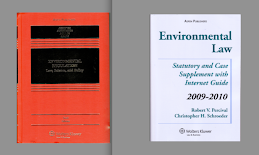
Photos of my recent trip to China with students from my class in Comparative China/U.S. Environmental Law have been posted in a new “Photo Albums” section of my parallel website at: globalenvironmentallaw.com. Simply click on the “Photo Albums” link at the top of the page on the website. On Tuesday August 21 Aspen Publishers released my 2012-13 Environmental Law: Statutory and Case Supplement. It contains not only an updated version of all the major federal environmental statutes, but also key recent environmental decisions by the U.S. Supreme Court and the D.C. Circuit’s June 26 decision upholding EPA’s regulation of greenhouse gas emissions.
The § 1504 rules require oil, gas and mining companies to disclose payments made to foreign governments. The extractive industries lobbied hard to forestall the regulations, but the SEC commissioners ultimately approved them on a 2-1 vote with two commissioners recusing themselves. The companies actually proposed what opponents dubbed the “dictator’s veto” that would have exempted reporting if the government that received the payments objected. The SEC did not adopt this proposal. Noting that reporting of payments to foreign governments has been rare, Transparency International hailed the new regulations. The European Union is considering adopting similar regulations. A vote is likely to be held in the European Parliament next month. For a powerful op-ed supporting disclosure by the former head of Libya’s national oil company, see Najwa al-Beshti, “A Libyan’s Plea to the S.E.C. on Oil Industry Transparency,” New York Times, Aug. 17, 2012, online at: http://www.nytimes.com/2012/08/18/opinion/a-libyans-plea-to-the-sec-on-oil-industry-rules.html
By a 2-1 vote the U.S. Court of Appeals for the D.C. Circuit again struck down EPA’s long-running efforts to regulate transboundary air pollution. The decision in EME Homer City Generation, L.P. v. EPA struck down the Cross-State Air Pollution Rule (CSAR) that EPA promulgated in August 2011 to replace the Clean Air Interstate Rule (CAIR) that previously had been struck down by the Court. The CSAR, referred to by the court as the Transport Rule, would have restricted emissions of sulfur dioxide and nitrogen oxides primarily from coal-fired power plants in 28 states, preventing as many as 34,000 deaths. Because the decision means that many coal-fired power plants that were slated to close in the near future may have their lives prolonged it sparked a rally in the stock market in companies that produce coal. The court majority faulted EPA for not calculating more precisely exactly how much each upwind state contributes to non-attainment in downwind states. EPA instead had calculated emissions floors that would avoid transboundary interference, but the court majority feared this could lead to some states having to control pollution more than absolutely necessary.
The Fair Labor Association, which has conducted an independent audit of Apple’s supply chain, reported last week that Apple and its largest supplier Foxconn have improved working conditions in its Chinese plants. Working hours have been reduced from 80 hours per week to between 48 and 60 hours per week and the companies generally are carrying out commitments made in response to an earlier audit.
Less than two weeks after Australia’s high court upheld Australia’s regulations requiring graphic warning labels on tobacco products, a U.S. court has invalidated similar regulations issued by the U.S. Food and Drug Administration (FDA). On August 24, the U.S. Court of Appeals for the D.C. Circuit ruled in R.J. Reynolds Tobacco Co. v. FDA that the FDA regulations, which were mandated by Congress in the Family Smoking Prevention and Tobacco Control Act, violated the companies’ First Amerndment free speech rights.
On Friday August 24 Maryland’s Environmental Law Program made its annual summer outing to Camden Yards. Environmental Clinic Director Prof. Jane Barrett, Prof. Mike Pappas and his wife Tanya, Program Managing Director Bill Piermattei, clinic fellows, and summer research assistants attended the game between the Orioles and the Toronto BLue Jays. Oriole designated hitter Chris Davis homered in each of his first three at bats, powering the Os to a 6-4 victory.
Photos of my recent trip to China with students from my class in Comparative China/U.S. Environmental Law have been posted in a new “Photo Albums” section of my parallel website at: globalenvironmentallaw.com. Simply click on the “Photo Albums” link at the top of the page on the website. On Tuesday August 21 Aspen Publishers released my 2012-13 Environmental Law: Statutory and Case Supplement. It contains not only an updated version of all the major federal environmental statutes, but also key recent environmental decisions by the U.S. Supreme Court and the D.C. Circuit’s June 26 decision upholding EPA’s regulation of greenhouse gas emissions.
Tuesday, August 21, 2012
China Trip, U.S. GHG Emissions Plunge, Arctic Drilling, China Auto Recall, Belo Monte Dam Halted, Gibson Guitar Settlement (by Bob Percival)
I returned from China on Thursday night after completing a terrific environmental field trip with students from my Vermont summer course in Comparative China/U.S. Environmental Law. On Tuesday August 14 we visited the offices of the Allbright law firm in the Citigroup Tower across the Huangpo River in Pudong. The firm has more than 400 lawyers and offices in Shanghai, Beijing, Hangzhou, Nanjing, Shenzhen, and Suzhou. It is the largest Chinese law firm in the country. Dr. Ke Chen, Mr. Jie Zhu and two associates met with us to discuss the work of the firm. Dr. Chen made a fascinating presentation about the challenges of practicing law in China. He noted that one of his most significant accomplishments has been to arrange the financing for the new generation of nuclear power plants that are being built in China. The plants use a new reactor designed by Westinghouse that is supposed to be much safer than previous designs (“the robot shoots itself” is how he described the automatic shutdown that occurs when unusual events occur).
Following our meeting, Mr. Zhu and the associates took us to lunch in the canteen in the basement of their building. After lunch we walked a few blocks to the World FInancial Center, the tallest building in China for now. The students and I went to the 101st floor observation deck where we had a spectacular view of Shanghai.
On Wednesday August 15 we visited the Shanghai offices of Roots and Shoots, the environmental organization founded by Jane Goodall. Roots and Shoots Shanghai is one of the few non-profit organizations officially registered with the Chinese government. Zhenxi Zhong, the office’s executive director, gave us a terrific presentation about the group’s work promoting environmental education in China. The group recently completed a project to plant 1 million trees in Inner Mongolia two years ahead of schedule.
We then traveled to Zhongshan Park where we were hosted for lunch at the Royal Garden Restaurant by faculty from the East China University of Political Science and Law. Joining us for lunch were Dr. Gengyun Gu, the vice rector of the university, Guoxing Xiao, who teaches energy law, Prof. Yang Qu, and two students. Following lunch we took a brief tour of the university campus, which adjoins Zhongshan Park. We then went to the Shanghai government’s Energy Conservation Center where we saw demonstrations of new technologies to use energy more efficiently. A photo album from our trip will be added to this website shortly.
The U.S. Energy Information Administration reported last week that greenhouse gas (GHG) emissions in the U.S. plunged by 5.8% in 2009 below 2008 levels from 6,983 to 6,576 million metric tons carbon dioxide equivalent. This was the largest annual drop since GHG emissions have been measured beginning in 1990. The agency gave three reasons for the decline: “an economy in recession, a particularly hard-hit energy-intensive industries sector, and a large drop in the price of natural gas that caused fuel switching away from coal to natural gas in the electric power sector.” A copy of the report is available online at: http://www.eia.gov/environment/emissions/ghg_report/
Last week Greenpeace and the Worldwide Fund for Nature issued a report warning that drilling for oil in the Pechora Sea in the Russian arctic could have disastrous consequences due to the inability to respond effectively to an oil spill in such a remote region. Russia’s state-owned oil company Gazprom has begun drilling in the area from its Prirazlomnaya offshore platform. Shell meanwhile continues to face delays in its efforts to commence drilling in the Arctic off the northern coast of Alaska.
China’s two largest exporters of automobiles - Chery Automobile and Great Wall Motor - were forced to recall most of their vehicles sold in Australia because of the discovery of asbestos contamination in the cars. Asbestos use has been banned in Australia since 2004, but it is still permitted in China.
The long-running battle over construction of the $17 billion Belo Monte dam on the Xingu River, an Amazon tributary in Brazil, entered a new phase last week when a Brazilian court ordered that construction work be suspended. The court ruled that the Brazilian government had failed to comply with the requirement that indigenous communities be consulted prior to a decision approving the project.
Two weeks ago the Gibson Guitar Corp. agreed to settle charges that it had illegally imported wood from Madagascar and India in violation of the Lacey Act. Gibson agreed to pay a $300,000 penalty and to make a $50,000 community service payment to the U.S. National Fish and Wildlife Foundation in order to avoid prosecution for the violations. The company also withdrew its claim for return of $262,000 of wood seized by federal authorities during a raid last year on the company’s factories in Tennessee. The Lacey Act makes it a federal crime to import wood taken in violation of the laws of the country of origin.
Following our meeting, Mr. Zhu and the associates took us to lunch in the canteen in the basement of their building. After lunch we walked a few blocks to the World FInancial Center, the tallest building in China for now. The students and I went to the 101st floor observation deck where we had a spectacular view of Shanghai.
On Wednesday August 15 we visited the Shanghai offices of Roots and Shoots, the environmental organization founded by Jane Goodall. Roots and Shoots Shanghai is one of the few non-profit organizations officially registered with the Chinese government. Zhenxi Zhong, the office’s executive director, gave us a terrific presentation about the group’s work promoting environmental education in China. The group recently completed a project to plant 1 million trees in Inner Mongolia two years ahead of schedule.
We then traveled to Zhongshan Park where we were hosted for lunch at the Royal Garden Restaurant by faculty from the East China University of Political Science and Law. Joining us for lunch were Dr. Gengyun Gu, the vice rector of the university, Guoxing Xiao, who teaches energy law, Prof. Yang Qu, and two students. Following lunch we took a brief tour of the university campus, which adjoins Zhongshan Park. We then went to the Shanghai government’s Energy Conservation Center where we saw demonstrations of new technologies to use energy more efficiently. A photo album from our trip will be added to this website shortly.
The U.S. Energy Information Administration reported last week that greenhouse gas (GHG) emissions in the U.S. plunged by 5.8% in 2009 below 2008 levels from 6,983 to 6,576 million metric tons carbon dioxide equivalent. This was the largest annual drop since GHG emissions have been measured beginning in 1990. The agency gave three reasons for the decline: “an economy in recession, a particularly hard-hit energy-intensive industries sector, and a large drop in the price of natural gas that caused fuel switching away from coal to natural gas in the electric power sector.” A copy of the report is available online at: http://www.eia.gov/environment/emissions/ghg_report/
Last week Greenpeace and the Worldwide Fund for Nature issued a report warning that drilling for oil in the Pechora Sea in the Russian arctic could have disastrous consequences due to the inability to respond effectively to an oil spill in such a remote region. Russia’s state-owned oil company Gazprom has begun drilling in the area from its Prirazlomnaya offshore platform. Shell meanwhile continues to face delays in its efforts to commence drilling in the Arctic off the northern coast of Alaska.
China’s two largest exporters of automobiles - Chery Automobile and Great Wall Motor - were forced to recall most of their vehicles sold in Australia because of the discovery of asbestos contamination in the cars. Asbestos use has been banned in Australia since 2004, but it is still permitted in China.
The long-running battle over construction of the $17 billion Belo Monte dam on the Xingu River, an Amazon tributary in Brazil, entered a new phase last week when a Brazilian court ordered that construction work be suspended. The court ruled that the Brazilian government had failed to comply with the requirement that indigenous communities be consulted prior to a decision approving the project.
Two weeks ago the Gibson Guitar Corp. agreed to settle charges that it had illegally imported wood from Madagascar and India in violation of the Lacey Act. Gibson agreed to pay a $300,000 penalty and to make a $50,000 community service payment to the U.S. National Fish and Wildlife Foundation in order to avoid prosecution for the violations. The company also withdrew its claim for return of $262,000 of wood seized by federal authorities during a raid last year on the company’s factories in Tennessee. The Lacey Act makes it a federal crime to import wood taken in violation of the laws of the country of origin.
Saturday, August 18, 2012
Delayed Aug. 12 Blog Post: China Trip, UN Criticizes Ethanol Mandate (by Bob Percival)
This is the blog post I posted on August 12 on my parallel website at: www.globalenvironmentallaw.com. I was unable to post it here until returning from China because blogspot apparently was block in China.
I have been in China for the past week with a group of four students from my summer Vermont Law School class in Comparative China/U.S. Environmental Law. On Wednesday August 7 we visited the Beijing offices of the Natural Resources Defense Council (NRDC). Bernadette Brennan, who directs the office’s environmental law program, gave us a wonderful presentation on NRDC’s work in China. The group focuses on environment, energy, climate, and urban development issues. She explained that most of the environmental litigation in China actually has been brought on behalf of private individuals, but that the first genuine public interest suit was filed late last year by Chinese environmental groups suing a factory that had dumped chromium in a river. We also discussed NRDC’s Pollution Information Transparency Index (PITI) that rates more than 100 Chinese cities on how well they are doing in providing the public with access to environmental information.
On Thursday August 8 we visited the Center for Legal Assistance to Pollution Victims (CLAPV) near the campus of the China University of Political Science and Law (CUPL), where I taught as a Fulbright scholar during the spring semester 2008. CLAPV’s director Wang Canfa was in Cambodia, so we were hosted by Professor Hu Jing, who had been a visiting scholar at the University of Maryland School of Law during the 2005-06 academic year. We then visited the offices of China’s first private law firm devoted to plaintiffs’ environmental issues. Liu Jinmei, a lawyer with the firm, explained that Professor Wang and other prominent public interest environmental lawyers founded the firm to make it easier to bring certain cases in light of restrictions on litigation by organizations.
Following a lunch hosted by Professor Hu and Ms. Liu, we visited the Central University of Finance and Economics (CUFE) where Maryland has a student exchange program run by Professor Dan Mitterhoff. Professor Miterhoff gave us an informative presentation about the state of the Chinese legal system. He then introduced us to some of the students participating in the exchange program in which groups of Chinese students take their classes together with the students from other countries during the fall semester and then come to the U.S. for classes during the spring.
On Friday August 9 we visited the Great Wall at Mutianyu prior to catching a plane to Qingdao, a beautiful coastal city east of Beijing. Profess Yu Ming of Ocean University Law School met us at the airport in Qingdao and took us to a lovely hotel situated on a bluff above the beach. On Saturday August 10 Professor Yu led us on a hike across the beaches and around the peninsula to Little Fish Hill where we had stunningly beautiful views of the city. After a visit to a former civil air defense bomb shelter that has been converted into shopping mall, we had lunch at a wonderful family restaurant that Professor Yu has long patronized. We then went to Beer Street and toured the Beer Museum at the Tsingtao Factory. Surprisingly, an entire room of the museum was devoted to environmental issues in light of the fact that Tsingtao had been declared the top of the 100 green companies in China. The exhibits included a shrine to Rachel Carson and information on the history of global environmental law.
In the evening we visited the Qingdao Olympic Sailing Center where the sailing events had been held during the 2008 Beijing Olympics. Dean Xu of Ocean University then hosted us for a wonderful dinner at a hotel just across from the site of the Qingdao International Beer Festival, which had just opened. After dinner we went to the festival, which featured some amazing sights, including many people standing on tables, dancing, and spraying pitchers of beer on each other.
On Sunday August 12 we flew from Qingdao to Shanghai. On Sunday night we met Marcus and Derrick Wang at the Hyatt’s Vue Bar. Marcus, who graduated from Maryland in 2009, is now director of business development in Shanghai for Under Armour, the Maryland-based athletic apparel company. His brother Derrick, a former student of mine, is currently a 3L at Maryland and an accomplished pianist and composer.
On Monday August 13 we visited the offices of the Shanghai Academy of Environmental Sciences (SAES). I made a presentation to the Academy on the history of air pollution control. SAES has been given the responsibility of monitoring air pollution in Shanghai and developing a strategy to control it by determining its precise sources. Dr. Changhong Chen, Director of SAES’s Atmospheric Environment Institute, gave us a tour of the Air Pollution Observation and Experiment Base and demonstrated how their highly sophisticated air pollution monitoring equipment works. After the visit to SAES, Professor Ying-ge Ma gave us a tour of the nearby Giulin Gardens.
We are so appreciative of everyone who has helped make this trip such a terrific success, in particular Professor Zhao Huiyu of Shanghai Jiaotong University Law School who helped organize the Shanghai portion of the trip, and Professor Yu Ming from Ocean University Law School who hosted us in Qingdao. Today we will tour a Chinese law firm in Pudong and tomorrow we will visit faculty from the East China University of Politics and Law and the Shanghai Government’s Energy Conservation Center.
We have been so busy on our China trip that it has been difficult to keep up on environmental news from around the world. Last week a United Nations official urged the U.S. to suspend the federal mandate to increase ethanol production because of surging global corn prices in the wake of the drought afflicting the U.S. Jose Graziano da Silva, director-general of the UN’s Food and Agriculture Organisation, has warned that the federal mandate to produce more ethanol could divert as much as 40% of U.S. corn production into fuel, harming world food supplies. Various groups in the U.S. also are petitioning EPA to waive the ethanol mandate. Javier Blas & Gregory Meyer, UN Urges US to Cut Ethanol Production, Financial Times, Aug. 9, 2012.
I have been in China for the past week with a group of four students from my summer Vermont Law School class in Comparative China/U.S. Environmental Law. On Wednesday August 7 we visited the Beijing offices of the Natural Resources Defense Council (NRDC). Bernadette Brennan, who directs the office’s environmental law program, gave us a wonderful presentation on NRDC’s work in China. The group focuses on environment, energy, climate, and urban development issues. She explained that most of the environmental litigation in China actually has been brought on behalf of private individuals, but that the first genuine public interest suit was filed late last year by Chinese environmental groups suing a factory that had dumped chromium in a river. We also discussed NRDC’s Pollution Information Transparency Index (PITI) that rates more than 100 Chinese cities on how well they are doing in providing the public with access to environmental information.
On Thursday August 8 we visited the Center for Legal Assistance to Pollution Victims (CLAPV) near the campus of the China University of Political Science and Law (CUPL), where I taught as a Fulbright scholar during the spring semester 2008. CLAPV’s director Wang Canfa was in Cambodia, so we were hosted by Professor Hu Jing, who had been a visiting scholar at the University of Maryland School of Law during the 2005-06 academic year. We then visited the offices of China’s first private law firm devoted to plaintiffs’ environmental issues. Liu Jinmei, a lawyer with the firm, explained that Professor Wang and other prominent public interest environmental lawyers founded the firm to make it easier to bring certain cases in light of restrictions on litigation by organizations.
Following a lunch hosted by Professor Hu and Ms. Liu, we visited the Central University of Finance and Economics (CUFE) where Maryland has a student exchange program run by Professor Dan Mitterhoff. Professor Miterhoff gave us an informative presentation about the state of the Chinese legal system. He then introduced us to some of the students participating in the exchange program in which groups of Chinese students take their classes together with the students from other countries during the fall semester and then come to the U.S. for classes during the spring.
On Friday August 9 we visited the Great Wall at Mutianyu prior to catching a plane to Qingdao, a beautiful coastal city east of Beijing. Profess Yu Ming of Ocean University Law School met us at the airport in Qingdao and took us to a lovely hotel situated on a bluff above the beach. On Saturday August 10 Professor Yu led us on a hike across the beaches and around the peninsula to Little Fish Hill where we had stunningly beautiful views of the city. After a visit to a former civil air defense bomb shelter that has been converted into shopping mall, we had lunch at a wonderful family restaurant that Professor Yu has long patronized. We then went to Beer Street and toured the Beer Museum at the Tsingtao Factory. Surprisingly, an entire room of the museum was devoted to environmental issues in light of the fact that Tsingtao had been declared the top of the 100 green companies in China. The exhibits included a shrine to Rachel Carson and information on the history of global environmental law.
In the evening we visited the Qingdao Olympic Sailing Center where the sailing events had been held during the 2008 Beijing Olympics. Dean Xu of Ocean University then hosted us for a wonderful dinner at a hotel just across from the site of the Qingdao International Beer Festival, which had just opened. After dinner we went to the festival, which featured some amazing sights, including many people standing on tables, dancing, and spraying pitchers of beer on each other.
On Sunday August 12 we flew from Qingdao to Shanghai. On Sunday night we met Marcus and Derrick Wang at the Hyatt’s Vue Bar. Marcus, who graduated from Maryland in 2009, is now director of business development in Shanghai for Under Armour, the Maryland-based athletic apparel company. His brother Derrick, a former student of mine, is currently a 3L at Maryland and an accomplished pianist and composer.
On Monday August 13 we visited the offices of the Shanghai Academy of Environmental Sciences (SAES). I made a presentation to the Academy on the history of air pollution control. SAES has been given the responsibility of monitoring air pollution in Shanghai and developing a strategy to control it by determining its precise sources. Dr. Changhong Chen, Director of SAES’s Atmospheric Environment Institute, gave us a tour of the Air Pollution Observation and Experiment Base and demonstrated how their highly sophisticated air pollution monitoring equipment works. After the visit to SAES, Professor Ying-ge Ma gave us a tour of the nearby Giulin Gardens.
We are so appreciative of everyone who has helped make this trip such a terrific success, in particular Professor Zhao Huiyu of Shanghai Jiaotong University Law School who helped organize the Shanghai portion of the trip, and Professor Yu Ming from Ocean University Law School who hosted us in Qingdao. Today we will tour a Chinese law firm in Pudong and tomorrow we will visit faculty from the East China University of Politics and Law and the Shanghai Government’s Energy Conservation Center.
We have been so busy on our China trip that it has been difficult to keep up on environmental news from around the world. Last week a United Nations official urged the U.S. to suspend the federal mandate to increase ethanol production because of surging global corn prices in the wake of the drought afflicting the U.S. Jose Graziano da Silva, director-general of the UN’s Food and Agriculture Organisation, has warned that the federal mandate to produce more ethanol could divert as much as 40% of U.S. corn production into fuel, harming world food supplies. Various groups in the U.S. also are petitioning EPA to waive the ethanol mandate. Javier Blas & Gregory Meyer, UN Urges US to Cut Ethanol Production, Financial Times, Aug. 9, 2012.
Aug. 5th Delayed Blog Post: Extreme Weather & Climate Change, EU Aviation Cap & Trade, Brazilian Court Enjoins Chevron and Transocean, ABA annual meeting, China trip (by Bob Percival)
THis is a copy of my Aug. 5 blog post that I posted on my parallel blog at www.globalenvironmentallaw.com. I was unable to post it on blogspot until now because I was in China where blogspot is blocked.
Dozens of homes near Oklahoma City burned last week as extreme drought and temperatures reaching 113 degrees Fahrenheit fueled devastating wildfires. Climate scientist James Hansen, published a paper last week linking global warming and climate change to an increase in the frequency of extreme weather events. The study, “Perception of Climate Change,” is published in the Proceedings of the National Academy of Sciences, is available online at: http://www.pnas.org/content/early/2012/07/30/1205276109. This is an excerpt from the abstract: “The distribution of seasonal mean temperature anomalies has shifted toward higher temperatures and the range of anomalies has increased. An important change is the emergence of a category of summertime extremely hot outliers, more than three standard deviations (3σ) warmer than the climatology of the 1951–1980 base period. This hot extreme, which covered much less than 1% of Earth’s surface during the base period, now typically covers about 10% of the land area. It follows that we can state, with a high degree of confidence, that extreme anomalies such as those in Texas and Oklahoma in 2011 and Moscow in 2010 were a consequence of global warming because their likelihood in the absence of global warming was exceedingly small.”
Last week the U.S. State and Transportation Departments hosted a meeting of 17 non-European nations to coordinate their opposition to the EU’s cap-and-trade program for emissions from airlines flying to and from the EU. On August 1 a Senate committee approved a bill forbidding U.S. airlines from participating in the program. Such legislation already has passed the House of Representatives. Delta, AMR and United Continental asked the Obama administration in a letter last week to file an Article 84 action with the International Civil Aviation Organizations (ICAO) to declare the EU program inconsistent with global aviation standards. Sixteen environmental groups sent a letter asking the administration not to file such a complaint, citing the need to curb aviation emissions of carbon, which now constitute 3% of global carbon emissions and which are projected nearly to double by 2025.
Last Tuesday a Brazilian appellate court ordered the Chevron Corporation and Transocean Ltd. to stop producing or transporting oil in Brazil within 30 days pending the completion of an investigation of a November 2011 oil spill in the Frade offshore oil field. The spill released only 3,700 barrels of oil from the seabed, but Brazilian authorities have reacted harshly, threatening criminal prosecution against Chevron executives. Transocean operates ten drilling platforms in Brazil, including seven for Petrobras, the now-publicly traded oil company formerly owned by the Brazilian government. The companies have vowed to challenge the injunction. Jeff Fick, Chevron, Transocean Halted in Brazil for Month, Wall St. J., Aug. 2, 2012, at B3.
Chevron is moving aggressively to buy land in Europe suitable for production of shale gas. It is estimated that Europe has 639 trillion cubic feet of recoverable shale gas, nearly as much as the United States, which is estimated to have 862 trillion cubic feet of such gas reserves. Chevron has purchased huge swaths of land from Bulgaria to Poland where it believes the potential for producing gas through hydrofracturing is the greatest. Environmental opposition to fracking may slow its use in Europe as France and Bulgaria have banned the practice and Romania and the Czech Republic also are considering bans. Chevron believes that Eastern Europe’s desire to reduce its reliance on gas from Russia ultimately will tip the balance in favor of fracking. Guy Chazan, Oilmen Hope to Carry Shale Revolution Across the Pond, Financial Times, Aug. 3, 2012, at 14.
Last Thursday I finished my last Comparative China/U.S. Environmental Law class at Vermont Law School. On Friday I flew to Chicago where I participated on a panel at the ABA Annual Meeting on “Overriding the Experts: Executive Rejection of Administrative Agency Expertise.” The panel was moderated for the ABA’s Administrative Law Section by Professor James O’Reilly of the University of Cincinnati. Also participating on the panel were Ralph Tyler of Venable LLP, who discussed political intervention into the FDA’s Plan B decision, and University of Akron Professor Katherine Van Tassel who gave an excellent overview of the history of the issue.
I have just arrived in Beijing where I will be spending the next two weeks taking four of my Vermont students on an environmental law field trip. As usual when I am in China I may not be able to make postings on one or the other of my blogs, the reason I publish parallel blogs.
Dozens of homes near Oklahoma City burned last week as extreme drought and temperatures reaching 113 degrees Fahrenheit fueled devastating wildfires. Climate scientist James Hansen, published a paper last week linking global warming and climate change to an increase in the frequency of extreme weather events. The study, “Perception of Climate Change,” is published in the Proceedings of the National Academy of Sciences, is available online at: http://www.pnas.org/content/early/2012/07/30/1205276109. This is an excerpt from the abstract: “The distribution of seasonal mean temperature anomalies has shifted toward higher temperatures and the range of anomalies has increased. An important change is the emergence of a category of summertime extremely hot outliers, more than three standard deviations (3σ) warmer than the climatology of the 1951–1980 base period. This hot extreme, which covered much less than 1% of Earth’s surface during the base period, now typically covers about 10% of the land area. It follows that we can state, with a high degree of confidence, that extreme anomalies such as those in Texas and Oklahoma in 2011 and Moscow in 2010 were a consequence of global warming because their likelihood in the absence of global warming was exceedingly small.”
Last week the U.S. State and Transportation Departments hosted a meeting of 17 non-European nations to coordinate their opposition to the EU’s cap-and-trade program for emissions from airlines flying to and from the EU. On August 1 a Senate committee approved a bill forbidding U.S. airlines from participating in the program. Such legislation already has passed the House of Representatives. Delta, AMR and United Continental asked the Obama administration in a letter last week to file an Article 84 action with the International Civil Aviation Organizations (ICAO) to declare the EU program inconsistent with global aviation standards. Sixteen environmental groups sent a letter asking the administration not to file such a complaint, citing the need to curb aviation emissions of carbon, which now constitute 3% of global carbon emissions and which are projected nearly to double by 2025.
Last Tuesday a Brazilian appellate court ordered the Chevron Corporation and Transocean Ltd. to stop producing or transporting oil in Brazil within 30 days pending the completion of an investigation of a November 2011 oil spill in the Frade offshore oil field. The spill released only 3,700 barrels of oil from the seabed, but Brazilian authorities have reacted harshly, threatening criminal prosecution against Chevron executives. Transocean operates ten drilling platforms in Brazil, including seven for Petrobras, the now-publicly traded oil company formerly owned by the Brazilian government. The companies have vowed to challenge the injunction. Jeff Fick, Chevron, Transocean Halted in Brazil for Month, Wall St. J., Aug. 2, 2012, at B3.
Chevron is moving aggressively to buy land in Europe suitable for production of shale gas. It is estimated that Europe has 639 trillion cubic feet of recoverable shale gas, nearly as much as the United States, which is estimated to have 862 trillion cubic feet of such gas reserves. Chevron has purchased huge swaths of land from Bulgaria to Poland where it believes the potential for producing gas through hydrofracturing is the greatest. Environmental opposition to fracking may slow its use in Europe as France and Bulgaria have banned the practice and Romania and the Czech Republic also are considering bans. Chevron believes that Eastern Europe’s desire to reduce its reliance on gas from Russia ultimately will tip the balance in favor of fracking. Guy Chazan, Oilmen Hope to Carry Shale Revolution Across the Pond, Financial Times, Aug. 3, 2012, at 14.
Last Thursday I finished my last Comparative China/U.S. Environmental Law class at Vermont Law School. On Friday I flew to Chicago where I participated on a panel at the ABA Annual Meeting on “Overriding the Experts: Executive Rejection of Administrative Agency Expertise.” The panel was moderated for the ABA’s Administrative Law Section by Professor James O’Reilly of the University of Cincinnati. Also participating on the panel were Ralph Tyler of Venable LLP, who discussed political intervention into the FDA’s Plan B decision, and University of Akron Professor Katherine Van Tassel who gave an excellent overview of the history of the issue.
I have just arrived in Beijing where I will be spending the next two weeks taking four of my Vermont students on an environmental law field trip. As usual when I am in China I may not be able to make postings on one or the other of my blogs, the reason I publish parallel blogs.
Monday, July 30, 2012
CNOOC ACQUISITION, AMAZON PROTEST, CHINESE PROTESTS BLOCKS PIPELINE, RETURN TO CHINA (by Bob Percival)
China’s state-owned oil company Cnooc Ltd. announced last week that it was offering $15.1 billion to acquire Canadian oil company Nexen. Nexen owns oil and shale gas properties in Alberta and leases for offshore oil drilling in the Gulf of Mexico. Because of the U.S. properties Nexen owns, U.S. regulators are likely to have some say in the transaction. Senator Charles Schumer argued that this leverage should be used to level the playing field by making it easier for U.S. companies to acquire companies in China. The deal is seen as a reflection of China’s growing global energy needs and some observers believe that it will be only the first in a wave of acquisitions by Chinese oil companies. The International Energy Agency forecasts that China may need net oil imports of 12 million barrels per day by the year 2035.
Three engineers for the Norte Energia Company, which is constructing the controversial Belo Monte dam in Brazil’s Amazon, were held last week by protesters from the Juruna and Arara tribes. The 11,233MW dam, which would be the third largest in the world, is being built on the Xingu River in Brazil. The engineers had met with tribal leaders to respond to their complaints about dislocations caused by the construction. The tribes apparently did not like what the engineers told them so they confined their visitors to the village in protest. Paulo Winterstein, Tribes Hold Engineers of Dam in Brazil, Wall St. J., July 26, 2012, at A8.
Anti-nuclear protests appear to be growing in Japan in the wake of the Fukushima Daichi nuclear accident, but they have yet to generate fundamental changes in Japanese politics. Yuka Hayashi & Toko Sekiguchi, Japan Antinuclear Movement Faces Tests in Poll, Rally, Wall St J., July 28-29, 2012, at A8. Tetsunari Iida, a former government employee running for provincial governor position was defeated on Sunday despite his pledge to scrap a nuclear power plant. His successful opponent, however, was forced to advocate “suspension” of operations for the time being in response to the antinuclear campaign. A group of retired engineers is pushing a plan to have remediation of the damaged reactors conducted by an independent team of older workers, claiming that Tokyo Electric has lost all credibility with its cleanup operations. Mure Dickie, Japan’s Veterans FIght to Relieve Young Workers of Nuclear Risk, FInancial Times, July 28-29, 2012, at 6.
A violent protest by residents of Qidong China has led the local government to abandon plans for a 70-mile sewage pipeline that would have discharged into the ocean near the city. A large crowd of protesters had stormed a local government building and overturned cars out of anger over the project that would have served a paper mill owned by a Japanese company. While such protests seem to be making more people confident that they can effect change in China, it would be preferable if ill-advised projects could be blocked by the decisions of an independent judiciary ruling on the merits, rather than as a political response to mob pressure.
Last Tuesday I gave a morning-long lecture to a group of nearly 20 Chinese judges who are in Vermont for part of a judicial training course run by Vermont Law School. The judges come from all parts of China and all levels of the Chinese judiciary. The group was very active in asking questions about the operation of the U.S. legal system. Next Sunday I will be returning to China on a field trip with some of the students from my Comparative China/U.S. Environmental Law course.
Three engineers for the Norte Energia Company, which is constructing the controversial Belo Monte dam in Brazil’s Amazon, were held last week by protesters from the Juruna and Arara tribes. The 11,233MW dam, which would be the third largest in the world, is being built on the Xingu River in Brazil. The engineers had met with tribal leaders to respond to their complaints about dislocations caused by the construction. The tribes apparently did not like what the engineers told them so they confined their visitors to the village in protest. Paulo Winterstein, Tribes Hold Engineers of Dam in Brazil, Wall St. J., July 26, 2012, at A8.
Anti-nuclear protests appear to be growing in Japan in the wake of the Fukushima Daichi nuclear accident, but they have yet to generate fundamental changes in Japanese politics. Yuka Hayashi & Toko Sekiguchi, Japan Antinuclear Movement Faces Tests in Poll, Rally, Wall St J., July 28-29, 2012, at A8. Tetsunari Iida, a former government employee running for provincial governor position was defeated on Sunday despite his pledge to scrap a nuclear power plant. His successful opponent, however, was forced to advocate “suspension” of operations for the time being in response to the antinuclear campaign. A group of retired engineers is pushing a plan to have remediation of the damaged reactors conducted by an independent team of older workers, claiming that Tokyo Electric has lost all credibility with its cleanup operations. Mure Dickie, Japan’s Veterans FIght to Relieve Young Workers of Nuclear Risk, FInancial Times, July 28-29, 2012, at 6.
A violent protest by residents of Qidong China has led the local government to abandon plans for a 70-mile sewage pipeline that would have discharged into the ocean near the city. A large crowd of protesters had stormed a local government building and overturned cars out of anger over the project that would have served a paper mill owned by a Japanese company. While such protests seem to be making more people confident that they can effect change in China, it would be preferable if ill-advised projects could be blocked by the decisions of an independent judiciary ruling on the merits, rather than as a political response to mob pressure.
Last Tuesday I gave a morning-long lecture to a group of nearly 20 Chinese judges who are in Vermont for part of a judicial training course run by Vermont Law School. The judges come from all parts of China and all levels of the Chinese judiciary. The group was very active in asking questions about the operation of the U.S. legal system. Next Sunday I will be returning to China on a field trip with some of the students from my Comparative China/U.S. Environmental Law course.
Monday, July 23, 2012
U.S. Ratification of Law of Sea Treaty Blocked Again, D.C. Circuit Upholds EPA NOX NAAQS, Vermont China Course (by Bob Percival)
Despite another concerted effort to have the U.S. Senate ratify the Law of the Sea Treaty, conservative Republicans announced last week that they had enough votes to block ratification. Support for ratification includes an unusually broad coalition of environmental, business, military and government leaders who argue that it will give the U.S. more clout in resolving disputes over Arctic resources and over control of the South China Sea. As noted in previous blog posts, the U.S. Chamber of Commerce has sponsored full page ads supporting ratification, perhaps the only time that they have supported environmental interests, but a small group of conservatives who argue that any foreign treaty infringes on U.S. sovereignty has vehemently opposed ratification for decades. Senator Jim Demint (R-S.C.) announced that he had obtained commitments from four more Republicans to vote against ratification, bringing the number of opponents to 34, enough to prevent the necessary two-thirds vote for ratification in the Senate. The new commitments to vote against ratification came from Republican Senators Mike Johanns of Nebraska, Kelly Ayotte of New Hampshire, Rob Portman of Ohio, and Johnny Isakkson of Georgia. In a subsequent interview with Phyllis Schaffly’s Eagle Forum, Demint essentially agreed that Republicans should never support ratification of any treaty.
On July 17 the U.S. Court of Appeals for the D.C. Circuit rejected industry challenges to EPA’s new 1-hour national ambient air quality standard (NAAQS) for nitrogen oxide (NO2). The court unanimously ruled that EPA had not acted arbitrarily or capriciously in promulgating the standard, which was found to be consistent with the Clean Air Act. The decision’s language bluntly rebuked the petitioners for some of their attacks on the agency’s action, which the court implied were rather far-fetched.
Today I started teaching a course in Comparative China/U.S. Environmental Law at Vermont Law School. I am staying in a beautiful cabin near Barnard, Vermont where I can really enjoy nature in between classes. The course will meet for two weeks and then some of my students will accompany me on a field trip to China. I have long wanted to teach in Vermont’s wonderful summer program and I am delighted that I finally am able to make it happen.
On July 17 the U.S. Court of Appeals for the D.C. Circuit rejected industry challenges to EPA’s new 1-hour national ambient air quality standard (NAAQS) for nitrogen oxide (NO2). The court unanimously ruled that EPA had not acted arbitrarily or capriciously in promulgating the standard, which was found to be consistent with the Clean Air Act. The decision’s language bluntly rebuked the petitioners for some of their attacks on the agency’s action, which the court implied were rather far-fetched.
Today I started teaching a course in Comparative China/U.S. Environmental Law at Vermont Law School. I am staying in a beautiful cabin near Barnard, Vermont where I can really enjoy nature in between classes. The course will meet for two weeks and then some of my students will accompany me on a field trip to China. I have long wanted to teach in Vermont’s wonderful summer program and I am delighted that I finally am able to make it happen.
Subscribe to:
Posts (Atom)