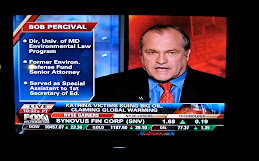
On Friday morning September 19, I participated in a panel on “China and the Environment -- A Conservation with Experts on Environmental Protection, Development of Natural Resources, Energy Use, and Health and Safety in China” at the fall conference of the ABA’s Section of Environment, Energy & Resources (SEER). The conference was held at the Biltmore Resort in Phoenix, Arizona. The panel was moderated by Margret J. Kim, senior advisor on International Climate Change and China Program Director for the California Air Resources Board. EPA attorney Steve Wolfson discussed the prospects for China controlling its emissions of greenhouse gases, noting that the Chinese government has been quietly shutting down many old, inefficient coal-fired power plants. Former EPA general counsel Roger Martella discussed the huge market for clean energy technologies in China and the rapid growth of wind power in China. I discussed the prospects for democratization in China and the need for greater centralization of authority to enforce Chinese environmental laws.
I was particularly struck last week by reports that the Chinese central government did not learn of the scandal involving Chinese infant formula contaminated with melamine until it was informed by the government of New Zealand. The contaminated formula has caused the deaths of some infants and sickened hundreds of others in China. It was produced by the Sanlu Group, a Chinese company whose New Zealand business partner was appalled when it was informed of the problem but told that there would be no public announcement of it. The New Zealand company then informed its government, who notified Chinese authorities. As other countries now restrict imports of Chinese dairy products, it seems likely that the Chinese central government will have to do much more to ensure the public in both China and export markets of the safety of Chinese products.
This week’s incredible gyrations in U.S. financial markets, including the sudden bankruptcy of Lehman Brothers, the sale of Merrill Lynch, the U.S. government bailout of AIG, and massive federal intervention to shore up financial markets, may signal a substantial shift in the relationship between government and business. Globalization and deregulation have made markets so interconnected that bad business decisions can have ripple effects that have much broader consequences than previously. The collapse of the Russian stock market earlier in the week was viewed by some as the global marketplace’s response to Russia’s invasion of Georgia and Russia’s reckless treatment of foreign investment partners. By the end of the week both the U.S. and Russian governments intervened to shore up their markets, at least temporarily, but the long-term effects of the bursting of the housing bubble in the U.S. are likely to persist for a long time to come.
After I flew into Phoenix on Thursday night I met five of my former students for drinks. Two of the Maryland alums - Brad and Karlene Martorama -- now work for law firms in Phoenix. The three others were in Phoenix for the SEER conference. They included Andrea Curatola, who is an attorney at the Nuclear Regulatory Commission (NRC); Sriram Gopal, an attorney for EPA; and Rich Kuhn, who works for a law firm in Washington, D.C. Andrea’s expertise proved useful when a question arose at the SEER panel on regulation of nuclear power in China.
On the way back to Washington from Phoenix I stopped in Denver and saw a baseball game in Coors Field for the first time. On Saturday I stopped in Dallas and caught a game at the Ballpark in Arlington with my nephew who works there for the Texas Rangers.
Sunday, September 21, 2008

Sunday, September 7, 2008
Tata Nano Plant Protest in India, Bisphenol-A in U.S. (by Bob Percival)
On January 13, 2008, this blog reported the announcement that Tata Motors of India had developed an automobile that would sell for one lakh (100,000 rupees, or approximately $2,300). This week construction of a $350 million production plant for the Nano in the state of West Bengal was briefly halted by vehement protests from farmers and local political leaders complaining about forcible seizures of land for the plant. During the course of the protests, Tata Motors threatened to move the location of the production plant to another part of India. The state governor of West Bengal, Gopal Krishna Gandhi, brokered a meeting between officials of the Communist Party of India, which supports the plant, and representatives of the opposition Trinamool Congress party, which opposes it. The Associated Press reports that today it was announced that the protests will be called off after the state government agreed to provide greater compensation to those who lost their land. The opposition is declaring the compensation agreement to be “a big win for us.”
Protests over seizures of land for economic development also are becoming increasingly common in China. When I discussed the U.S. Supreme Court’s decision in Kelo v. City of New London in my Environmental Law class in Beijing, my Chinese students were highly critical of the decision because it upheld the U.S. government’s right to seize land for purposes of economic development. A major reason for their opposition is that this practice is quite common in China, but the compensation provided by the Chinese government when land is seized is viewed as grossly inadequate. Yet few protests in China succeed because the government does not have well developed protections for property rights. This is one reason why China has been able to develop large infrastructure projects more quickly than India. While it is too soon to tell, the settlement of the Tata protests may signal that when the stakes are high enough, Indian political leaders can afford to grease the wheels of development.
Controversy continues in the United States over the safety of a chemical - bisphenol-A - that is widely used to harden plastics. In April of this year Canadian health authorities concluded that the chemical may pose some risks to infants because of test data associating it with toxic effects in animals. The data had been obtained through targeted testing pursuant to the government’s new chemical control law that is similar to the European Union’s REACH program. These programs require extensive testing before new chemicals can be marketed and they establish tiered testing procedures to assess the safety of chemicals already on the market.
In April 2008 the Canadian Health Minister announced plans to ban the sale of products containing bisphenol-A in baby bottles. At the same time retailers such as Walmart agreed not to sell food containers, bottles and pacifiers containing the chemical and Nalgene, a manufacturer of water bottles, agreed to discontinue use of the chemical. The American Chemistry Council, a chemical industry trade association, continues to insist that the chemical can be safely used in such products. Their position recently received support from the U.S. Food and Drug Administration, which reported that human exposures from use in consumers products were too low to be dangerous. However, this week researchers at Yale released a study linking the chemical to neurological problems and mood disorders in monkeys. Lyndsey Layton, Chemical in Plastic Is Connected to Health Problems in Monkeys, New York Times, Sept. 4, 2008, p. A2. The responses of the Canadian and U.S. governments to the test data seem to reflect a more precautionary approach in Canada than in the United States.
Protests over seizures of land for economic development also are becoming increasingly common in China. When I discussed the U.S. Supreme Court’s decision in Kelo v. City of New London in my Environmental Law class in Beijing, my Chinese students were highly critical of the decision because it upheld the U.S. government’s right to seize land for purposes of economic development. A major reason for their opposition is that this practice is quite common in China, but the compensation provided by the Chinese government when land is seized is viewed as grossly inadequate. Yet few protests in China succeed because the government does not have well developed protections for property rights. This is one reason why China has been able to develop large infrastructure projects more quickly than India. While it is too soon to tell, the settlement of the Tata protests may signal that when the stakes are high enough, Indian political leaders can afford to grease the wheels of development.
Controversy continues in the United States over the safety of a chemical - bisphenol-A - that is widely used to harden plastics. In April of this year Canadian health authorities concluded that the chemical may pose some risks to infants because of test data associating it with toxic effects in animals. The data had been obtained through targeted testing pursuant to the government’s new chemical control law that is similar to the European Union’s REACH program. These programs require extensive testing before new chemicals can be marketed and they establish tiered testing procedures to assess the safety of chemicals already on the market.
In April 2008 the Canadian Health Minister announced plans to ban the sale of products containing bisphenol-A in baby bottles. At the same time retailers such as Walmart agreed not to sell food containers, bottles and pacifiers containing the chemical and Nalgene, a manufacturer of water bottles, agreed to discontinue use of the chemical. The American Chemistry Council, a chemical industry trade association, continues to insist that the chemical can be safely used in such products. Their position recently received support from the U.S. Food and Drug Administration, which reported that human exposures from use in consumers products were too low to be dangerous. However, this week researchers at Yale released a study linking the chemical to neurological problems and mood disorders in monkeys. Lyndsey Layton, Chemical in Plastic Is Connected to Health Problems in Monkeys, New York Times, Sept. 4, 2008, p. A2. The responses of the Canadian and U.S. governments to the test data seem to reflect a more precautionary approach in Canada than in the United States.
Monday, September 1, 2008
Visiting Uganda Scholar, ANWR & China Car Tax
This week Professor Emmanuel Kasimbazi from the Faculty of Law at Makerere University in Kampala, Uganda, arrived at Maryland to begin his time as a visiting scholar. Professor Kasimbazi is an expert on environmental law. He received his LL.M. in Environmental Law from the University of Calgary in 1995. He currently is the President of the East African Association for Environmental Impact Assessment and the Vice President of the Association for Environmental Law Lecturers in African Universities. Prof. Kasimbazi has extensive experience in energy law, water law and forestry law. He has been a consultant to the World Bank, the African Development Bank, the United Nations Environment Programme, and the European Union.
I first met Prof. Kasimbazi in 1999 when I presented an Environmental Law Workshop in Uganda for the American Bar Association’s African Law Initiative. I was very impressed with him then and I subsequently have encountered him at meetings of members of the IUCN Commission on Environmental Law. Prof. Kasimbazi’s visit is funded by a J. William Fulbright scholarship. He will be in residence at the law school through the end of January 2009. I am sure that Prof. Kasimbazi will be a big help to me in putting together the casebook on Global Environmental Law that I am co-authoring with Prof. Tseming Yang.
I am currently working on the sixth edition of the environmental law casebook that I co-author with Chris Schroeder, Alan Miller and Jim Leape. Chapter One of the book raises the question of whether the Arctic National WIldlife Refuge (ANWR) should be opened to oil drilling. That part of the chapter appeared in the first edition in 1992 when we had no idea how durable the controversy would be. We have been contemplating replacing it in the sixth edition with material on climate change, particularly since both presidential candidates now oppose oil drilling in ANWR. However, it now appears clear that the controversy simply will not die.
Last week the Republican Party adopted a platform that urges more oil drilling in Alaska, but that for the first time in many years does not specifically mention drilling in ANWR. However, the debate in the platform committee made it clear that this is not a reflection of any real change in the party’s policy in ANWR, but only a matter of trying not to directly contradict the position of the party’s presidential candidate. On Wednesday an Alaska delegate to the platform committee made a motion to amend the draft platform to specifically endorse oil drilling in ANWR. An opponent of the amendment from Oregon stated: “We all support, I think, drilling in ANWR, and we know that President McCain will eventually come around to our position. But he’s not there yet. And so I would say prudence would dictate that we leave the text as it is until our candidate catches up with us a little bit.” See http://www.npr.org/templates/story.php?storyid=94057387. The proposed amendment narrowly failed.
With Senator McCain’s announcement on Friday that his running mate will be Gov. Sarah Palin of Alaska, the pressure on him to reverse his position and support drilling in ANWR may increase. Gov. Palin, like virtually all Alaskan politicians, strongly supports opening up ANWR to oil drilling. She previously has expressed hope that she can convince Senator McCain to change his position and to support drilling in ANWR. On Friday Gov. Palin and the state of Alaska sued the Secretary of Interior to challenge his listing of the polar bear as a threatened species under the Endangered Species Act.
On Monday, September 1 a new tax on gas-guzzling cars will go into effect in China. Automobiles with engines larger than 4.1 liters will be subject to a 40% sales tax, double the previous amount. Cars with engines between 3 and 4.1 liters will be subject to a 25% tax, an increase from 15%. The tax on cars with engines smaller than 1 litter will be reduced from 3 percent to 1 percent. The Chinese government hopes that these tax changes will encourage Chinese consumers to buy more fuel efficient cars. Skeptics argue that there also may be a protectionist motivation since virtually all the large cars sold in China are imported from abroad. The Economist notes that the tax may be a “canny” response to a July WTO ruling striking down China’s 25% tariff on imported car parts. “Taking Another Road,” The Economist, Aug. 23, 2008, p. 54.
I first met Prof. Kasimbazi in 1999 when I presented an Environmental Law Workshop in Uganda for the American Bar Association’s African Law Initiative. I was very impressed with him then and I subsequently have encountered him at meetings of members of the IUCN Commission on Environmental Law. Prof. Kasimbazi’s visit is funded by a J. William Fulbright scholarship. He will be in residence at the law school through the end of January 2009. I am sure that Prof. Kasimbazi will be a big help to me in putting together the casebook on Global Environmental Law that I am co-authoring with Prof. Tseming Yang.
I am currently working on the sixth edition of the environmental law casebook that I co-author with Chris Schroeder, Alan Miller and Jim Leape. Chapter One of the book raises the question of whether the Arctic National WIldlife Refuge (ANWR) should be opened to oil drilling. That part of the chapter appeared in the first edition in 1992 when we had no idea how durable the controversy would be. We have been contemplating replacing it in the sixth edition with material on climate change, particularly since both presidential candidates now oppose oil drilling in ANWR. However, it now appears clear that the controversy simply will not die.
Last week the Republican Party adopted a platform that urges more oil drilling in Alaska, but that for the first time in many years does not specifically mention drilling in ANWR. However, the debate in the platform committee made it clear that this is not a reflection of any real change in the party’s policy in ANWR, but only a matter of trying not to directly contradict the position of the party’s presidential candidate. On Wednesday an Alaska delegate to the platform committee made a motion to amend the draft platform to specifically endorse oil drilling in ANWR. An opponent of the amendment from Oregon stated: “We all support, I think, drilling in ANWR, and we know that President McCain will eventually come around to our position. But he’s not there yet. And so I would say prudence would dictate that we leave the text as it is until our candidate catches up with us a little bit.” See http://www.npr.org/templates/story.php?storyid=94057387. The proposed amendment narrowly failed.
With Senator McCain’s announcement on Friday that his running mate will be Gov. Sarah Palin of Alaska, the pressure on him to reverse his position and support drilling in ANWR may increase. Gov. Palin, like virtually all Alaskan politicians, strongly supports opening up ANWR to oil drilling. She previously has expressed hope that she can convince Senator McCain to change his position and to support drilling in ANWR. On Friday Gov. Palin and the state of Alaska sued the Secretary of Interior to challenge his listing of the polar bear as a threatened species under the Endangered Species Act.
On Monday, September 1 a new tax on gas-guzzling cars will go into effect in China. Automobiles with engines larger than 4.1 liters will be subject to a 40% sales tax, double the previous amount. Cars with engines between 3 and 4.1 liters will be subject to a 25% tax, an increase from 15%. The tax on cars with engines smaller than 1 litter will be reduced from 3 percent to 1 percent. The Chinese government hopes that these tax changes will encourage Chinese consumers to buy more fuel efficient cars. Skeptics argue that there also may be a protectionist motivation since virtually all the large cars sold in China are imported from abroad. The Economist notes that the tax may be a “canny” response to a July WTO ruling striking down China’s 25% tariff on imported car parts. “Taking Another Road,” The Economist, Aug. 23, 2008, p. 54.
Sunday, August 24, 2008
VERMONT LAW SCHOOL VISIT TO THREE GORGES DAM (BY GUEST BLOGGER TSEMING YANG)
I accompanied a group of 8 Vermont School students from my “Environmental Law and Regulation in China” summer course for an 8 day study tour to China (8/6-8/14). In Guangzhou, we were able to visit the Guangdong Province Supreme Court. Together with Sun Yat-sen University Professor Dejin Gu and SYSU student Peipei Wang, we also traveled to Hubei Province. In the city of Wuhan, we met with the Wuhan University Law School’s Environmental Law Center faculty. The focal point of the Hubei province trip, however, was a visit to the Three Gorges Dam Project near the city of Yichang, approximately a 4 hour drive from Wuhan.
Our main impression of the dam project was its massive size and the tight security surrounding it. We had to go through several security check-points in order to approach the dam. Near the dam ship-locks, we were also subjected to what appeared to be a radiation detection device. At the top of an project area observation point (see the picture), we were able to see the entire dam. From that vantage point, the dam does not appear too overwhelming in size – until we saw a bus crossing the dam. Compared to the other structures on the dam, the bus’s size was miniscule, showing how everything is dwarfed by the dam and its structures. In fact, it is rather difficult to take a good picture of the dam – A picture showing the entire dam makes it impossible to discern much detail.
The dam also has permanently altered the landscape of what is one of the most aesthetically stunning areas that I have ever seen. Even with the dam there, however, the area remains an amazing sight -- mountains rise high above the river on both sides. What was less enchanting, however, were the great amounts of trash floating down the river, concentrated in the center of the stream by the fast-moving currents. From afar, it almost looked like long ribbons of flotsam. When examined more closely, they turned out to be plastic bottles, styrofoam pieces, or many other household items.
When we left the Three Gorges Dam Project, we saw a multitude of power transmission lines radiating away from the dam’s power plants. That is of course one of the dam’s main justifications. While the dam has been operational since 2003 and is already delivering electricity, additional turbines are still being installed. When everything is completed in 2009, the total installed electric power generation capacity of the dam will be 18 gigawatts. The price in human cost, however, has been high. At last count, about 1.4 million people had to be resettled to avoid the rising reservoir waters. And there are many other adverse environmental effects. Hopefully, this dam project can serve as a learning experience for China.
Our main impression of the dam project was its massive size and the tight security surrounding it. We had to go through several security check-points in order to approach the dam. Near the dam ship-locks, we were also subjected to what appeared to be a radiation detection device. At the top of an project area observation point (see the picture), we were able to see the entire dam. From that vantage point, the dam does not appear too overwhelming in size – until we saw a bus crossing the dam. Compared to the other structures on the dam, the bus’s size was miniscule, showing how everything is dwarfed by the dam and its structures. In fact, it is rather difficult to take a good picture of the dam – A picture showing the entire dam makes it impossible to discern much detail.
The dam also has permanently altered the landscape of what is one of the most aesthetically stunning areas that I have ever seen. Even with the dam there, however, the area remains an amazing sight -- mountains rise high above the river on both sides. What was less enchanting, however, were the great amounts of trash floating down the river, concentrated in the center of the stream by the fast-moving currents. From afar, it almost looked like long ribbons of flotsam. When examined more closely, they turned out to be plastic bottles, styrofoam pieces, or many other household items.
When we left the Three Gorges Dam Project, we saw a multitude of power transmission lines radiating away from the dam’s power plants. That is of course one of the dam’s main justifications. While the dam has been operational since 2003 and is already delivering electricity, additional turbines are still being installed. When everything is completed in 2009, the total installed electric power generation capacity of the dam will be 18 gigawatts. The price in human cost, however, has been high. At last count, about 1.4 million people had to be resettled to avoid the rising reservoir waters. And there are many other adverse environmental effects. Hopefully, this dam project can serve as a learning experience for China.
Sunday, August 17, 2008
Beijing Air Quality, Oil Drilling in U.S.
Zhang Jingjing, Director of Litigation for Wang Canfa’s Center for Legal Assistance to Pollution Victims (CLAPV) was in Washington this week. Jingjing is going to be spending the 2008-2009 academic year in New Haven as a Yale World Fellow. During the spring semester 2008 she audited my Environmental Law class at the China University of Political Science and Law in Beijing. She is one of the top public interest environmental litigators in China. Last year she was featured in a New York Times expert roundtable about China’s environmental problems (available for viewing online at http://china.blogs.nytimes.com/2007/08/29/thursdays-expert-zhang-jingjing/) and in a PBS Frontline series on “Young and Restless in China” (available online at http://www.pbs.org/wgbh/pages/frontline/youngchina/nine/).
On Monday I met Jingjing for dinner at Zatinya. We were joined by Dan Guttman, who is briefly back in the U.S. from China, Carl Bruch of the Environmental Law Institute, and Professor Jamie Grodsky from George Washington University Law School. Jingjing brought along her friend Steve Andrews who she met while working at the Beijing office of the Natural Resources Defense Council (NRDC). Steve, who will start law school in the fall at UCLA, has done some fascinating work on air quality in Beijing using the Chinese government’s own reported data. In an article in the Far Eastern Economic Review, “Beijing Plays Air Quality Games” (available online at: http://www.feer.com/essays/2008/august/playing-air-quality-games), he notes that China began to release air quality data in 1996 in an effort to put pressure on local officials to enforce the environmental laws. However, the Chinese government subsequently weakened its standards for ozone and nitrogen oxide and stopped reporting levels of ozone after the data demonstrated widespread exceedances of those standards. Andrews views with suspicion the fact that so many days are reported as having air quality just below the magic 100 index for “blue sky” days while virtually no days occur with air quality just above 100. He reports that in 2006 the Beijing Environmental Protection Bureau changed the location of air quality monitoring stations for the first time in 20 years, moving most of them beyond the Sixth Ring Road where they would be less likely to be affected by motor vehicle pollution. Andrews notes that independent monitoring by the Chinese Research Academy of Environmental Sciences has found much higher levels of pollution that reflected in the government’s official data. Further discussion comparing independent monitoring readings with those reported by the Chinese government can be found at the Beijing Air Blog (http://www.pyongyangsquare.com/beijingair).
This week rain cleared out the Beijing air at least temporarily. NBC’s Olympic commentators raved about being able to see the mountains northwest of Beijing, something that was rare when I lived there. The official Beijing Olympic website features an interview with Achim Steiner, executive director of the UN Environment Programme (UNEP) praising the environmental progress made by China in preparation for the Olympics (http://en.beijing2008.cn/live/interview/n214521103.shtml).
On Tuesday I took Jingjing to see her first Major League Baseball Game at Nationals Park in Washington. She was really interested in learning about baseball and even took notes during the game. The game was an exciting one with the home team Nationals scoring two runs in the first inning off the Johan Santana, the NY Mets’ best pitcher, but unfortunately the Nats ultimately continued their losing streak by a score of 4-3. On Thursday Jingjing left Washington for New Haven, but she promises to return during the fall to speak to my Environmental Law class.
In two weeks I will start teaching Environmental Law and Administrative Law. During the second Environmental Law class of the year we usually discuss the debate over whether the Alaska National Wildlife Refuge (ANWR) should be open to oil drilling. Now that both presidential candidates continue to oppose opening ANWR to drilling, one would think that this is a moot issue for the foreseeable future. However, a group of ten Republican Senators is urging President Bush to issue an Executive Order directing that a seismic survey of ANWR be conducted in hopes of generating data showing that there is far more oil in ANWR that currently believed. These Senators believe that such a study would generate public pressure to open ANWR to drilling. Oddly, a proposed compromise by a bipartisan group of ten senators that would allow limited additional drilling on the continental shelf as part of a broad package of energy measures is being harshly denounced by the far right because they believe it will deprive them of a campaign issue.
On Monday I met Jingjing for dinner at Zatinya. We were joined by Dan Guttman, who is briefly back in the U.S. from China, Carl Bruch of the Environmental Law Institute, and Professor Jamie Grodsky from George Washington University Law School. Jingjing brought along her friend Steve Andrews who she met while working at the Beijing office of the Natural Resources Defense Council (NRDC). Steve, who will start law school in the fall at UCLA, has done some fascinating work on air quality in Beijing using the Chinese government’s own reported data. In an article in the Far Eastern Economic Review, “Beijing Plays Air Quality Games” (available online at: http://www.feer.com/essays/2008/august/playing-air-quality-games), he notes that China began to release air quality data in 1996 in an effort to put pressure on local officials to enforce the environmental laws. However, the Chinese government subsequently weakened its standards for ozone and nitrogen oxide and stopped reporting levels of ozone after the data demonstrated widespread exceedances of those standards. Andrews views with suspicion the fact that so many days are reported as having air quality just below the magic 100 index for “blue sky” days while virtually no days occur with air quality just above 100. He reports that in 2006 the Beijing Environmental Protection Bureau changed the location of air quality monitoring stations for the first time in 20 years, moving most of them beyond the Sixth Ring Road where they would be less likely to be affected by motor vehicle pollution. Andrews notes that independent monitoring by the Chinese Research Academy of Environmental Sciences has found much higher levels of pollution that reflected in the government’s official data. Further discussion comparing independent monitoring readings with those reported by the Chinese government can be found at the Beijing Air Blog (http://www.pyongyangsquare.com/beijingair).
This week rain cleared out the Beijing air at least temporarily. NBC’s Olympic commentators raved about being able to see the mountains northwest of Beijing, something that was rare when I lived there. The official Beijing Olympic website features an interview with Achim Steiner, executive director of the UN Environment Programme (UNEP) praising the environmental progress made by China in preparation for the Olympics (http://en.beijing2008.cn/live/interview/n214521103.shtml).
On Tuesday I took Jingjing to see her first Major League Baseball Game at Nationals Park in Washington. She was really interested in learning about baseball and even took notes during the game. The game was an exciting one with the home team Nationals scoring two runs in the first inning off the Johan Santana, the NY Mets’ best pitcher, but unfortunately the Nats ultimately continued their losing streak by a score of 4-3. On Thursday Jingjing left Washington for New Haven, but she promises to return during the fall to speak to my Environmental Law class.
In two weeks I will start teaching Environmental Law and Administrative Law. During the second Environmental Law class of the year we usually discuss the debate over whether the Alaska National Wildlife Refuge (ANWR) should be open to oil drilling. Now that both presidential candidates continue to oppose opening ANWR to drilling, one would think that this is a moot issue for the foreseeable future. However, a group of ten Republican Senators is urging President Bush to issue an Executive Order directing that a seismic survey of ANWR be conducted in hopes of generating data showing that there is far more oil in ANWR that currently believed. These Senators believe that such a study would generate public pressure to open ANWR to drilling. Oddly, a proposed compromise by a bipartisan group of ten senators that would allow limited additional drilling on the continental shelf as part of a broad package of energy measures is being harshly denounced by the far right because they believe it will deprive them of a campaign issue.
Sunday, August 10, 2008
Are These the "Pollution Olympics"?
As mentioned last week, I was amused by the Wall Street Journal’s editorial (“Olympic Pollution Games”) decrying environmental conditions in China. The gist of the editorial was that only democracies have done a good job of controlling pollution. What amused me was the fact that the Journal’s editorial page seemed to be praising the very U.S. environmental regulations that they routinely denounce. The editorial inspired me to write a letter to the editor that was published in the August 9-10 weekend edition of the Journal. Here is what the letter says:
"How refreshing to read a Journal editorial decrying a government’s failure to control pollution – even if the government is China’s (“Olympic Pollution Games, Aug. 2-3). Having lived in Beijing for the past six months, I can attest to the severity of China’s pollution problems. The editors also are correct that democracies “have for the most part been able to accommodate green priorities without sacrificing growth.” But the editorial fails to explain why. Democracies allow citizens, nongovernmental organizations (NGOs), and an independent judiciary to ensure that strict environmental laws are implemented and enforced. These features of U.S. law often are the targets of harsh criticism by the Journal’s editorial page (particularly when a court rules against big business or in favor of an environmental group). But they are the envy of those who wish to clean up China’s environment, as I know from a semester teaching environmental law as a Fulbright scholar in Beijing." [The Journal editors cut out the sentence: "But the editorial fails to explain why").
I have been fascinated watching the Olympics because I can recognize virtually every Beijing venue from which a broadcast occurs. This morning’s New York Times Sports section has a photo of Nike’s basketball courts with the apartment complex where I lived in Beijing visible in the background. I planned to watch the Olympic Opening ceremonies on Friday morning, but was outraged to discover that NBC not only refused to cover them live, unlike the rest of the world’s media, but also that the network sought to shut down all foreign sources of live information about them. I think what was most offensive to me is the notion that any TV network thinks it can fool people into thinking that an event is not occurring at the time it actually occurs. Most amazing was to discover that portions of NBC’s “Today” show which purported to be live and were broadcast at the time the Opening Ceremonies were taking place, actually had been taped in advance so that Matt Lauer could attend the Opening Ceremonies and tape the commentary that was shown in the U.S. 12 hours later. The idea that any network thinks it truly can control what information people receive in this age of the Internet and instant global communications seems rather archaic. Oddly, it actually reminded me of the Chinese government’s inept attempts to control broadcasts from international media like CNN & BBC when they are viewed in China.
The rain in Beijing actually should improve Olympic air quality fairly significantly for a day or so. Tomorrow the forecast high in Beijing is 78 degrees, which is unusually cool for this time of year. Thus, the Chinese may luck out. While 54 of the 144 competitors failed to finish yesterday’s grueling cycling road race, one should remember that in the 2004 Summer Olympics in Athens fully half the competitors failed to finish this race when it was held in 102 degree weather with lots of air pollution in Athens.
National Public Radio ran a great program this week on the continuing litigation over pollution of Ecuador’s Oriente caused by shoddy environmental practices by Texaco when it was invited by Ecuador’s government to develop oil resources there. The program “Oil and Justice in the Amazon” can be viewed online at http://www.onpointradio.org/shows/2008/08/chevron.
"How refreshing to read a Journal editorial decrying a government’s failure to control pollution – even if the government is China’s (“Olympic Pollution Games, Aug. 2-3). Having lived in Beijing for the past six months, I can attest to the severity of China’s pollution problems. The editors also are correct that democracies “have for the most part been able to accommodate green priorities without sacrificing growth.” But the editorial fails to explain why. Democracies allow citizens, nongovernmental organizations (NGOs), and an independent judiciary to ensure that strict environmental laws are implemented and enforced. These features of U.S. law often are the targets of harsh criticism by the Journal’s editorial page (particularly when a court rules against big business or in favor of an environmental group). But they are the envy of those who wish to clean up China’s environment, as I know from a semester teaching environmental law as a Fulbright scholar in Beijing." [The Journal editors cut out the sentence: "But the editorial fails to explain why").
I have been fascinated watching the Olympics because I can recognize virtually every Beijing venue from which a broadcast occurs. This morning’s New York Times Sports section has a photo of Nike’s basketball courts with the apartment complex where I lived in Beijing visible in the background. I planned to watch the Olympic Opening ceremonies on Friday morning, but was outraged to discover that NBC not only refused to cover them live, unlike the rest of the world’s media, but also that the network sought to shut down all foreign sources of live information about them. I think what was most offensive to me is the notion that any TV network thinks it can fool people into thinking that an event is not occurring at the time it actually occurs. Most amazing was to discover that portions of NBC’s “Today” show which purported to be live and were broadcast at the time the Opening Ceremonies were taking place, actually had been taped in advance so that Matt Lauer could attend the Opening Ceremonies and tape the commentary that was shown in the U.S. 12 hours later. The idea that any network thinks it truly can control what information people receive in this age of the Internet and instant global communications seems rather archaic. Oddly, it actually reminded me of the Chinese government’s inept attempts to control broadcasts from international media like CNN & BBC when they are viewed in China.
The rain in Beijing actually should improve Olympic air quality fairly significantly for a day or so. Tomorrow the forecast high in Beijing is 78 degrees, which is unusually cool for this time of year. Thus, the Chinese may luck out. While 54 of the 144 competitors failed to finish yesterday’s grueling cycling road race, one should remember that in the 2004 Summer Olympics in Athens fully half the competitors failed to finish this race when it was held in 102 degree weather with lots of air pollution in Athens.
National Public Radio ran a great program this week on the continuing litigation over pollution of Ecuador’s Oriente caused by shoddy environmental practices by Texaco when it was invited by Ecuador’s government to develop oil resources there. The program “Oil and Justice in the Amazon” can be viewed online at http://www.onpointradio.org/shows/2008/08/chevron.
Monday, August 4, 2008
A Beijing Visitor, the Olympics and the Environment
On Wednesday, July 30, I spent the day with Deng Haifeng, a lecturer from Tsinghua University’s School of Law who works with Wang Mingyuan’s Center for Environment, Resources and Energy Law in Beijing. Professor Deng had just arrived in Washington after a week in New York. In New York he had visited Jerry Cohen of New York University’s law school to discuss a new project to be funded by the Ford Foundation. NYU and Tsinghua will be working with the Beijing office of the Natural Resources Defense Council (NRDC) to establish an environmental law clinic at Tsinghua. The project will be launched at an international conference at Tsinghua next summer. Professor Deng accompanied me to Baltimore to tour the University of Maryland School of Law. We participated in a demonstration of Maryland’s videoconferencing technology and he received briefings on our environmental law program and Maryland’s East Asian Legal Studies Program. On Wednesday night I took Professor Deng to his first baseball game at Nationals Park. While the Nats jumped out to an early lead over the Phillies, the Phillies rallied and won the game. Professor Deng agreed that attending a baseball game was a great way to appreciate American culture.
On Wednesday August 6, Professor Deng will fly to Vermont where he will be spending several weeks at Vermont Law School. He is particularly interested in seeing how the Beijing Olympics, which open on Friday, look through the eyes of the U.S. media.
As the opening of the Olympics approaches there continues to be considerable coverage of China’s environmental problems. On Saturday August 2, the Wall Street Journal ran a lengthy editorial entitled “Olympic Pollution Games.” The article discussed China’s widespread and severe environmental problems and the difficulty the Chinese government is having fulfilling its pledge to host a “Green Olympics”. It concluded that the main problems was China’s undemocratic political system. “Western democracies -- with their ability to work out compromises among competing interests -- have for the most part been able to accommodate green priorities without sacrificing growth.” What a refreshing change to see the Journal’s editorial board acknowledge the success of U.S. environmental law, which normally is a target of some of its harshest criticisms. What the Journal’s editors fail to explain is that the U.S. has been able to control pollution in large part because it allows its citizens and powerful nongovernmental organizations (NGOs) to play a significant role in the development and implementation of environmental law. These features of U.S. environmental law - powerful NGOs, citizen suits, a judiciary willing to uphold the law even when it conflicts with the wishes of the party in power or business interests, are the very things the Journal’s editors often decry when environmental regulations are applied to U.S. industries. But they are the envy of those who seek to clean up China’s environment.
This week Tseming Yang and I submitted a joint abstract of the paper on “Global Environmental Law and Poverty Alleviation” that we are preparing for the IUCN Academy of Environmental Law Colloquium in Mexico City in November. This month’s issue of EcoAmericas has an interview with Mexico City Mayor Marcelo Ebrard that focuses on his efforts to make Mexico City the greenest city in Latin America. In August 2007 Ebrard launched his “Green Plan” that includes efforts to promote greater bicycle use, including closing off all major avenues of the city to motor vehicle traffic on Sundays. This week Tseming is taking his Vermont Law School summer environmental law class to Beijing for a week.
On Wednesday August 6, Professor Deng will fly to Vermont where he will be spending several weeks at Vermont Law School. He is particularly interested in seeing how the Beijing Olympics, which open on Friday, look through the eyes of the U.S. media.
As the opening of the Olympics approaches there continues to be considerable coverage of China’s environmental problems. On Saturday August 2, the Wall Street Journal ran a lengthy editorial entitled “Olympic Pollution Games.” The article discussed China’s widespread and severe environmental problems and the difficulty the Chinese government is having fulfilling its pledge to host a “Green Olympics”. It concluded that the main problems was China’s undemocratic political system. “Western democracies -- with their ability to work out compromises among competing interests -- have for the most part been able to accommodate green priorities without sacrificing growth.” What a refreshing change to see the Journal’s editorial board acknowledge the success of U.S. environmental law, which normally is a target of some of its harshest criticisms. What the Journal’s editors fail to explain is that the U.S. has been able to control pollution in large part because it allows its citizens and powerful nongovernmental organizations (NGOs) to play a significant role in the development and implementation of environmental law. These features of U.S. environmental law - powerful NGOs, citizen suits, a judiciary willing to uphold the law even when it conflicts with the wishes of the party in power or business interests, are the very things the Journal’s editors often decry when environmental regulations are applied to U.S. industries. But they are the envy of those who seek to clean up China’s environment.
This week Tseming Yang and I submitted a joint abstract of the paper on “Global Environmental Law and Poverty Alleviation” that we are preparing for the IUCN Academy of Environmental Law Colloquium in Mexico City in November. This month’s issue of EcoAmericas has an interview with Mexico City Mayor Marcelo Ebrard that focuses on his efforts to make Mexico City the greenest city in Latin America. In August 2007 Ebrard launched his “Green Plan” that includes efforts to promote greater bicycle use, including closing off all major avenues of the city to motor vehicle traffic on Sundays. This week Tseming is taking his Vermont Law School summer environmental law class to Beijing for a week.
Subscribe to:
Posts (Atom)