On Tuesday January 27, Bruce Rich, co-director of International Programs for the Environmental Defense Fund, was a guest lecturer in my Global Environmental Law Seminar. Bruce discussed the impact on the global environment of government agencies providing export credit guarantees and multilateral development banks financing large development projects. Bruce also discussed the Equator Principles and the OECD’s Common Approaches on Environment and Officially Supported Export Credits. One of the most interesting parts of his lecture was his explanation of how the developed countries have "carved out" an exception to WTO rules banning export subsidies by allowing government-sponsored export credit agencies to provide such subsidies.
Bruce is the author of Mortgaging the Earth, a devastating critique of the environmental obliviousness of the World Bank published by Beacon Press in 1995. Bruce endorsed the notion that a kind of “global environmental law” is emerging to govern the practices of multilateral development banks and private multinationals funding projects with significant environmental impacts. He noted that some major loopholes have emerged, such as the funding of coal-fired powerplants by agencies claiming to be reducing greenhouse gas emissions. Bruce’s most recent book, To Uphold the World: The Message of Ashoka and Kautilya for the 21st Century (see Jan. 4 blog entry) can be ordered online through an Indian bookseller at: http://www.bookshopofindia.com.
On my parallel blog at www.globalenvironmentallaw.com, which includes much cooler graphics, I have used Apple’s new iLife program, which was introduced at Macworld earlier this month (see January 6 blog entry). It includes an updated version of the iWeb program on which this blog is prepared for that website. At www.globalenvironmentallaw.com I’ve experimented with some of iWeb’s new features by inserting a YouTube link at the bottom of this post and by pasting in photo galleries to my previous posts from November 13 (Mexico City IUCN Conference), December 14 (Beijing and Shanghai) and December 28 (Hong Kong & Harbin). I’ve also inserted a “countdown clock” on the welcome page of this website to count down the time to Maryland’s hosting of the International Environmental Moot Court Competition’s North American finals Atlantic Rounds. (This blog does not use iLife so it does not include these features).
Last weekend Maryland’s team competed in the Pacific Rounds of the International Environmental Moot Court at the University of Santa Clara, but did not advance. For next week's Atlantic Rounds of the North American Finals at Maryland we have arranged a spectacularly qualified group of judges for next week’s competition at Maryland. The final round will be judged by Bruce Rich, Dan Magraw (president and CEO of the Center for International Environmental Law), and Paul Hagen (chairman of the board of the Environmental Law Institute).
On Thursday January 29 a group of Jordanian law professors visited the law school. Dr. Sayel Al-Momani, dean of the law faculty of Irbid National University, visited my Constitutional Law class where we were discussing standing. Following class two of my students, including one who is a Palestinian, introduced themselves to Dr. Al-Momani in Arabic. We had lunch following class where we were joined by three other Jordanian professors who engaged us in a lively discussion of the state of legal education in the Middle East and the impact of Israel’s invasion of Gaza on the prospects for peace in the region. I reminisced about being in Jordan in October 2000 for the IUCN’s World Conservation Congress, which was hosted by Queen Noor. The opening ceremonies were held in the Roman amphitheater in Amman and we spent a day visiting Petra, one of the most spectacular World Heritage sites. While law is an undergraduate subject in Jordan, as is the case in most of the world, one professor expressed the view that there are too many law faculties in Jordan as 17 universities teach law in a country of 5.5 million people. He noted that it is difficult to retain the best faculty because much higher salaries are offered by law school in Gulf states like Qatar that are just an hour away.
As a new generation of nuclear powerplants using the EPR design is being launched, questions were raised this week about the hazards of the waste they will generate. EPR, which initially stood for the Evolutionary Power Reactor, but now is commonly called the European Pressurized Reactor, is a third generation pressurized water reactor. These reactors are supposed to be safer, cheaper, easier to build, and yet capable of generating significantly more electricity per unit of nuclear fuel than other designs. Two EPR reactors currently are under construction: one at Olkiluoto, an island off the western coast of Finland, and the Flamanville project in the Basse-Normandie region of France. Construction was started on the Finnish project in 2005, but it is now three years behind schedule and greatly over budget and is not expected to go online until 2012. Construction of the first EPR in France commenced in December 2007 with a projected 2012 completion date. The Chinese government also has announced plans to build two nuclear powerplants using the EPR design. Contracts for the design of the Chinese Taishan 1 & 2 project were signed in July 2008.
On Thursday the French government announced that it would build a second EPR in Penly in northern France. Greenpeace maintains that the nuclear waste generated by the EPR will be seven times more hazardous than hihg-level radioactive waste generated by other nuclear powerplants. Areva, the French company that designed the EPR, concedes that the waste will be more radioactive, but only by 15 percent at most. James Kanter, “Warning Sounded as France Moves Ahead on Reactor,” N.Y. Times, Jan. 31, 2009, p. B2. No long-term facilities currently exists for storing high-level radioactive waste, though a tunnel is under construction at Olkiluoto in Finland in hopes of storing the waste 1,300 feet underground. The U.S. has spent billions to prepare a facility at Yucca Mountain, Nevada, but the project’s fate is uncertain. During the presidential campagin Barack Obama expressed opposition to opening Yucca Mountain. See http://www.youtube.com/watch?v=DpwGnHRv-L4
Saturday, January 31, 2009

Sunday, January 25, 2009
Obama Inaugural & Midnight Regulations Revisited
On Tuesday January 20 a crowd of nearly 1.8 million people assembled on the Washington Mall for the Inauguration of President Barack Obama. Because I live on Capitol Hill my home was chock full of relatives in the days before the inauguration. On the night before the inauguration we had ten people staying with us, including relatives from as far away as Nigeria who had come to witness the transfer of power to President Obama.
On the morning of the inauguration my family went to the Mall, but I headed to Baltimore to appear on NPR’s local public radio station (WYPR) for an interview about the Bush administration’s midnight regulations. I had discussed this issue on the program Maryland Morning with Sheila Kast in November and was invited back to provide an update. In my November interview I had warned that the Bush administration action that would be most difficult to undo would be the leasing of public land for oil drilling near national parks in Utah. I had not anticipated the unique strategy of University of Utah student Tim DeChristopher who appeared at the Bureau of Land Management (BLM) auction on December 19. De Christopher, who had come to the auction as a protester, outbid prospective drillers for 12 parcels totaling 22,000 acres in order to be able to protect the land. After protesting outside the place where the auction was taking place, he wandered inside and was offered a bidding paddle after only showing his driver’s license. After word spread that DeChristopher might be prosecuted for bidding on leases he could not afford, he subsequently raised $45,000 in donations to help pay for the leases. See his website at: http://www.bidder70.org. As I noted during the interview, the issue may become moot because the leases the BLM tried to award were blocked by a federal district judge in Washington, D.C., shortly before they would have been consummated. The judge issued a preliminary injunction in response to a lawsuit claiming that inadequate environmental reviews had been conducted prior to the auction.
In addition to discussing last minute regulations the Bush administration issued, I talked about the approval by the Federal Energy Regulatory Commission (FERC) of a liquid natural gas (LNG) terminal and pipeline in Maryland despite the opposition of virtually all state and local officials. I noted this decision would be harder to undo given FERC’s status as an independent regulatory agency and the 4-1 commission vote. My interview can be heard online at: http://stream.publicbroadcasting.net/production/mp3/wypr/local-wypr-796008.mp3
On Thursday the Pew Research Center for People and the Press released new poll results finding that the environment had fallen to 16th among a list of the public’s “top priorities” for 2009. As economic concerns surged to the forefront, only 41 percent cited it this year, compared to 56 percent last year. The survey results can be viewed online at: http://people-press.org/report/485/economy-top-policy-priority. Yet it was refreshing that President Obama’s Inaugural Address made several direct references to environmental concerns. Obama noted that “each day brings further evidence that the ways we use energy strengthen our adversaries and threaten our planet.” He pledged to “restore science to its rightful place” and promised to “harness the sun and the winds and the soil to fuel our cars and run our factories.” Global warming also was referenced as he pledged to “work tirelessly to lessen the nuclear threat, and roll back the specter of a warming planet.”
In words that echoed President Kennedy’s Inaugural promise to aid developing countries, Obama told the world: “To the people of poor nations, we pledge to work alongside you to make your farms flourish and let clean waters flow; to nourish starved bodies and feed hungry minds. And to those nations like ours that enjoy relative plenty, we say we can no longer afford indifference to the suffering outside our borders; nor can we consume the world's resources without regard to effect. For the world has changed, and we must change with it.”
On the morning of the inauguration my family went to the Mall, but I headed to Baltimore to appear on NPR’s local public radio station (WYPR) for an interview about the Bush administration’s midnight regulations. I had discussed this issue on the program Maryland Morning with Sheila Kast in November and was invited back to provide an update. In my November interview I had warned that the Bush administration action that would be most difficult to undo would be the leasing of public land for oil drilling near national parks in Utah. I had not anticipated the unique strategy of University of Utah student Tim DeChristopher who appeared at the Bureau of Land Management (BLM) auction on December 19. De Christopher, who had come to the auction as a protester, outbid prospective drillers for 12 parcels totaling 22,000 acres in order to be able to protect the land. After protesting outside the place where the auction was taking place, he wandered inside and was offered a bidding paddle after only showing his driver’s license. After word spread that DeChristopher might be prosecuted for bidding on leases he could not afford, he subsequently raised $45,000 in donations to help pay for the leases. See his website at: http://www.bidder70.org. As I noted during the interview, the issue may become moot because the leases the BLM tried to award were blocked by a federal district judge in Washington, D.C., shortly before they would have been consummated. The judge issued a preliminary injunction in response to a lawsuit claiming that inadequate environmental reviews had been conducted prior to the auction.
In addition to discussing last minute regulations the Bush administration issued, I talked about the approval by the Federal Energy Regulatory Commission (FERC) of a liquid natural gas (LNG) terminal and pipeline in Maryland despite the opposition of virtually all state and local officials. I noted this decision would be harder to undo given FERC’s status as an independent regulatory agency and the 4-1 commission vote. My interview can be heard online at: http://stream.publicbroadcasting.net/production/mp3/wypr/local-wypr-796008.mp3
On Thursday the Pew Research Center for People and the Press released new poll results finding that the environment had fallen to 16th among a list of the public’s “top priorities” for 2009. As economic concerns surged to the forefront, only 41 percent cited it this year, compared to 56 percent last year. The survey results can be viewed online at: http://people-press.org/report/485/economy-top-policy-priority. Yet it was refreshing that President Obama’s Inaugural Address made several direct references to environmental concerns. Obama noted that “each day brings further evidence that the ways we use energy strengthen our adversaries and threaten our planet.” He pledged to “restore science to its rightful place” and promised to “harness the sun and the winds and the soil to fuel our cars and run our factories.” Global warming also was referenced as he pledged to “work tirelessly to lessen the nuclear threat, and roll back the specter of a warming planet.”
In words that echoed President Kennedy’s Inaugural promise to aid developing countries, Obama told the world: “To the people of poor nations, we pledge to work alongside you to make your farms flourish and let clean waters flow; to nourish starved bodies and feed hungry minds. And to those nations like ours that enjoy relative plenty, we say we can no longer afford indifference to the suffering outside our borders; nor can we consume the world's resources without regard to effect. For the world has changed, and we must change with it.”
Sunday, January 18, 2009
Kasimbazi Lecture & Beijing Water Conference
This week was the first week of classes for the spring semester at Maryland. Visiting Fulbright scholar Emmanuel Kasimbazi from Makerere University in Uganda gave a terrific introductory lecture on environmental law in Africa to my Global Environmental Law seminar. He described how much of African environmental law has been based on customary law and how international agreements have played an important role in encouraging the recent development of environmental law in Africa. In 1995 Uganda adopted a National Environment Act that created the National Environmental Management Authority (NEMA), which is responsible for coordinating government environmental policies and reviewing environmental impact assessments.
More students registered for my Global Environmental Law seminar than can fit in the classroom so the class has a waiting list. At the first class session we found space for two extra students. One of the first class assignments will be for the students to complete country profiles that will be posted on this website.
On Monday I gave a three-hour presentation to water management officials from Beijing at the Institute for Global Chinese Affairs (IGCA) in College Park. My presentation focused on the laws protecting water resources in the United States with particular emphasis on the Safe Drinking Water Act. I opened my presentation with photos from my trip to Harbin, a Chinese city where the people revel in winter recreation on the frozen Songhua River, but where the tap water is not safe to drink even in the luxury hotels. I emphasized that by imposing uniform national standards to protect the quality of drinking water, the Safe Drinking Water Act seeks to ensure that wherever one travels in the U.S. water provided by public water supply systems will be safe to drink. The Chinese government is working to increase the supply of safe drinking water which is why the Beijing officials are visiting the United States to study our water management practices. During my presentation they seemed particularly interested in enforcement issues. While in the U.S. the Beijing officials are visiting federal, state and local environmental agencies and touring water supply and sewage treatment plants.
This was my first lecture at the IGCA, which is located on the College Park campus of the University of Maryland. The Institute runs training programs for Chinese government officials in a wide variety of fields. Information about them is available on their website at: http://www.international.umd.edu/igca/
More students registered for my Global Environmental Law seminar than can fit in the classroom so the class has a waiting list. At the first class session we found space for two extra students. One of the first class assignments will be for the students to complete country profiles that will be posted on this website.
On Monday I gave a three-hour presentation to water management officials from Beijing at the Institute for Global Chinese Affairs (IGCA) in College Park. My presentation focused on the laws protecting water resources in the United States with particular emphasis on the Safe Drinking Water Act. I opened my presentation with photos from my trip to Harbin, a Chinese city where the people revel in winter recreation on the frozen Songhua River, but where the tap water is not safe to drink even in the luxury hotels. I emphasized that by imposing uniform national standards to protect the quality of drinking water, the Safe Drinking Water Act seeks to ensure that wherever one travels in the U.S. water provided by public water supply systems will be safe to drink. The Chinese government is working to increase the supply of safe drinking water which is why the Beijing officials are visiting the United States to study our water management practices. During my presentation they seemed particularly interested in enforcement issues. While in the U.S. the Beijing officials are visiting federal, state and local environmental agencies and touring water supply and sewage treatment plants.
This was my first lecture at the IGCA, which is located on the College Park campus of the University of Maryland. The Institute runs training programs for Chinese government officials in a wide variety of fields. Information about them is available on their website at: http://www.international.umd.edu/igca/
Sunday, January 11, 2009
Macworld and AALS Conferences & Harvard Visit
From Monday through Wednesay I attended the annual Macworld Conference in San Francisco. As an Apple computer fanatic, I have been making regular yearly pilgrimages to this event. This was the first year that Apple CEO Steve Jobs did not present the Keynote address announcing new products to the Apple faithful. Phil Schiller, VP of Worldwide Product Marketing presented the Keynote due to Steve Jobs’ health problems. He announced updates of Apple’s iLife and iWork programs that include the Keynote presentation program I use regularly in class and the iWeb program I use for my www.globalenvironmentallaw.com website. Al Gore, a member of Apple’s Board of Directors, sat in the front row at the Keynote, which for once did not require waiting in line for hours in order to be able to get a seat. I attended sessions of Apple’s Users Conference where educators discussed the latest technology for the classroom and the growing use of web blogs and podcasting by professors. I bought some cool new accessories for my iPod and iPhone. Surprisingly, both Spring and Verizon had booths at Macworld even though the iPhone is only available through AT&T. The New York Times also had a booth promoting their cool iPhone application that I regularly use to read the Times when on the road.
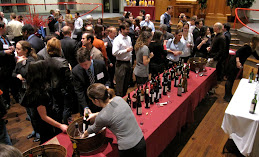
Apple announced that this will be the last year that the company participates in Macworld, which will greatly reduce its popularity. To counteract this, the company that runs the conference already has announced the admission to the exhibit halls will be free next year. I discovered a great new winetasting venue in San Francisco just a block from the Moscone Center where Macworld is held. It’s called “The Press Club” and it features wines from eight of California’s finest wineries. I also had a great dinner with a Maryland alum at Quince, a restaurant in Pacific Heights.
On Wednesday night I flew to San Diego for the American Association of Law Schools (AALS) conference. I arrived just in time to attend Aspen Publishers annual authors’ reception, which was held at the San Diego Maritime Museum. It was great to get a chance to catch up with the Aspen executives who have been so invaluable to the success of my environmental law casebook, which they confirmed is still the best-seller in the field. At the AALS Conference I attended a great session of the Torts section on “Torts (Beyond Europe)”. Eri Osaka of the Surugadai University Faculty of Law made a great presentation on how the Japanese tort system has evolved over time in response to environmental tragedies, such as mercury poisoning in Minamata. The Environmental section presented a program on environmental justice at the U.S./Mexican border. This summer I will be teaching a short course on Comparative Environmental Justice at the University of British Columbia.
Last week the Obama administration announced that Harvard Law professor Cass Sunstein will be nominated to the be the new director of OMB’s Office of Information and Regulatory Affairs (OIRA). After Cass’s nomination was announced, Harvard recruited me to visit there this spring to teach the Environmental Law course that Cass had been scheduled to teach. Tomorrow I teach my first Constitutional Law class of the spring at Maryland and on Tuesday I have the first session of my Global Environmental Law seminar. Fortunately Harvard’s semester does not start until February 2 after which I will start my weekly commute to Harvard on Wednesdays.
Apple announced that this will be the last year that the company participates in Macworld, which will greatly reduce its popularity. To counteract this, the company that runs the conference already has announced the admission to the exhibit halls will be free next year. I discovered a great new winetasting venue in San Francisco just a block from the Moscone Center where Macworld is held. It’s called “The Press Club” and it features wines from eight of California’s finest wineries. I also had a great dinner with a Maryland alum at Quince, a restaurant in Pacific Heights.
On Wednesday night I flew to San Diego for the American Association of Law Schools (AALS) conference. I arrived just in time to attend Aspen Publishers annual authors’ reception, which was held at the San Diego Maritime Museum. It was great to get a chance to catch up with the Aspen executives who have been so invaluable to the success of my environmental law casebook, which they confirmed is still the best-seller in the field. At the AALS Conference I attended a great session of the Torts section on “Torts (Beyond Europe)”. Eri Osaka of the Surugadai University Faculty of Law made a great presentation on how the Japanese tort system has evolved over time in response to environmental tragedies, such as mercury poisoning in Minamata. The Environmental section presented a program on environmental justice at the U.S./Mexican border. This summer I will be teaching a short course on Comparative Environmental Justice at the University of British Columbia.
Last week the Obama administration announced that Harvard Law professor Cass Sunstein will be nominated to the be the new director of OMB’s Office of Information and Regulatory Affairs (OIRA). After Cass’s nomination was announced, Harvard recruited me to visit there this spring to teach the Environmental Law course that Cass had been scheduled to teach. Tomorrow I teach my first Constitutional Law class of the spring at Maryland and on Tuesday I have the first session of my Global Environmental Law seminar. Fortunately Harvard’s semester does not start until February 2 after which I will start my weekly commute to Harvard on Wednesdays.
Monday, January 5, 2009
To Uphold the World, Ilisu Dam Financing & California
Last Monday I had lunch with my old friend and former EDF colleague Bruce Rich. He gave me a copy of his impressive new book “To Uphold the World: The Message of Ashoka and Kautilya for the 21st Century,” which been published by Penguin-India. The book discusses how the modern world should respond to the forces of globalization drawing on the work of the ancient Indian leaders Ashoka and Kautilya. To promote the release of the book, Bruce went on a book tour of India last May, as shown in the photo above. Bruce discusses the book in an interview available online at: http://www.verveonline.com/62/people/edgefull.shtml. While the book is only available in India right now, Beacon Press has just signed Bruce to publish a U.S. version and to update his classic book “Mortgaging the Earth” on environmental mismanagement by the World Bank.
Bruce also gave me a copy of the column he wrote for the January issue of the Environmental Forum (“A Test Case for Export Finance”) sharply criticizing the involvement of export credit agencies (ECAs) in the financing of the Ilisu Dam project. This dam, which would be built on the Tigris River in southeastern Turkey, would forcibly displace nearly 65,000 ethnic Kurds while flooding archeological treasures in Anatolia. An effort by a consortium of companies in Germany, Switzerland and the United Kingdom to obtain financing for the project fell apart in 2002 after an international outcry. However, the project recently was revived when ECAs from Austria. Germany, and Switzerland approved nearly $600 million in loan guarantees for the project. Bruce argues that this represents an important test of the OECD’s “Common Approaches on Environment” for export credit agencies. Bruce notes that the three ECAs involved in the project required the Turkish government to meet 153 conditions dealing with the environment, resettlement and cultural heritage. After independent monitoring committees determined in March and August 2008 that the Turkish government had failed to meet these conditions, the ECAs in October sent an official Environmental Failure Notice. This notice gave the Turkish government 60 days to remedy these deficiencies or face withdrawal of ECA support. On December 23, the three ECAs ordered work on the project suspended for 180 days due to the failure to live up to the environmental conditions.
While happy about the imminent departure of the Bush administration, Bruce expressed some skepticism about the new administration in light of the appointment of Larry Summers to be director of the National Economic Council. Few remember that while an economist at the World Bank in December 1991 Summers authored the infamous memo suggesting that because earnings and life expectancy are lower in developing countries, the Bank should encourage more dumping of toxic waste there and the shifting of polluting industries to such countries. A copy of the memo is available online at: http://www.whirledbank.org/ourwords/summers.html.
After ringing in the New Year in Philadelphia, I flew with my son to California on New Year’s day. While staying in Los Angeles for the weekend, I noticed several street signs with directions to the nearest “electric vehicle charging station.” Drivers on the freeways were reminded by electronic bulletin boards that on January 1 a new law went into effect banning the sending of text messages while driving. On Friday night my son and I went to the Staples Center in downtown LA to see the Los Angeles Lakers play the Utah Jazz. Jack Nicholson was sitting at courtside and graciously signed some autographs for children during the halftime break. After the Lakers secured their 15th straight home victory by a score of 113-100, Laker Coach Phil Jackson told the press that his only regret was that “we didn’t get the free tacos for the fans.” A taco chain had offered two free tacos for each ticket stub if the Lakers won while holding their opponent to less than 100 points, but a successful 3-point basket in the final seconds gave the Jazz 100 points. On Saturday night we sampled the tapas at The Bazaar in Beverly Hills, a new restaurant in the SLS Hotel where we stayed. The restaurant is run by Jose Andres, who founded Jaleo in Washington, D.C. and it features new versions of some of Jaleo’s signature dishes. On Sunday night my son and I flew to San Francisco. He caught the red eye to return to D.C. for school on Monday morning while I am staying in SF for the annual Macworld Conference. Photos of my trip to California are available online at: http://gallery.me.com/rperci/100396.
Bruce also gave me a copy of the column he wrote for the January issue of the Environmental Forum (“A Test Case for Export Finance”) sharply criticizing the involvement of export credit agencies (ECAs) in the financing of the Ilisu Dam project. This dam, which would be built on the Tigris River in southeastern Turkey, would forcibly displace nearly 65,000 ethnic Kurds while flooding archeological treasures in Anatolia. An effort by a consortium of companies in Germany, Switzerland and the United Kingdom to obtain financing for the project fell apart in 2002 after an international outcry. However, the project recently was revived when ECAs from Austria. Germany, and Switzerland approved nearly $600 million in loan guarantees for the project. Bruce argues that this represents an important test of the OECD’s “Common Approaches on Environment” for export credit agencies. Bruce notes that the three ECAs involved in the project required the Turkish government to meet 153 conditions dealing with the environment, resettlement and cultural heritage. After independent monitoring committees determined in March and August 2008 that the Turkish government had failed to meet these conditions, the ECAs in October sent an official Environmental Failure Notice. This notice gave the Turkish government 60 days to remedy these deficiencies or face withdrawal of ECA support. On December 23, the three ECAs ordered work on the project suspended for 180 days due to the failure to live up to the environmental conditions.
While happy about the imminent departure of the Bush administration, Bruce expressed some skepticism about the new administration in light of the appointment of Larry Summers to be director of the National Economic Council. Few remember that while an economist at the World Bank in December 1991 Summers authored the infamous memo suggesting that because earnings and life expectancy are lower in developing countries, the Bank should encourage more dumping of toxic waste there and the shifting of polluting industries to such countries. A copy of the memo is available online at: http://www.whirledbank.org/ourwords/summers.html.
After ringing in the New Year in Philadelphia, I flew with my son to California on New Year’s day. While staying in Los Angeles for the weekend, I noticed several street signs with directions to the nearest “electric vehicle charging station.” Drivers on the freeways were reminded by electronic bulletin boards that on January 1 a new law went into effect banning the sending of text messages while driving. On Friday night my son and I went to the Staples Center in downtown LA to see the Los Angeles Lakers play the Utah Jazz. Jack Nicholson was sitting at courtside and graciously signed some autographs for children during the halftime break. After the Lakers secured their 15th straight home victory by a score of 113-100, Laker Coach Phil Jackson told the press that his only regret was that “we didn’t get the free tacos for the fans.” A taco chain had offered two free tacos for each ticket stub if the Lakers won while holding their opponent to less than 100 points, but a successful 3-point basket in the final seconds gave the Jazz 100 points. On Saturday night we sampled the tapas at The Bazaar in Beverly Hills, a new restaurant in the SLS Hotel where we stayed. The restaurant is run by Jose Andres, who founded Jaleo in Washington, D.C. and it features new versions of some of Jaleo’s signature dishes. On Sunday night my son and I flew to San Francisco. He caught the red eye to return to D.C. for school on Monday morning while I am staying in SF for the annual Macworld Conference. Photos of my trip to California are available online at: http://gallery.me.com/rperci/100396.
Sunday, December 28, 2008
Hong Kong, Harbin, Holidays & Chinese Gas Taxes
On Monday night I returned to the U.S. after my latest visit to China. The atmosphere in Beijing seemed quite different from the pre-Olympic frenzy that gripped it when I left last July. There is far less construction in evidence and concern about the impact of the global economic slump is pervasive. Chinese students seem far more concerned about the job market than they were when I was last there.
I spent December 15-19 in Hong Kong, my first visit there since 1981. Not surprisingly, Hong Kong has changed quite a bit in the last few decades. One of the most striking changes is that Victoria Harbor is far less congested with boat traffic now that highway and subway tunnels provide alternative means for crossing it. I took the Peak Tram, a funicular that has been in operation since 1888, to the top of Victoria Peak, as I had done in 1981. The view from the Sky Terrace atop the Peak remains spectacular, though now it is marred by numerous, cheesy commercial enterprises that one has to pass through before emerging on the Sky Terrace. After descending from the peak I had a great lunch at M at the Fringe, a restaurant located in an historic part of Hong Kong that has the same owners as Shanghai’s great M on the Bund. Earlier in the week I met my Maryland colleague Professor Shruti Rana for lunch in Kowloon where I stayed. Shruti was in Hong Kong to do a site visit for a new clinical externship that Maryland is establishing there.
Hong Kong seems so different from Beijing. In Beijing the vast majority of taxis still do not have working seat belts for their passengers (most taxis drivers have removed either the belts or the buckles). In Hong Kong the taxis not only have seat belts that work, but they also prominently display a warning that the drivers can be fined if any passengers are discovered not to be wearing seat belts. While I certainly do not advocate a nanny state (and I still rail against the outrageous French regulation requiring male swimmers at public pools to wear bikini briefs), seat belts have become fundamental to public safety. Today is the anniversary of the day in 1970 when I was in an auto accident that killed my best friend and debate partner and another acquaintance because they were not wearing seat belts. I feel distinctly at risk in Beijing whenever I am in a taxi without working seat belts, particularly when the driver seems to be auditioning for NASCAR.
The Hong Kong press is distinctly freer than the press in Beijing. The Hong Kong newspapers carry reports about criticism of the Chinese government, demonstrations on the mainland, and books banned on the mainland that one would not expect to see in the Beijing press.
On Friday December 19 I flew back to Beijing and then spent the weekend in Harbin, a city of four million people located more than 600 miles north of Beijing. Harbin is the city where the December 2005 benzene spill in the Songhua River forced the authorities to shut off local drinking water supplies for an extended period. Harbin is close to Russian Siberia. Historically it has had a large Russian population and St. Sofia’s Russian Orthodox Cathedral is one of the major tourist attractions in downtown Harbin.
I arrived in Harbin the day after a snowstorm had hit the city and the temperature was as low as -24 degrees Centigrade (-11 degrees Fahrenheit). While the extreme temperature and a chill wind made it uncomfortable to expose any flesh to the elements, Harbin residents were reveling in preparations for the city’s annual Snow and Ice Festival. The festival, which features hundreds of elaborate snow and ice sculptures along the river, does not officially open until January 5, but many snow sculptures already have been completed. Locals were skating on the frozen Songhua River, roaring down ice slides, and a few were even diving into the freezing water through holes cut in the ice to demonstrate to tourists that they were unfazed by the cold.
I visited the Siberian Tiger Park outside Harbin where a captive breeding program has produced more than 400 of these magnificent animals. Tourists tour the park in specially reinforced vans and can watch the tigers feeding. Unfortunately, the precipitous decline in suitable habitat for Siberian tigers in Northern China has made it impossible to reintroduce them into the wild where it is estimated that a population of only approximately 200 remain. Photos of my trips to Hong Kong and Harbin are available online at: http://gallery.me.com/rperci/100366. Videos are available online at: http://gallery.me.com/rperci/100381.
Back in the U.S. for the holidays I noticed that the price of gasoline in Baltimore is now as low as $1.59 a gallon, less than 40% of what it had been in July when gasoline prices exceeded $4 per gallon. The precipitous decline in the price of oil since July may once again kill the incentive for expanded investments in renewable energy, as occurred when oil prices declined during the 1980s and 1990s. In China the government controls gasoline prices, which were among the lowest in the world until they were increased in the first half of the year when global crude oil prices soared. On December 19 the Chine government responded to the decline in global oil prices by reducing the price of gasoline by 14 percent. However, China also will increase its tax on gasoline five-fold effective January 1 from approximately 3 cents to 15 cents per liter (or roughly from 11 cents to 56 cents per gallon). Many believe that a similar strategy would make a lot of sense for the United States, see Thomas L. Friedman, “Win, Win, Win, Win, Win . . .”, New York Times, Dec. 28, 2008, p. 8 (Week in Review), though it is widely viewed as politically impossible.
While I was in China the Chinese press put a somewhat positive spin on the Poznan Conference, while stressing the importance of poverty alleviation and greater financial aid to developing countries as elements of any post-Kyoto regime to control emissions of greenhouse gases. They also reported on a largely symbolic auction of carbon credits that occurred on the China Beijing Environment Exchange on December 11. The credits had been “earned” by 81,670 commuters who opted to take public transportation from July 20 to September 20. They were calculated by scientists from Tsinghua University and Environmental Defense. Si Tingting, “Symbolic Efforts,” China Daily, Dec. 22, 2008.
I spent December 15-19 in Hong Kong, my first visit there since 1981. Not surprisingly, Hong Kong has changed quite a bit in the last few decades. One of the most striking changes is that Victoria Harbor is far less congested with boat traffic now that highway and subway tunnels provide alternative means for crossing it. I took the Peak Tram, a funicular that has been in operation since 1888, to the top of Victoria Peak, as I had done in 1981. The view from the Sky Terrace atop the Peak remains spectacular, though now it is marred by numerous, cheesy commercial enterprises that one has to pass through before emerging on the Sky Terrace. After descending from the peak I had a great lunch at M at the Fringe, a restaurant located in an historic part of Hong Kong that has the same owners as Shanghai’s great M on the Bund. Earlier in the week I met my Maryland colleague Professor Shruti Rana for lunch in Kowloon where I stayed. Shruti was in Hong Kong to do a site visit for a new clinical externship that Maryland is establishing there.
Hong Kong seems so different from Beijing. In Beijing the vast majority of taxis still do not have working seat belts for their passengers (most taxis drivers have removed either the belts or the buckles). In Hong Kong the taxis not only have seat belts that work, but they also prominently display a warning that the drivers can be fined if any passengers are discovered not to be wearing seat belts. While I certainly do not advocate a nanny state (and I still rail against the outrageous French regulation requiring male swimmers at public pools to wear bikini briefs), seat belts have become fundamental to public safety. Today is the anniversary of the day in 1970 when I was in an auto accident that killed my best friend and debate partner and another acquaintance because they were not wearing seat belts. I feel distinctly at risk in Beijing whenever I am in a taxi without working seat belts, particularly when the driver seems to be auditioning for NASCAR.
The Hong Kong press is distinctly freer than the press in Beijing. The Hong Kong newspapers carry reports about criticism of the Chinese government, demonstrations on the mainland, and books banned on the mainland that one would not expect to see in the Beijing press.
On Friday December 19 I flew back to Beijing and then spent the weekend in Harbin, a city of four million people located more than 600 miles north of Beijing. Harbin is the city where the December 2005 benzene spill in the Songhua River forced the authorities to shut off local drinking water supplies for an extended period. Harbin is close to Russian Siberia. Historically it has had a large Russian population and St. Sofia’s Russian Orthodox Cathedral is one of the major tourist attractions in downtown Harbin.
I arrived in Harbin the day after a snowstorm had hit the city and the temperature was as low as -24 degrees Centigrade (-11 degrees Fahrenheit). While the extreme temperature and a chill wind made it uncomfortable to expose any flesh to the elements, Harbin residents were reveling in preparations for the city’s annual Snow and Ice Festival. The festival, which features hundreds of elaborate snow and ice sculptures along the river, does not officially open until January 5, but many snow sculptures already have been completed. Locals were skating on the frozen Songhua River, roaring down ice slides, and a few were even diving into the freezing water through holes cut in the ice to demonstrate to tourists that they were unfazed by the cold.
I visited the Siberian Tiger Park outside Harbin where a captive breeding program has produced more than 400 of these magnificent animals. Tourists tour the park in specially reinforced vans and can watch the tigers feeding. Unfortunately, the precipitous decline in suitable habitat for Siberian tigers in Northern China has made it impossible to reintroduce them into the wild where it is estimated that a population of only approximately 200 remain. Photos of my trips to Hong Kong and Harbin are available online at: http://gallery.me.com/rperci/100366. Videos are available online at: http://gallery.me.com/rperci/100381.
Back in the U.S. for the holidays I noticed that the price of gasoline in Baltimore is now as low as $1.59 a gallon, less than 40% of what it had been in July when gasoline prices exceeded $4 per gallon. The precipitous decline in the price of oil since July may once again kill the incentive for expanded investments in renewable energy, as occurred when oil prices declined during the 1980s and 1990s. In China the government controls gasoline prices, which were among the lowest in the world until they were increased in the first half of the year when global crude oil prices soared. On December 19 the Chine government responded to the decline in global oil prices by reducing the price of gasoline by 14 percent. However, China also will increase its tax on gasoline five-fold effective January 1 from approximately 3 cents to 15 cents per liter (or roughly from 11 cents to 56 cents per gallon). Many believe that a similar strategy would make a lot of sense for the United States, see Thomas L. Friedman, “Win, Win, Win, Win, Win . . .”, New York Times, Dec. 28, 2008, p. 8 (Week in Review), though it is widely viewed as politically impossible.
While I was in China the Chinese press put a somewhat positive spin on the Poznan Conference, while stressing the importance of poverty alleviation and greater financial aid to developing countries as elements of any post-Kyoto regime to control emissions of greenhouse gases. They also reported on a largely symbolic auction of carbon credits that occurred on the China Beijing Environment Exchange on December 11. The credits had been “earned” by 81,670 commuters who opted to take public transportation from July 20 to September 20. They were calculated by scientists from Tsinghua University and Environmental Defense. Si Tingting, “Symbolic Efforts,” China Daily, Dec. 22, 2008.
Sunday, December 14, 2008
"Golden Tree" Awards & CUPL Moot Court Practice
On Thursday I arrived in China for a reunion with the students I taught last spring while a Fulbright scholar at the China University of Political Science and Law (CUPL). On Friday morning I met with Professor Wang Canfa, the CUPL professor who is director of the Center for Legal Assistance to Pollution Victims (CLAPV). He had just received a copy of the Chinese edition of Esquire magazine that had named him one of the 30 hottest men in China. The magazine had an Annie Liebowitz-type photo of him standing next to the famous Chinese filmmaker Zhang Yimou, who directed the Beijing Olympics’ opening and closing ceremonies. Ma Jun, the environmental law professor from Peking University also was one of the 30, which included Yao Ming and Jackie Chan.
After I met with the students on CUPL's International Environmental Moot Court team, Professor Wang and I went to lunch. We were joined by Professor Xu Kezhu and other members of the CLAPV staff. At lunch we discussed CLAPV's growing litigation docket and recent developments in Chinese environmental law. Professor Wang noted that there are now specialized environmental courts in at least four provinces in China. One judge from such a court has expressly recognized the right of registered NGOs to bring public interest litigation. CLAPV is involved in a wide variety of cases, many of which center on failures to comply wth environmental assessment requirements. On Monday Professor Xu will be appearing in court in Shanghai to represent CLAPV in its challenge to the Shanghai Environmental Protection Bureau’s (EPB’s) refusal to release certain environmental assessment documents in response to a request from CLAPV under China’s new open information law. Ironically, in May I spoke at a conference co-sponsored by the Shanghai EPB and NRDC to encourage broad use of the new law. The judge hearing CLAPV's challenge seems interested in persuading the litigants to settle, though CLAPV staff believe that the case can be a vehicle for establishing an important precedent for public access to information.
After lunch we returned to CUPL where we held an awards ceremony to honor the students who had made films in my environmental law class last spring. The awards were the result of voting by an independent panel of seven judges, including Professors Taunya Banks and Kathy Vaughns from Maryland, former Fulbrighter Alan Lepp, Maryland alums Karla Schaffer, David Mandell, and Lewis Taylor, and former student filmmaker Bob Clemons. "Golden Tree” awards were presented in eight categories. “White Pollution,” a film that examines the new law banning free distribution of plastic bags at Chinese grocery stores, won awards for Most Educational, Best Interviews, and Best Picture. “Disposable Chopsticks,” a film about the environmental consequences of using disposable chopsticks, won the award for Best Acting. “Red Beijing,” a film that examined the daily consequences of air and noise pollution in Beijing, won awards for Best Cinematography and Best Sound. ”Banana’s Fault,” which focused on the consequences of improper waste disposal, won the award for Best Use of Humor. A Special Judge’s Award was given to “Loving Animals Is Loving Ourselves” for Creativity for filming from the animal’s perspective.
Following the awards ceremony, we conducted a moot court practice session for the CUPL students who have entered the Stetson International Environmental Moot Court Competition. CUPL is becoming the first Chinese law school ever to compete in this event. I served as a judge along with my Maryland colleague Shruti Rana, who is in Beijing to lecture as part of our exchange program with the Central University of Finance and Economics (CUFE), and Maryland 3L Nathan Hopkins, who is participating in the Maryland/CUFE exchange program. Considering that it was their first argument, the CUPL students did an absolutely fabulous job. They were unflappable and yet appropriately deferential to the judges who peppered them with lots of challenging questions. I am really proud of the team that CUPL has put together for this competition.
Friday night I attended a performance by the Simon Bolivar Youth Orchestra at the National Center for the Performing Arts, the spectacular new structure near Tiananmen Square known affectionately as “the egg” because of its shape. It was the first time I had been inside this breathtaking building. I was a guest of CUPL Professor Xu Kezhu, who is leaving CLAPV this month to join her husband in Caracas, Venezuela where he is a diplomat with the Chinese Embassy.
On Saturday I flew to Shanghai where I visited my friends Dan Guttman and Zhenzhi Zhong. We had lunch and dinner together with Dan’s friend Jonathan Moreno, a bioethics professor at Penn who also works for the Center for American Progress. On Sunday I toured the Bund and then joined Dan and ZZ to explore the Taikang Lu art district before having dinner together at a Yunnan folk restaurant. On Monday I fly to Hong Kong.
After I met with the students on CUPL's International Environmental Moot Court team, Professor Wang and I went to lunch. We were joined by Professor Xu Kezhu and other members of the CLAPV staff. At lunch we discussed CLAPV's growing litigation docket and recent developments in Chinese environmental law. Professor Wang noted that there are now specialized environmental courts in at least four provinces in China. One judge from such a court has expressly recognized the right of registered NGOs to bring public interest litigation. CLAPV is involved in a wide variety of cases, many of which center on failures to comply wth environmental assessment requirements. On Monday Professor Xu will be appearing in court in Shanghai to represent CLAPV in its challenge to the Shanghai Environmental Protection Bureau’s (EPB’s) refusal to release certain environmental assessment documents in response to a request from CLAPV under China’s new open information law. Ironically, in May I spoke at a conference co-sponsored by the Shanghai EPB and NRDC to encourage broad use of the new law. The judge hearing CLAPV's challenge seems interested in persuading the litigants to settle, though CLAPV staff believe that the case can be a vehicle for establishing an important precedent for public access to information.
After lunch we returned to CUPL where we held an awards ceremony to honor the students who had made films in my environmental law class last spring. The awards were the result of voting by an independent panel of seven judges, including Professors Taunya Banks and Kathy Vaughns from Maryland, former Fulbrighter Alan Lepp, Maryland alums Karla Schaffer, David Mandell, and Lewis Taylor, and former student filmmaker Bob Clemons. "Golden Tree” awards were presented in eight categories. “White Pollution,” a film that examines the new law banning free distribution of plastic bags at Chinese grocery stores, won awards for Most Educational, Best Interviews, and Best Picture. “Disposable Chopsticks,” a film about the environmental consequences of using disposable chopsticks, won the award for Best Acting. “Red Beijing,” a film that examined the daily consequences of air and noise pollution in Beijing, won awards for Best Cinematography and Best Sound. ”Banana’s Fault,” which focused on the consequences of improper waste disposal, won the award for Best Use of Humor. A Special Judge’s Award was given to “Loving Animals Is Loving Ourselves” for Creativity for filming from the animal’s perspective.
Following the awards ceremony, we conducted a moot court practice session for the CUPL students who have entered the Stetson International Environmental Moot Court Competition. CUPL is becoming the first Chinese law school ever to compete in this event. I served as a judge along with my Maryland colleague Shruti Rana, who is in Beijing to lecture as part of our exchange program with the Central University of Finance and Economics (CUFE), and Maryland 3L Nathan Hopkins, who is participating in the Maryland/CUFE exchange program. Considering that it was their first argument, the CUPL students did an absolutely fabulous job. They were unflappable and yet appropriately deferential to the judges who peppered them with lots of challenging questions. I am really proud of the team that CUPL has put together for this competition.
Friday night I attended a performance by the Simon Bolivar Youth Orchestra at the National Center for the Performing Arts, the spectacular new structure near Tiananmen Square known affectionately as “the egg” because of its shape. It was the first time I had been inside this breathtaking building. I was a guest of CUPL Professor Xu Kezhu, who is leaving CLAPV this month to join her husband in Caracas, Venezuela where he is a diplomat with the Chinese Embassy.
On Saturday I flew to Shanghai where I visited my friends Dan Guttman and Zhenzhi Zhong. We had lunch and dinner together with Dan’s friend Jonathan Moreno, a bioethics professor at Penn who also works for the Center for American Progress. On Sunday I toured the Bund and then joined Dan and ZZ to explore the Taikang Lu art district before having dinner together at a Yunnan folk restaurant. On Monday I fly to Hong Kong.
Subscribe to:
Posts (Atom)